


Daimler Truck accelerates its hydrogen strategy with the NextGenH2 Truck, a fuel cell vehicle designed for long distances, fast refueling and diesel-like range.

Hydrogen trucks move into their second generation
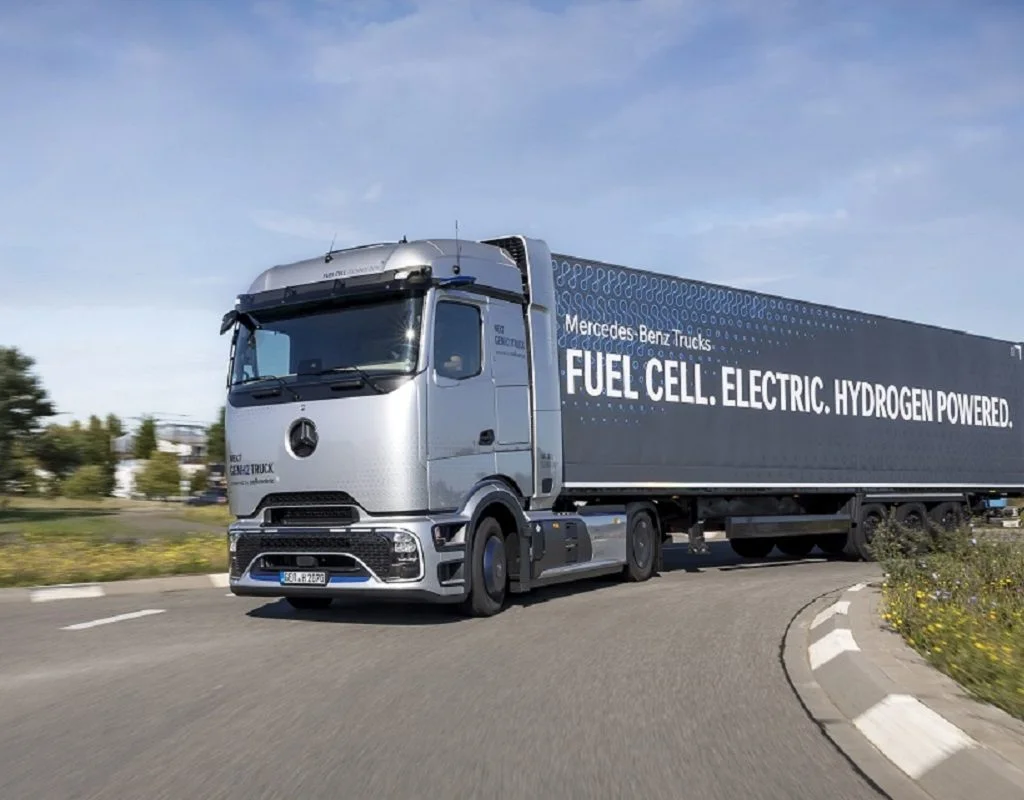
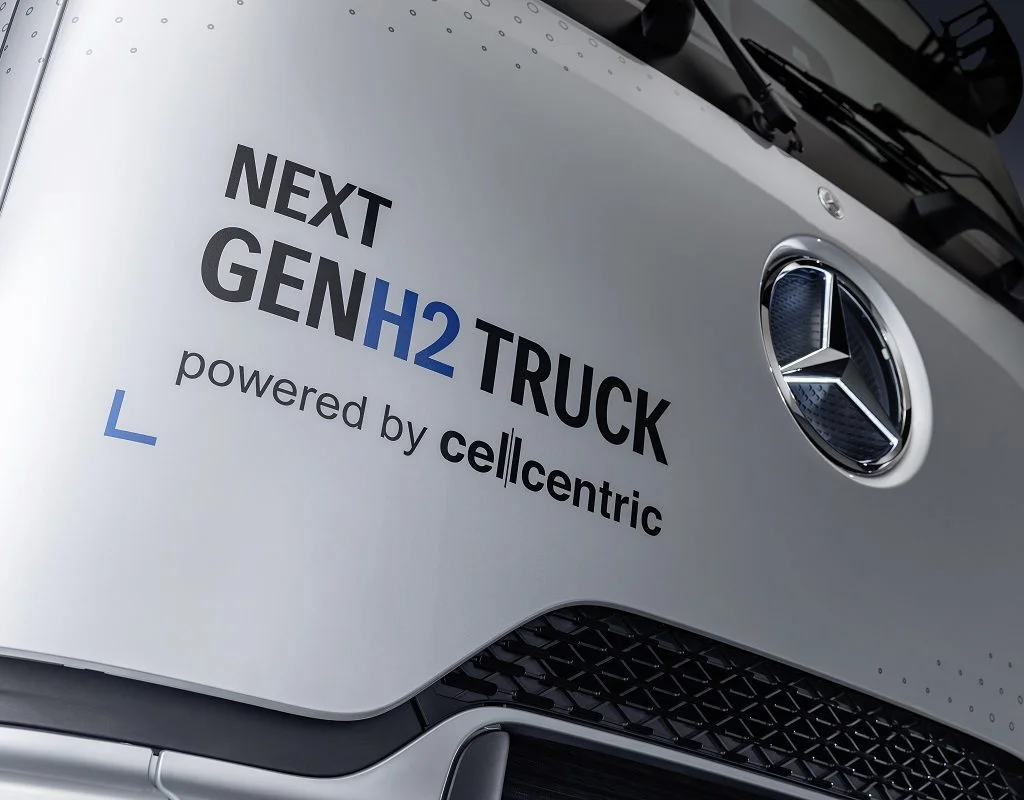
Alongside battery-electric solutions for heavy-duty transport, Daimler Truck is investing heavily in hydrogen propulsion. Production is underway for the Mercedes-Benz NextGenH2 Truck, a fuel cell truck that the German group will initially build in a limited batch of 100 units, with road deployment planned by the end of 2026. Building on experience gained with the first generation of articulated hydrogen trucks and with the fully electric eActros 600, the new model targets ranges of more than 1,000 km on a single refueling, even at full load.
The advantages of hydrogen trucks
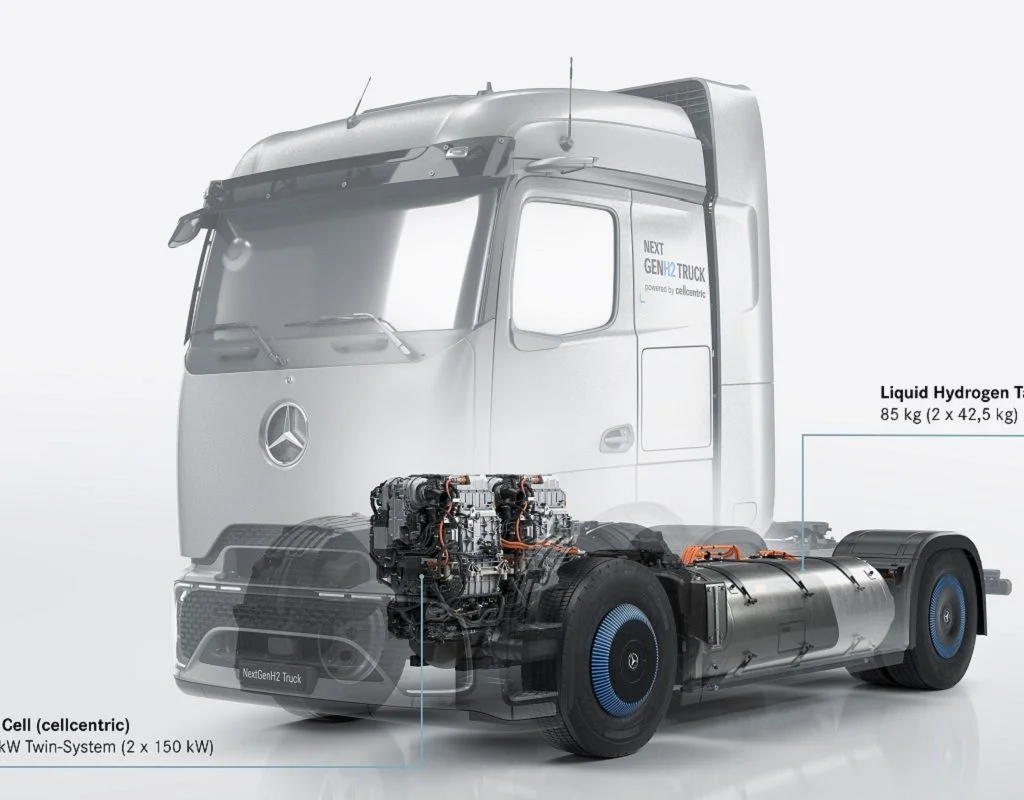
The new truck stores a total of 85 kg of liquid hydrogen in two tanks. At -253 degrees Celsius, liquid hydrogen offers a higher energy density than gaseous hydrogen, allowing more fuel to be stored on board and enabling ranges comparable to those of diesel trucks. Engineers have also made it possible to refuel from both sides of the vehicle in 10 to 15 minutes, with a process designed to be as safe, quick and simple as diesel refueling.
Compared with gaseous hydrogen, liquid hydrogen requires less logistical effort and adds less weight, enabling higher payloads. In 2023, a Daimler Truck test showed that the GenH2 Truck, with a gross combined vehicle weight of around 40 tons, covered 1,047 km on a single fill.
How the fuel cell technology works
At the heart of the Mercedes-Benz NextGenH2 Truck is the BZA150 fuel cell developed by cellcentric, the joint venture between Daimler Truck and Volvo Group. The system delivers a total output of 300 kW through two 150 kW units, compactly integrated into the engine compartment beneath the cab to optimize space.
Electricity is generated through the chemical reaction between hydrogen and oxygen, which releases electrons to power the electric motors on the axle. The only byproduct is water vapor. Real-world testing has already confirmed the efficiency of this setup. Trials with early customers showed average hydrogen consumption ranging from 5.6 to 8 kg per 100 km, even with heavy payloads of up to 34 tons.
Efficiency and power, building on the eActros 600
The integration of mass-produced components marks a significant step forward for the NextGenH2 Truck, which benefits from the technological maturity and reliability of the brand’s flagship models. The ProCabin, already used on the eActros 600, makes its debut on a hydrogen-powered vehicle and improves aerodynamic efficiency by 9%.
The technical architecture is based on a smart combination of technologies:
- A 101 kWh lithium iron phosphate battery acts as a buffer, storing energy recovered during braking and downhill driving to optimize consumption.
- The truck uses the same electric axle as the eActros 600, paired with a four-speed transmission to ensure optimal power delivery in all driving conditions.
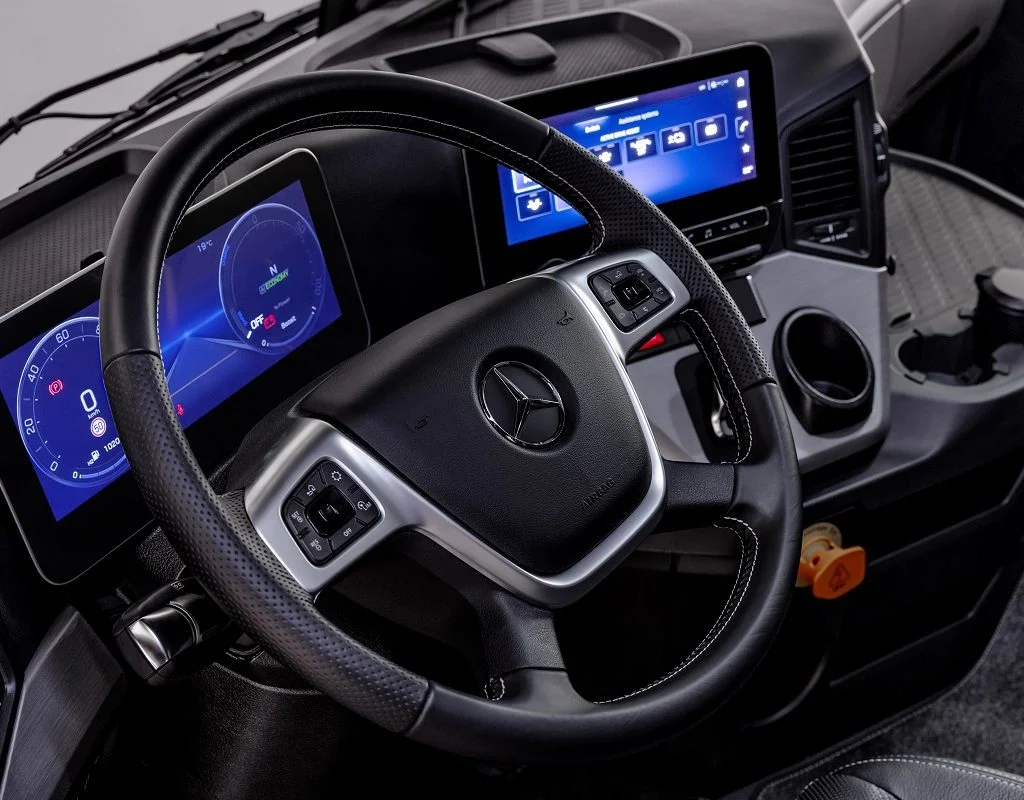
- Thanks to a next-generation electronic architecture, the vehicle integrates advanced driver assistance systems such as Active Brake Assist 6 and Front Guard Assist, while meeting the highest standards for cybersecurity and road safety.
Hydrogen trucks and maximum safety
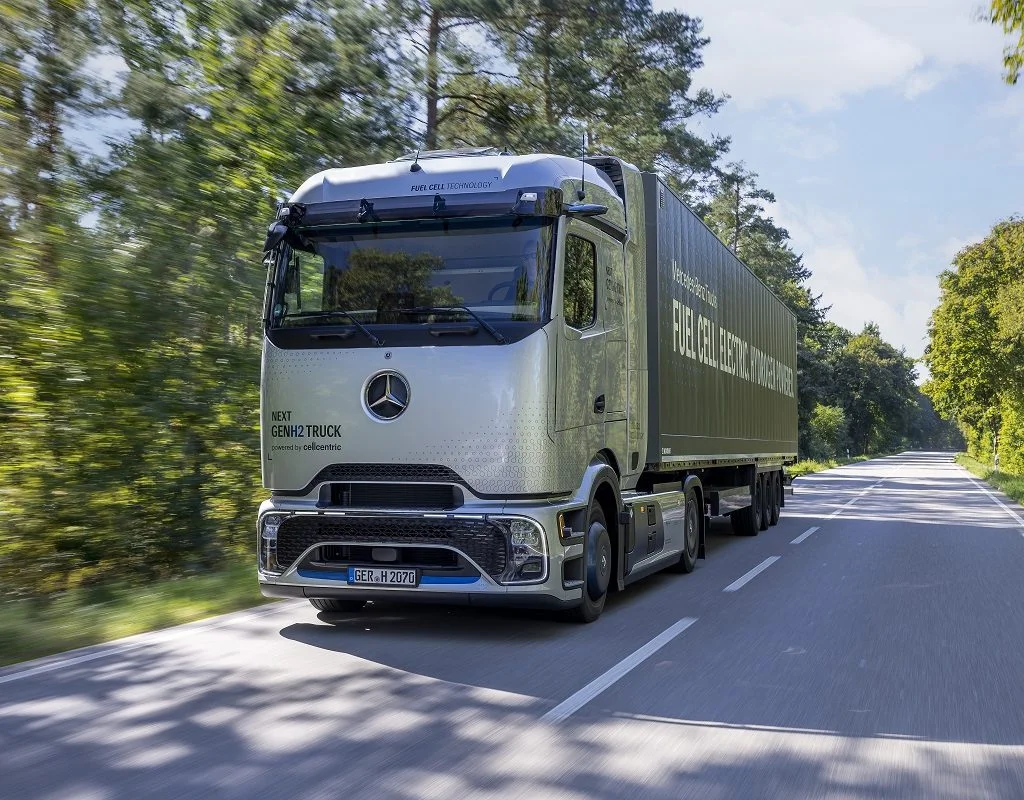
To maximize safety, engineers have developed a new evaporation management system that meets all regulatory requirements for hydrogen handling, including parking in enclosed spaces. A dedicated cooling system ensures stable operating conditions even at very high ambient temperatures or on demanding terrain.
In addition, a new sensor system addresses the highly unlikely event of a hydrogen leak, making it possible for drivers to rest overnight in the two standard cab-mounted beds. Daimler Truck has tested the prototypes under extreme conditions in the Swiss Alps, validating reliability in challenging operational scenarios. Series production of fuel cell trucks is planned for the early 2030s.


