


Sodium-ion batteries are gaining momentum as new supply agreements, rising production capacity, and competitive costs position this technology as the most promising alternative to lithium-ion storage.

Sodium-ion batteries accelerate toward commercial scale
The energy-storage market has formally welcomed sodium-ion batteries in recent years. While the technology has not yet reached the performance levels of lithium-ion systems, early large-scale supply deals are already emerging. One example is the contract signed by Peak Energy, a US startup based in California and Colorado, which this week announced an agreement for the delivery of 4.75 GWh of sodium-ion battery systems.
This development reflects an industry still in its early stages but moving rapidly. According to IRENA, global sodium-ion battery production capacity is expected to reach 70 GWh per year by 2025 and could grow fivefold by 2030.
Future market penetration remains uncertain, with demand projections ranging from 50 to 600 GWh per year by 2030. What is clear, however, is that sodium-ion batteries have become the most promising alternative to lithium-ion technology, driven by fast performance improvements and the ability to build supply chains outside China.
How sodium-ion batteries work
Sodium-ion batteries, or SIBs, are an electrochemical storage technology that uses sodium ions (Na+) as charge carriers. Functionally, they operate similarly to lithium-ion batteries, though their different intercalating ion requires different materials.
In the simplest terms, a sodium-ion cell uses a hard-carbon anode, though alternatives such as graphene, molybdenum disulfide, metals, and metal alloys are also possible. Cathodes typically rely on transition-metal oxides, polyanions, or Prussian blue analogues. Research is increasingly shifting from aqueous electrolytes to solid-state ones capable of delivering higher energy density.
During charging, Na+ ions move from the cathode through the electrolyte and intercalate into the anode. During discharge, the process reverses.
| Material | Family | Specific Capacity (mAh/g) | Average Voltage (V vs Na⁺/Na) | Voltage Window (V vs Na⁺/Na) |
|---|---|---|---|---|
| Cathode | ||||
| Na₂/₃Mn₀.₆₇Ni₀.₂₂Co₀.₀₇O₂ | Layered oxide | 105 | 3.3 V | 2.0–4.2 V |
| Na₀.₆₇Ni₀.₂Co₀.₂Mn₀.₆O₂ | Layered oxide | 132.2 | 3.4 V | 1.5–4.2 V |
| Na₂–xFe(PO₄)₀.₃ | Polyanionic | 130 | 3.4 V | 2.0–4.2 V |
| Na₃MnPO₄CO₃ | Polyanionic | 125 | 3.5 V | 2.5–4.5 V |
| Na₁.₈₉Mn[Fe(CN)₆]₀.₉₇ | Prussian blue | 150 | 3.5 V | 2.0–4.0 V |
| Anode | ||||
| Hard carbon | – | 300 | 0.3 V | 0.01–2.0 V |
Advantages and disadvantages of SIBs
The key driver behind the SIB market is the abundance and cost of raw materials. Sodium is roughly 1,000 times more abundant in the Earth’s crust than lithium, and its concentration skyrockets in seawater, where it is around 60,000 times more abundant. As a result, sodium carbonate, the main precursor for these batteries, is significantly cheaper than lithium carbonate, at around 0.17–0.56 dollars per kilogram versus 8–10 dollars per kilogram (as of November 2025).
Another major advantage is power density: SIBs could theoretically reach up to 1,000 W/kg, nearly three times higher than commercial lithium-ion batteries.
Beyond economics, sodium-ion batteries offer essential technical benefits, including simpler battery-management systems (BMS) compared to lithium-ion units and greater thermal stability, making them inherently safer.
However, there are critical weaknesses. Specific energy, the gravimetric energy density, is not yet competitive. Current values range from 110 Wh/kg to 160 Wh/kg, though some lab prototypes have reached 250 Wh/kg. Progress is accelerating. In April, Chinese giant CATL announced mass-production-ready SIBs with an energy density of 175 Wh/kg, currently the highest official value on the market.
Carbon footprint: SIB vs LIB
One of the aspects still being defined by sector research is the carbon footprint of sodium-ion batteries, a key factor in assessing their real sustainability within the energy transition. In this area, a German study published in July 2025 provides useful insights.
Scientists from the Fraunhofer FFB and the University of Münster conducted a cradle-to-gate life cycle assessment, covering the process from raw material extraction to the factory gate.
The study used the carbon footprint of lithium-ion batteries with LFP chemistry as a benchmark, estimated at about 71.2 kg CO2-eq/kWh. It showed that the best sodium-ion batteries have a nearly identical footprint, at 71.6 kg CO2-eq/kWh, highlighting that 80 to 87 percent of emissions come from material extraction and synthesis rather than from factory assembly.
Carbon vs graphite
This is where another competitive advantage of SIBs emerges. Sodium-ion batteries use hard carbon at the anode, with an impact of about 3.2 kg CO2-eq/kg. Lithium-ion batteries rely on synthetic graphite which, due to highly energy-intensive graphitization processes, has a footprint almost eight times higher, around 25.1 kg CO2-eq/kg.
The existing gap could be further widened by making the SIB anode nearly zero-emission. Its production can be almost energy self-sufficient by using energy from volatile gases released during carbonization. These improvements could reduce the overall carbon footprint by up to 16 percent.
By contrast, the active cathode materials used in sodium-ion batteries do not show environmental advantages over lithium-based rechargeables. LFP remains the cleanest cathode material at 7.6 kg CO2-eq/kg, while for SIBs the main emission hot spots are precursors such as nickel sulfate, vanadium pentoxide, and ferrocyanides.
Sodium-ion battery costs
Because the industry has not yet achieved full economies of scale, pricing does not reflect all potential cost advantages. According to Wood Mackenzie, sodium-ion batteries still cost more than lithium-iron-phosphate (LFP) systems of equivalent capacity, averaging above 85 dollars per kWh in 2024.
“For 2025, we estimate an average cost of 52 dollars per kWh for LFP batteries and 59 dollars per kWh for sodium-ion batteries,” said Ed Crooks, vice president for the Americas at WoodMac. “We believe sodium-ion battery costs are declining slightly faster than lithium-ion, but we do not expect price parity with LFP before around 2035.”
Global production capacity
Industry forecasts indicate that global sodium-ion battery production capacity could reach 70 GWh per year by late 2025, rising to nearly 400 GWh per year by the end of the decade.
Despite sodium’s abundance, China has moved fastest to industrialize this technology. Today, more than 95 percent of announced global SIB production capacity is concentrated in the country.
This should not be surprising. China has heavily invested in the storage sector, first dominating lithium-ion and then expanding into alternative technologies, including SIBs and flow batteries. Nearly all major Chinese storage companies, from CATL and BYD to specialists like HiNa Battery, are pushing mass commercialization of sodium-ion systems.
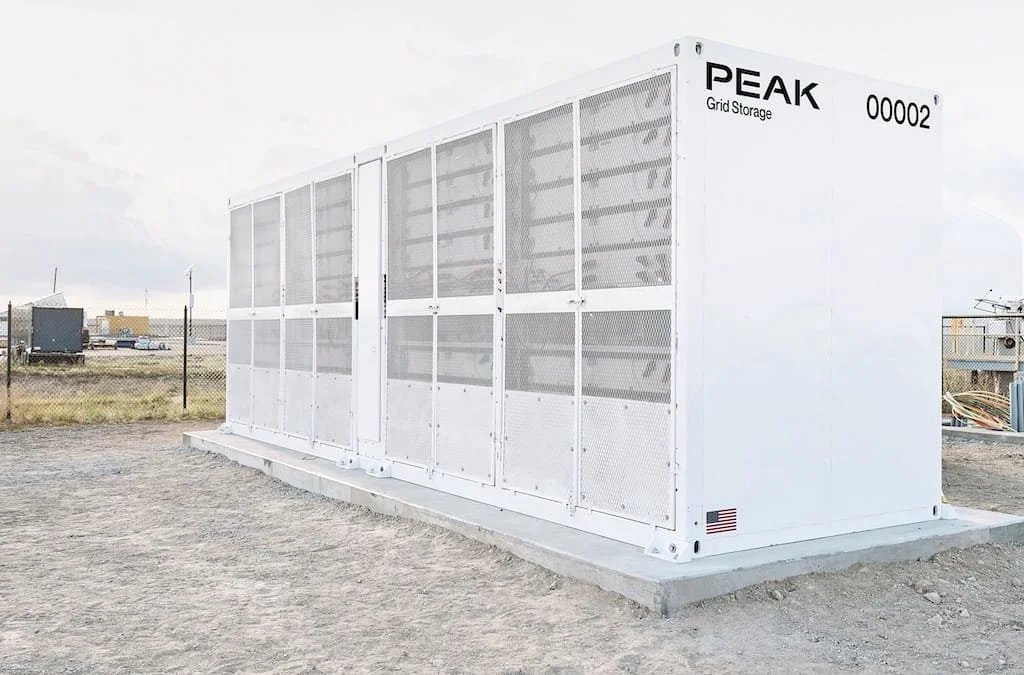
The United States is also beginning to move. Peak Energy recently announced a multiyear agreement with Jupiter Power to supply 4.75 GWh of its sodium-ion storage systems between 2027 and 2030. This is notable considering that the technology was introduced only in July 2025, and its first installation went online in September at SolarTAC in Watkins, Colorado.
The largest sodium-ion BESS in Europe
| Company | Location |
|---|---|
| CATL | China |
| HiNa Battery Technology Co. | China |
| Faradion Limited | United Kingdom |
| Altris AB | Sweden |
| AMTE Power PLC | United Kingdom |
| Natron Energy Inc. | United States |
| Tiamat SAS | France |
| NGK Insulators, Ltd. | Japan |
| PHENOGY | Switzerland |
| Peak Energy | United States |
| BYD | China |
| HORIEN | Switzerland |
Demand outlook
Experts at IRENA remain cautious about demand forecasts. The industry sources analyzed by the Agency report projections ranging widely between 50 and 600 GWh per year by 2030. “For comparison, the entire lead-acid battery market stands at around 400–450 GWh,” the Agency notes in its Technology Brief. “Future deployment of SIB manufacturing capacity is still uncertain. Several challenges remain. For example, when it comes to ensuring sufficient demand and a robust supply chain, announcements of new hard-carbon production capacity are not keeping pace with those of SIB plants. If this trend continues, it could become a limiting factor for the growth of sodium-ion batteries.”
Key applications
For now, sodium-ion batteries are particularly well suited for applications where cost efficiency, safety, and performance in extreme temperatures matter more than maximum energy density.
Stationary storage is unquestionably one of the most promising practical uses, as SIBs offer strong safety characteristics, reliable performance across a wide temperature range, and competitive cycle life.
The largest sodium-ion BESS in Europe
On the grid-storage front, Germany is now home to Europe’s first large-scale sodium-ion BESS: PHENOGY 1.0. Launched on September 24, 2025, at Bremen Airport by Swiss company PHENOGY, the system marks a milestone for sustainable and geopolitically independent storage technologies.
Integrated with a 50 kW solar installation, the sodium-ion BESS provides 400 kW of power and nearly 1 MWh of storage capacity in a single standard container. The system operates in island mode, optimizing on-site energy use while powering the airport’s EV-charging infrastructure.
Other applications for sodium-ion batteries
A smaller niche is urban mobility, particularly light and short-range vehicles. Several Chinese vehicle and battery manufacturers have announced plans for compact EVs and scooters powered by SIBs.
Experts also see potential in hybrid configurations, such as sodium-lithium hybrid batteries or hybrid supercapacitors, which could combine the strengths of multiple technologies and accelerate SIB adoption.
FAQ
Sodium-ion batteries, SIBs, are electrochemical energy storage systems that use sodium ions, Na+, as charge carriers. During charging, ions move from the cathode to the anode through an electrolyte, during discharge, they travel in the opposite direction.
The main advantages include:
Abundance and low cost. Sodium is about 1,000 times more abundant than lithium in the Earth’s crust, making raw materials significantly cheaper, roughly $0.17 to $0.56 per kg for sodium carbonate versus $8 to $10 per kg for lithium.
Safety. They offer higher thermal stability and require less complex battery management systems.
Performance. They can reach power densities of up to 1,000 W/kg, almost three times higher than current commercial batteries.
Geopolitical independence. They enable the development of supply chains outside China.
The main limitation is energy density, or specific energy, currently between 110 and 160 Wh/kg, lower than lithium-based batteries. In addition, large economies of scale are still missing, in 2024 the average cost remained higher than LFP batteries, at about $85 per kWh.
According to data from Wood Mackenzie, in 2025 the estimated average cost is $59 per kWh, compared with $52 per kWh for lithium LFP batteries. Although prices are falling faster than lithium, cost parity with LFP batteries is not expected before 2035.
Sodium batteries are well suited for stationary storage systems, BESS, light mobility, and hybrid energy storage systems.
China dominates the market with more than 95 percent of announced production capacity. Global leaders include China, with CATL, HiNa Battery, and BYD, the United States, with Peak Energy and Natron Energy, and Europe, with Faradion, Tiamat, Altris, and PHENOGY.
Article published on November 27, 2025, updated on December 23, 2025.


