

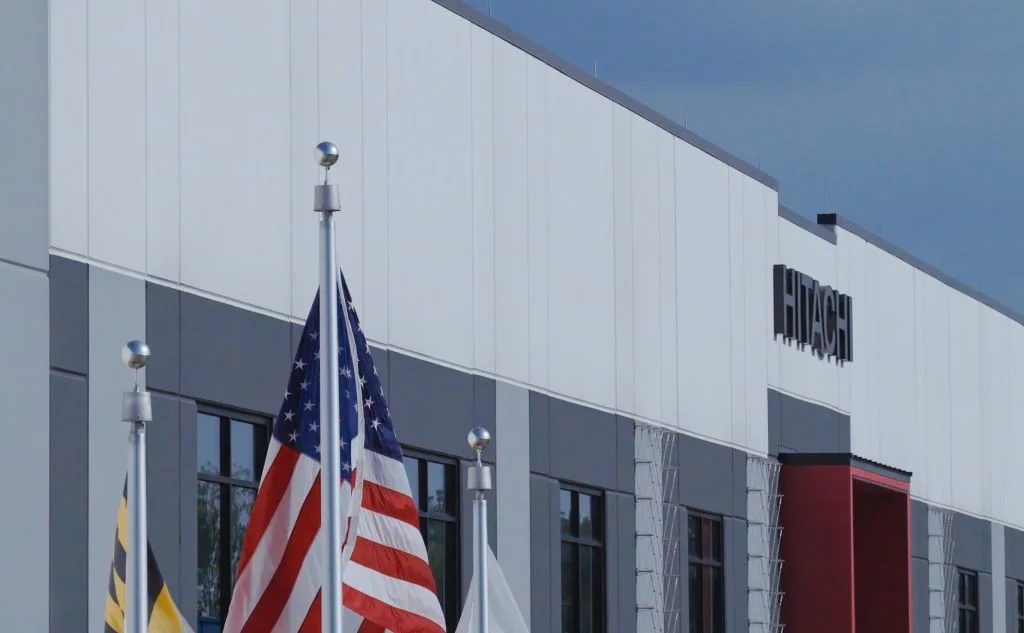
The new Hitachi Rail plant in Hagerstown marks a turning point for American rail manufacturing. Entirely electric and powered by solar energy, the facility embodies a model of carbon neutral production and advanced digital operations.

Hitachi Rail plant and the shift toward low carbon rail manufacturing
More than 4,000 companies in the United States have made climate commitments, yet only a fraction are turning those pledges into measurable results. The new Hitachi Rail plant in Hagerstown, Maryland sets a benchmark for carbon neutral and digitally integrated manufacturing, signaling a significant shift for North American rail mobility.
According to the latest PwC report on the state of corporate decarbonization in the United States, over 4,000 American companies have submitted climate targets to CDP, nine times more than in 2019. Eighty three percent are investing in research on low emission products and one third of future revenues is expected to come from the sustainable transition. However, the report highlights a gap in the transport and logistics sector, where only 46 percent of companies are aligned with direct emission targets and just 54 percent meet supply chain related goals.
PwC identifies electrification and strong environmental governance as the two essential levers to close this gap. In this context, the newly inaugurated Hitachi Rail plant in Hagerstown represents a clear case study, an all electric industrial facility powered by solar energy and designed to eliminate Scope 1 and Scope 2 emissions in rail production.
A 100 million dollar investment and a fully electric plant
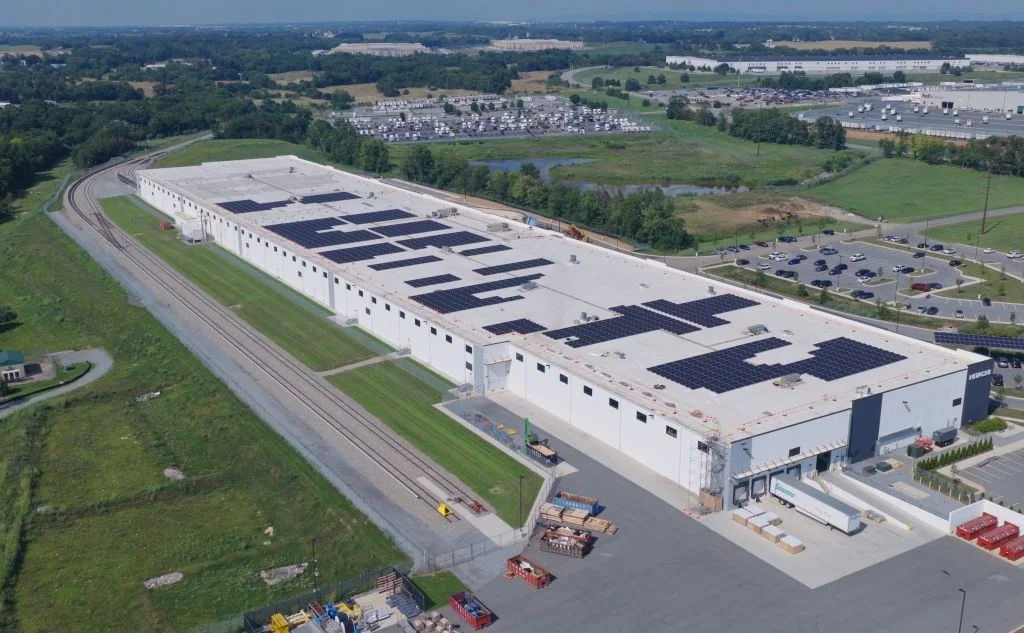
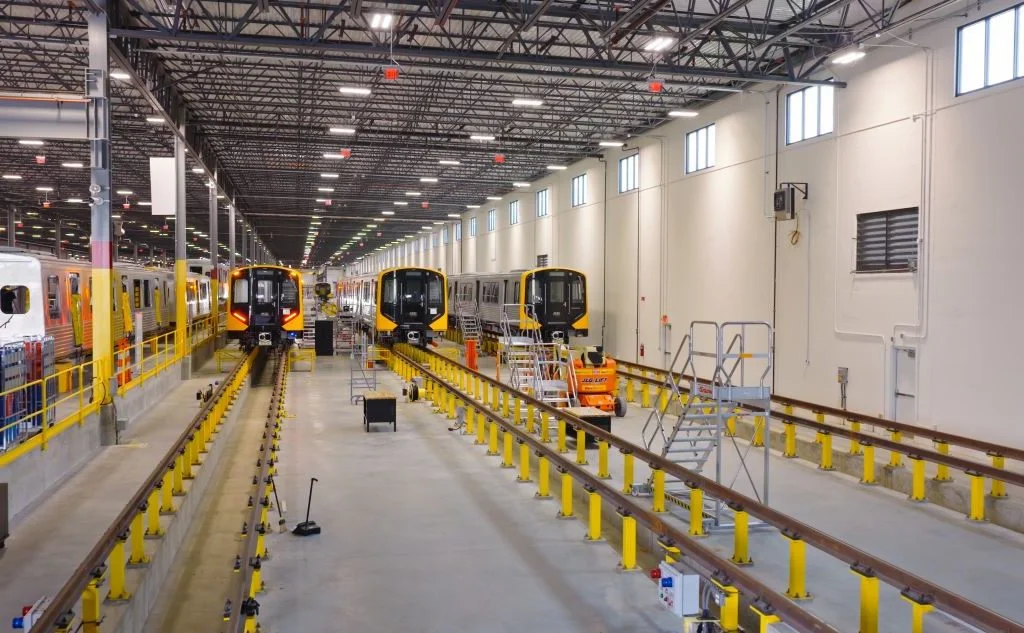
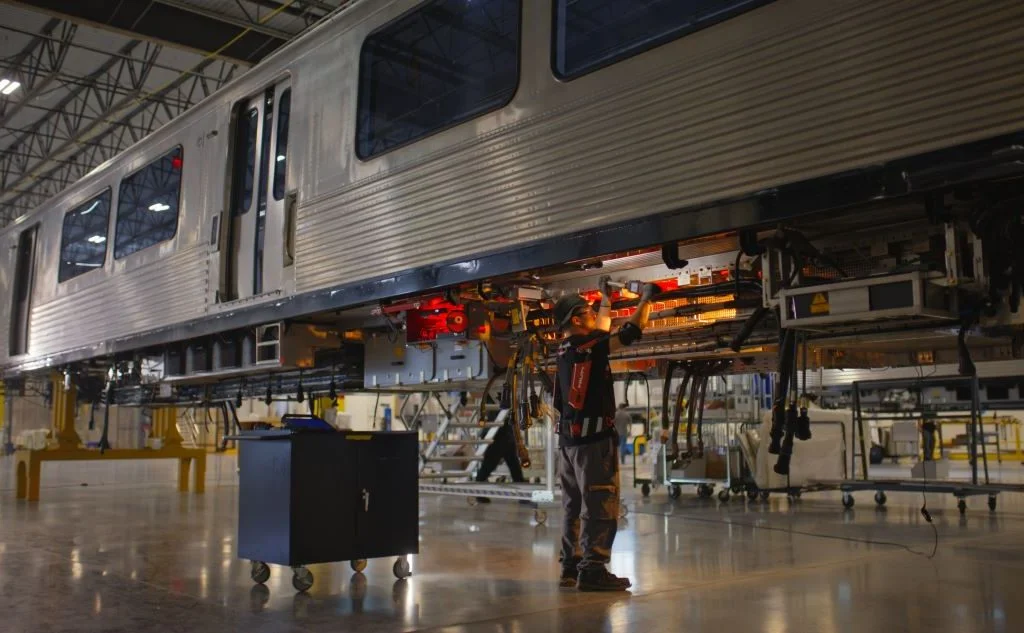
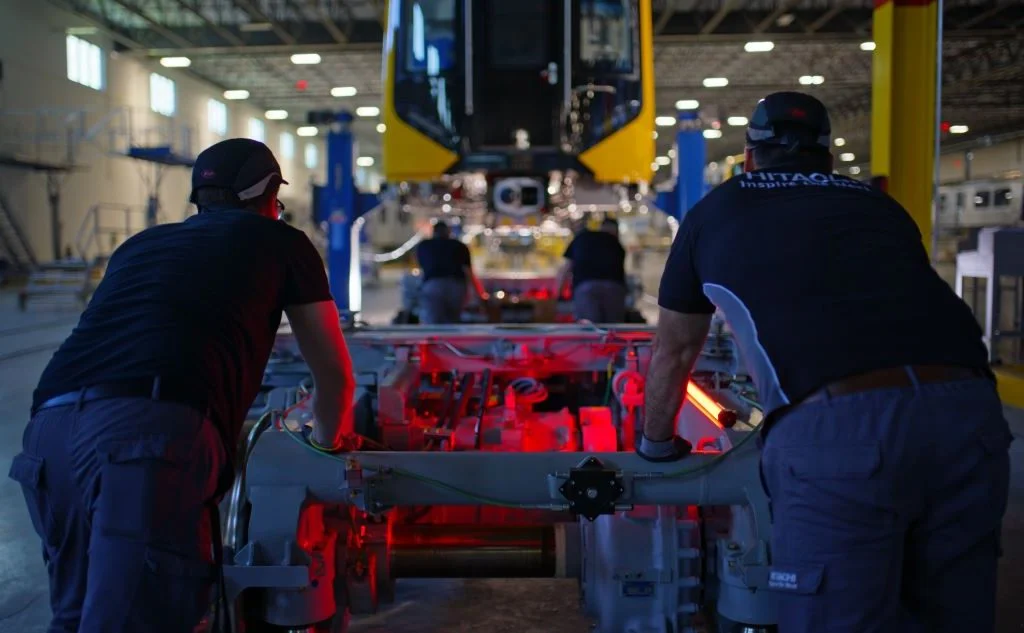
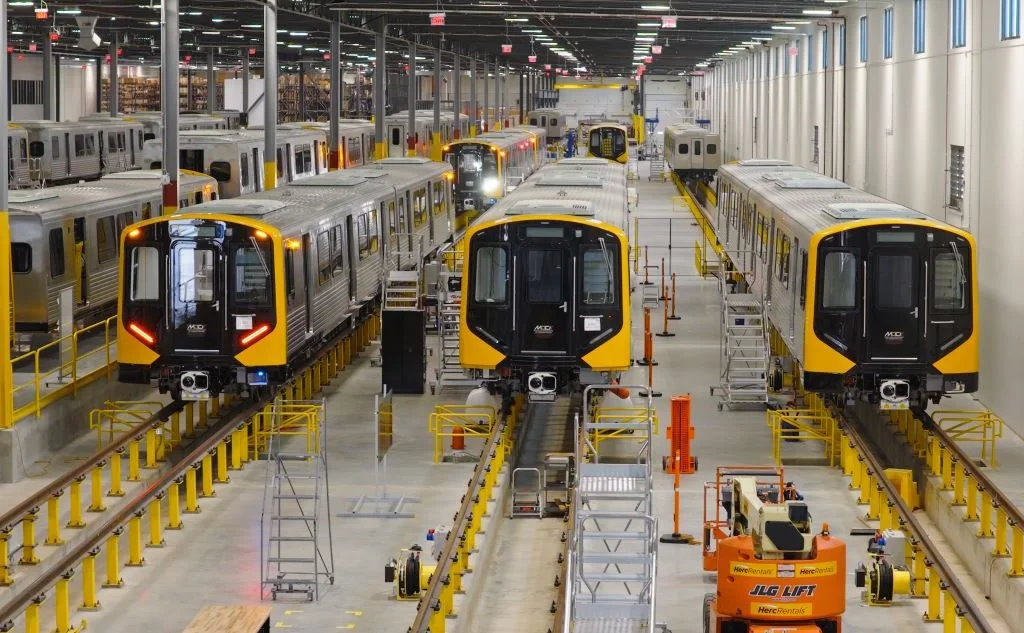
The 100 million dollar investment, including more than 30 million for digitalization, makes the Hitachi Rail plant in Hagerstown the first carbon neutral rail manufacturing site in the United States. The facility produces up to 20 railcars per month for the metro systems of Washington, Baltimore and Philadelphia. It operates through an entirely electric system supported by a 1.8 MW solar array generating 2.3 GWh per year, covering more than 70 percent of the plant’s energy needs. The remaining share is purchased as certified renewable electricity.
The site uses no fossil fuels and features an advanced energy management system capable of monitoring electricity and water consumption in real time to maximize operational efficiency. The company’s stated goal is to achieve full energy self sufficiency in the coming years through expansion of the solar field and the addition of storage systems.
Zero waste and 400 new trees: a circular approach with LEED certification
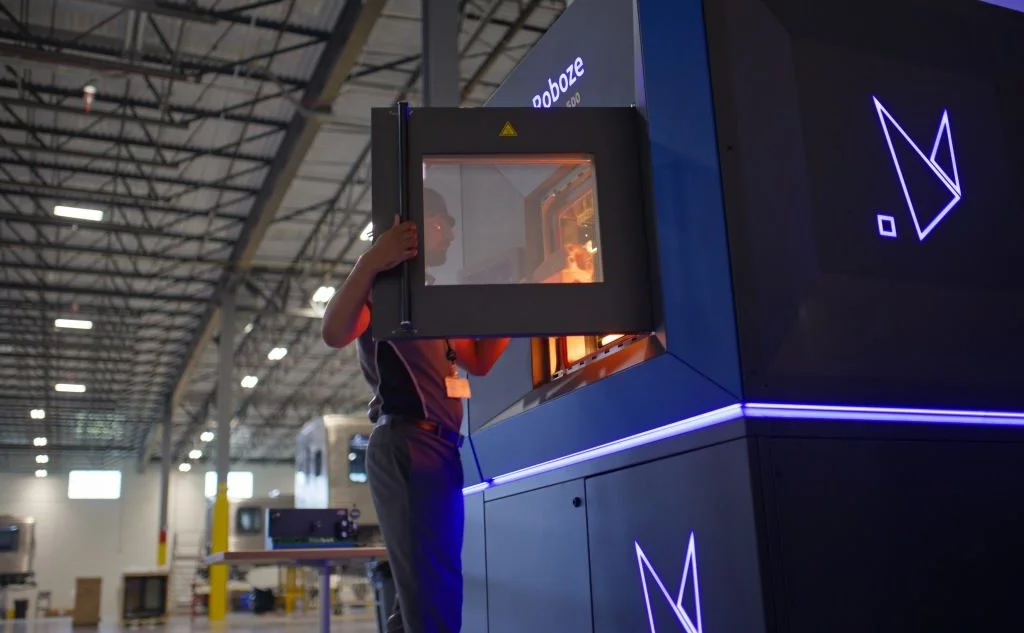
From day one, the Hitachi Rail plant in Hagerstown achieved zero landfill status, sending no waste to disposal. All materials are reused or recycled. The site also integrates 3D printing technologies to produce high performance rail components directly in house. More than 400 trees and plants have been added to the site, absorbing over 4 tons of CO₂ per year and improving air quality and the local microclimate.
The plant is a candidate for LEED certification, which evaluates the sustainability of industrial buildings in terms of efficiency, material selection and occupant well being. This model aligns with PwC findings showing that 67 percent of companies meeting Scope 1 and Scope 2 targets succeed because they invest in electrification programs and circular manufacturing processes.
AI and 5G as drivers of zero emission digital manufacturing
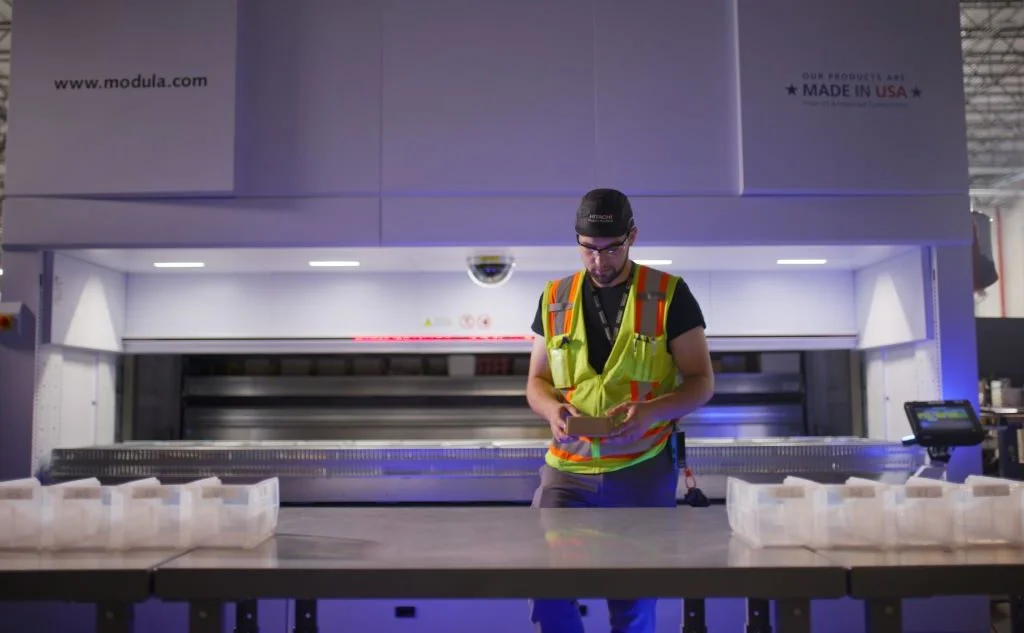
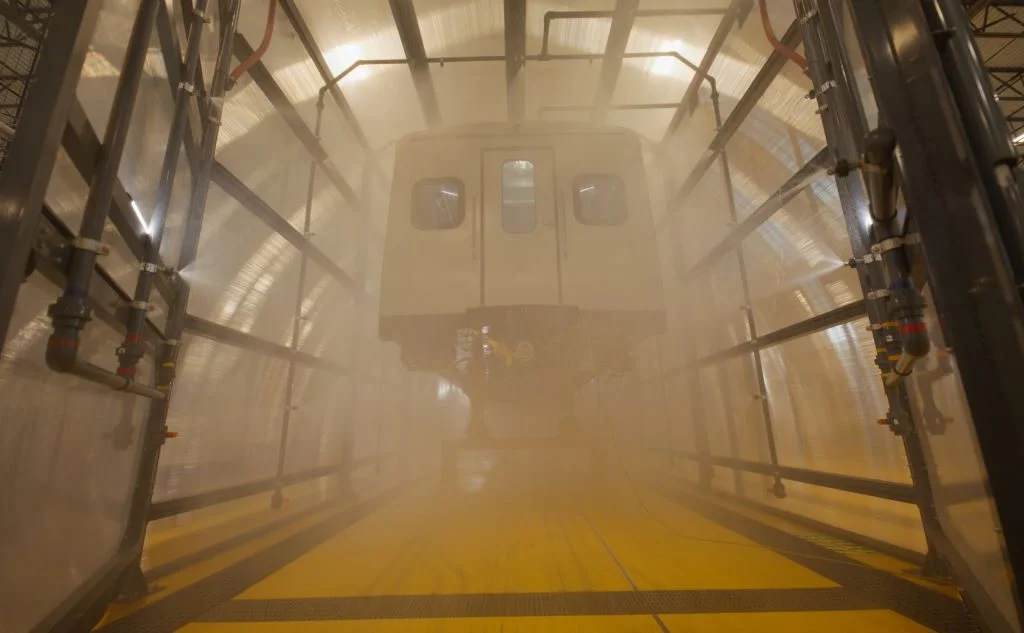
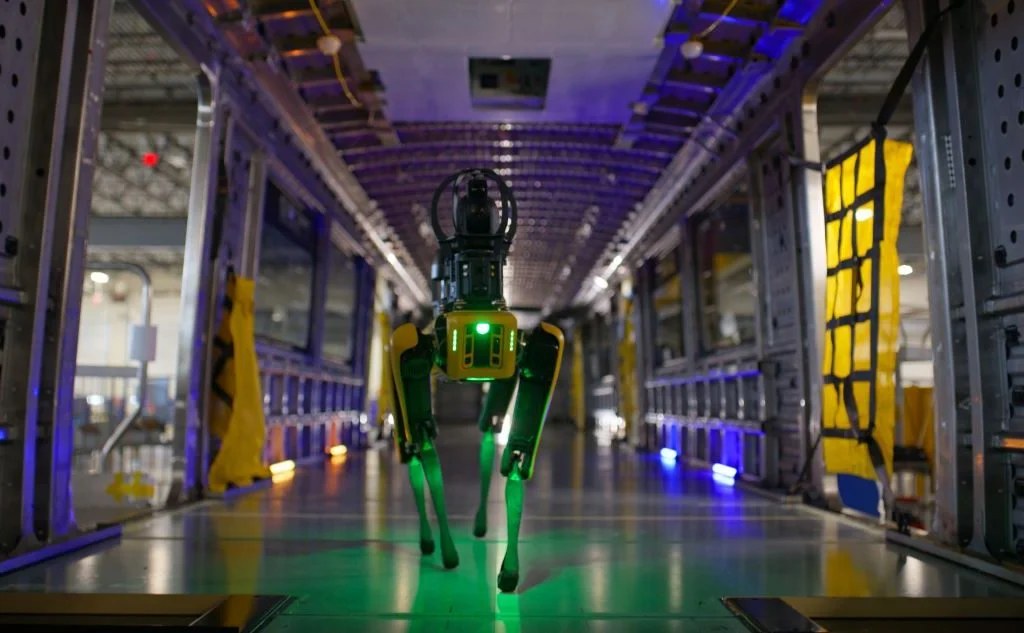
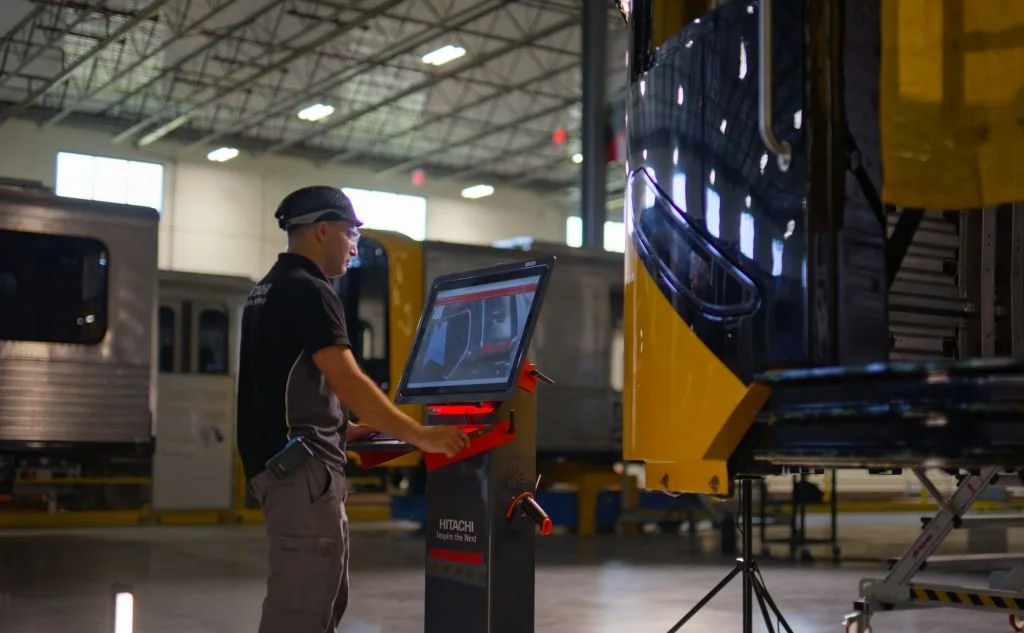
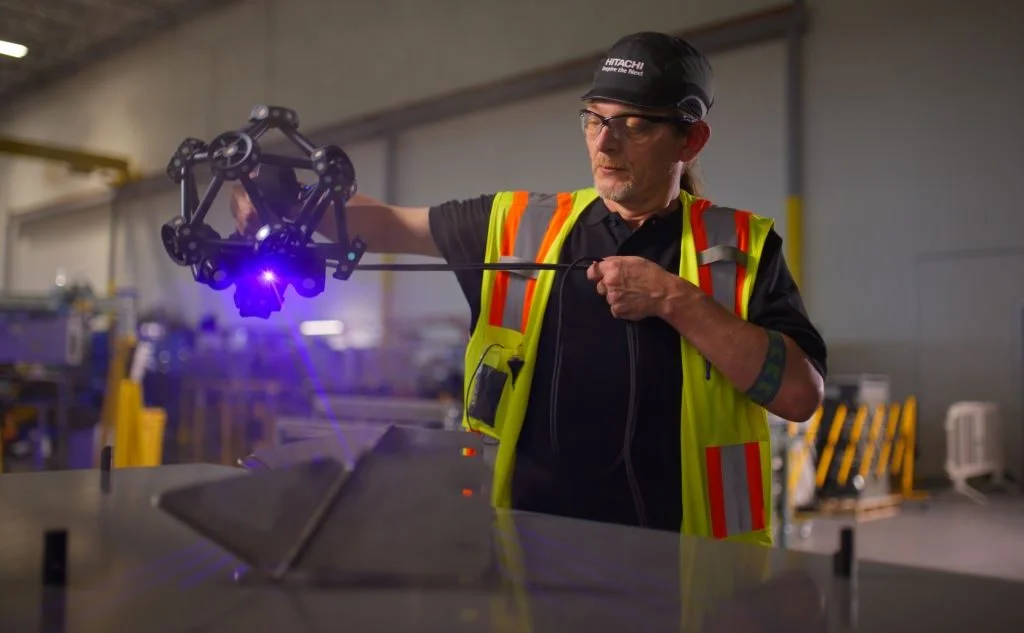
The Hitachi Rail plant in Hagerstown embodies the shift from traditional production to a digital lighthouse model. Its infrastructure includes robots and drones for automated inspection, along with a private 5G network enabling seamless industrial connectivity. These technologies increase productivity while reducing energy waste and logistical delays, in line with what PwC identifies as the next frontier of industrial decarbonization, a combination of digital innovation and automation to cut Scope 3 emissions and improve margins.
“Sustainability means competitiveness,” Hitachi Rail executives say
For Ulderigo Zona, Executive Director Global Safety, Health, Environment and Quality at Hitachi Rail, “sustainability is not limited to emission reduction but represents an evolutionary paradigm in which digitalization becomes an integral part of the production chain.”
Raffaele Castagna, Senior Director Safety, Health, Environment and Quality Excellence, notes that “every new plant is designed with the future in mind, equipped with energy management systems and responsible processes across the entire value chain.”
This approach reflects the direction described in PwC’s “State of Decarbonization 2025,” which identifies governance, sustainable finance and product innovation as the drivers that turn decarbonization into competitive advantage. According to the report, 80 percent of companies with mature governance meet climate targets and achieve revenue growth of up to 25 percent in sustainable products.
460 new jobs and 350 million dollars in annual economic impact
The economic impact of the plant extends well beyond technology. The Hitachi Rail plant in Hagerstown creates 460 direct jobs and supports a total of 1,300 positions across the region, generating an estimated annual economic value of 350 million dollars.
The initiative is part of the “One Hitachi” program, which brings together the Group’s global expertise and includes contributions from European partners and Italian startups. The collaboration between industry and the local community demonstrates how the energy transition can also drive economic development and job creation. PwC’s report links decarbonization to average revenue growth of 6 to 25 percent for companies investing in low impact products and services.
A model for the future of U.S. rail transport
In the United States, where transport remains one of the hardest sectors to decarbonize, the example set by the Hitachi Rail plant in Hagerstown introduces a new industrial paradigm. It proves that full electrification, circular production and advanced digitalization can be successfully applied to large scale rail manufacturing.
In an industry where many companies still lag behind climate targets, the Hagerstown facility stands as a more efficient, competitive and zero emission production model that integrates economic growth with real decarbonization.
In collaboration with Hitachi Rail


