
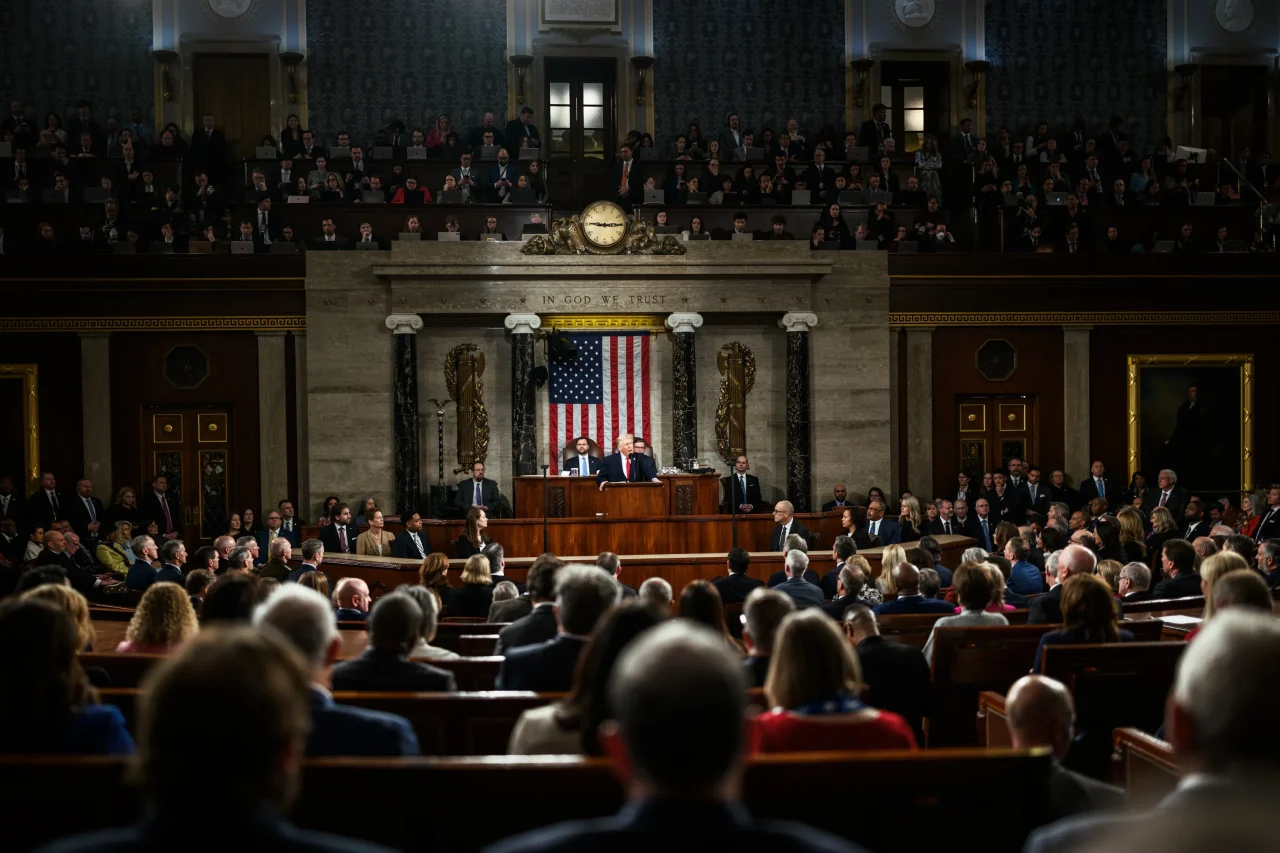

Energy was not the central focus of President Donald Trump’s State of the Union address, but it featured prominently in his economic argument. Federal statistics show electricity and gasoline prices remain elevated despite record oil production and claims of consumer relief.
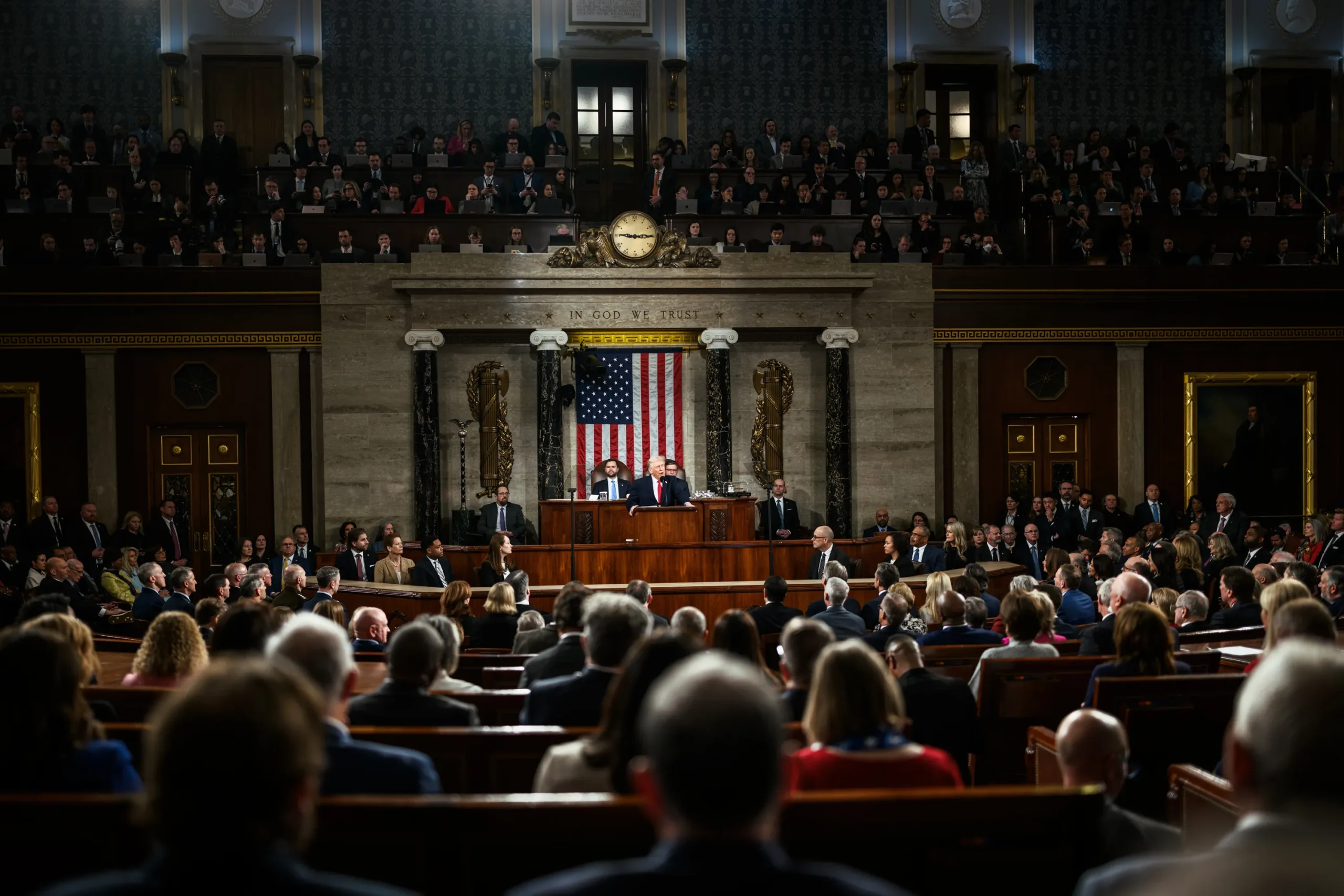
Energy prices were not the centerpiece of President Donald Trump’s State of the Union address this week. Still, it surfaced repeatedly as part of his argument that the economy is strengthening and that costs for American families are moving in the right direction. The president pointed to oil production, gasoline prices, and electricity affordability as evidence.
Federal data tell a more complicated story.
Energy Prices and Household Costs
In his remarks, Trump suggested that energy prices are coming down and that households are beginning to feel relief. A review published by The Guardian found that average household energy bills increased by roughly 6.7% between 2024 and 2025.
Data from the U.S. Energy Information Administration show residential electricity prices continuing to rise year over year. The national average retail electricity price remains well above 2020 levels. In several regions, utilities have filed for additional rate increases tied to grid modernization, storm hardening, and fuel expenses.
Natural gas prices have moved unevenly across the country. Some states saw modest declines during periods of lower wholesale prices, but winter spikes and regional supply constraints kept bills elevated elsewhere. The broader national trend does not show a sustained drop consistent with the administration’s characterization.
Electricity costs, in particular, have been under pressure from capital spending. Transmission buildout, substation upgrades, and interconnection backlogs have required billions in new investment. Those costs are typically recovered through rate cases, meaning they are passed along to monthly bills over time.
The numbers indicate continued upward pressure on household energy expenses rather than a clear reversal.
Gasoline Prices and Record Oil Output
Trump also emphasized domestic production, arguing that expanded drilling is driving down gasoline prices. U.S. crude oil production is near historic highs, hovering around 13 million barrels per day according to federal data. Output levels have recovered from pandemic-era declines and surpassed prior records.
Gasoline pricing, however, remains tied to global crude benchmarks. Brent and West Texas Intermediate prices respond to international supply adjustments, refinery outages, shipping disruptions, and OPEC+ decisions. Domestic production growth does not isolate U.S. consumers from those global forces.
National average gasoline prices have fluctuated over the past year. They remain below the peak levels reached in 2022 but are still sensitive to refinery constraints and seasonal demand shifts. Adjusted for inflation, current prices remain above pre-pandemic norms.
Record production has strengthened U.S. supply capacity. It has not eliminated volatility at the pump.
Data Centers and Electricity Demand
Another energy theme in the speech involved artificial intelligence and the rapid expansion of data centers. Trump argued that large technology companies should pay for the additional generation and transmission infrastructure required to power new facilities.
Reporting from the Los Angeles Times detailed the administration’s push for commitments from major tech firms to shoulder those costs. The idea is framed as shielding residential customers from subsidizing AI-driven demand growth.
Electricity demand in the United States is rising after more than a decade of relative stagnation. The EIA projects sustained load growth through the late 2020s, driven by data centers, industrial electrification, and the reshoring of manufacturing. In certain regional markets, utilities have warned that new data center clusters could require gigawatts of additional capacity and extensive transmission upgrades.
What remains unclear is enforcement. No formal federal rule has been introduced requiring technology firms to fund grid expansion directly. Under the current regulatory structure, utilities typically recover infrastructure costs across their customer base unless state regulators impose targeted cost-allocation mechanisms.
At the same time, several regions facing projected shortfalls have advanced plans for new natural gas generation. Federal financing tools and state approvals are supporting those projects. That approach complicates the argument that increasing fossil production alone will stabilize electricity prices.
Structural Pressures on the Energy System
Three factors are shaping the present landscape: rising capital expenditures, accelerating electricity demand, and exposure to global fuel markets.
Utility capital spending has expanded significantly over the past several years. Transmission lines, grid digitization, wildfire mitigation, and resilience upgrades require long permitting timelines and high upfront costs. Those investments are embedded in regulated rate structures.
Wholesale power prices also remain sensitive to natural gas movements in regions where gas-fired plants set the marginal price. Weather events and extreme heat waves have added additional stress to capacity markets.
Renewable generation has grown quickly, but interconnection delays and transmission bottlenecks limit how rapidly new supply reaches load centers. That mismatch contributes to congestion costs in certain markets.
These structural conditions extend beyond short-term production metrics.
Political Framing and Measured Outcomes
Energy policy appeared in the State of the Union as part of a broader economic defense. The administration linked record oil output and deregulation to consumer savings and long-term affordability.
Federal statistics show that average household energy bills rose over the past year. Electricity prices remain elevated relative to earlier in the decade. Gasoline prices continue to track global crude markets despite strong domestic production.
Energy affordability is influenced by infrastructure investment cycles, fuel volatility, and demand growth. Those measurable trends provide a more grounded assessment of current conditions than the simplified narrative presented during the address.


