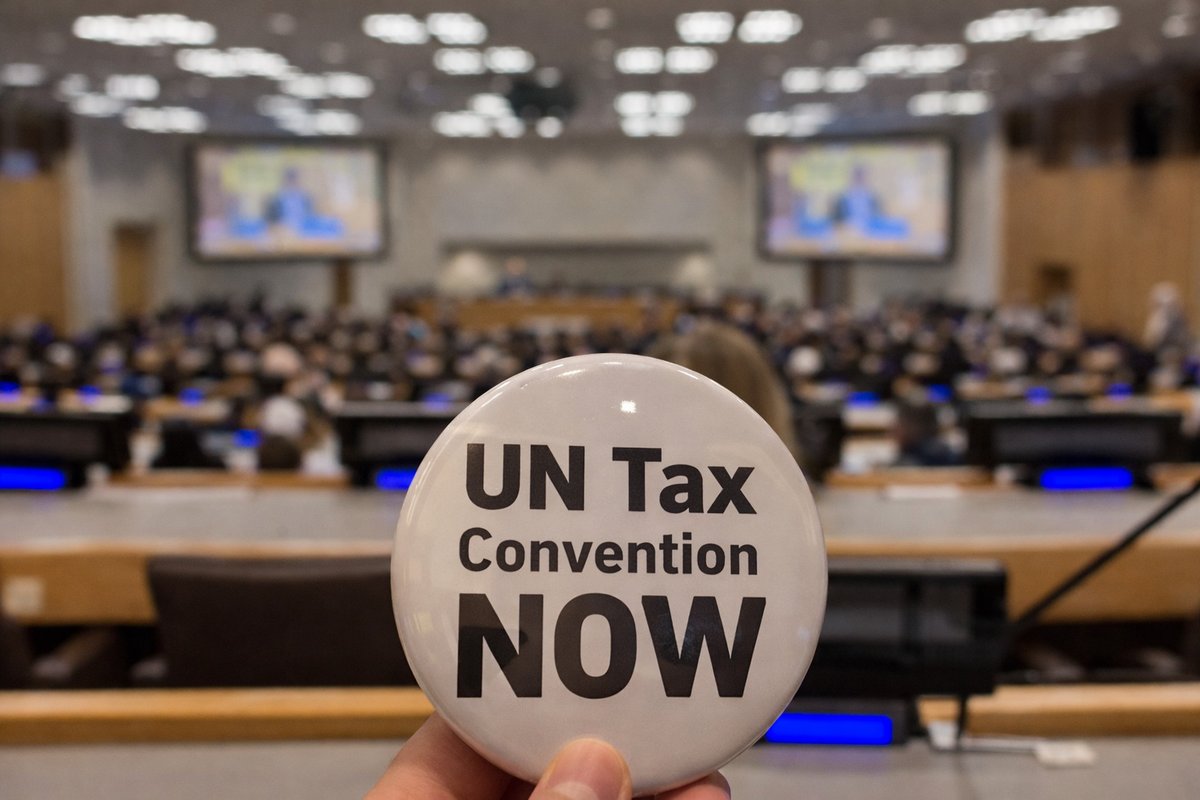
Global taxation negotiations move forward at the United Nations
The international community has a concrete opportunity to establish a truly inclusive and effective system of global taxation, capable of allowing every country, especially developing economies, to mobilize the resources needed for sustainable development. This is the objective of the UN negotiations aimed at creating a global taxation framework through the United Nations Framework Convention on International Tax Cooperation, along with two initial protocols focused on the taxation of income from cross-border services and on the prevention and resolution of tax disputes.
Negotiations resumed on February 2 in New York, with many countries calling for stricter rules designed to make the world’s largest polluters pay an amount proportional to the damage inflicted on the climate and the environment. The urgency is clear, as a growing number of countries are already experiencing the impacts of climate change. At the same time, just 32 companies are estimated to be responsible for more than half of global CO2 emissions linked to fossil fuels.
Why a global taxation system matters
The negotiations are crucial because the push for a United Nations framework convention on international tax cooperation represents a historic shift. It would move the center of gravity of global tax rules away from the OECD, a forum largely composed of wealthy and advanced economies, and toward the United Nations. This, in turn, would give developing economies a stronger voice in shaping global taxation. So far, a major obstacle has been the preference of many high-income countries to keep tax matters within the OECD rather than under UN authority.
The fourth session of the Intergovernmental Negotiating Committee is being held at UN headquarters in New York from February 2 to February 13, 2026. During this round of talks, countries are reviewing submissions on the core negotiating documents. These discussions will guide the preparation of the zero draft and define the pathway toward presenting the final texts to the UN General Assembly in 2027.
For vulnerable states and communities, taxing the companies that drive climate change is an essential prerequisite for achieving climate justice. Some governments already impose taxes on fossil fuel consumption, but only countries that host extractive industries are able to levy direct charges on fossil fuel extraction itself. This is why a global taxation regime is considered necessary. Resistance remains strong in some states, particularly due to concerns about driving away ultra-wealthy individuals. However, supporters argue that if a sufficiently large group of countries acted together and agreed on a minimum tax on wealth, these concerns could be largely mitigated.
The proposal for a global taxation treaty was first advanced by African countries in 2022. Progress has been relatively slow so far, but formal adoption of the convention could take place as early as the end of next year, provided governments are able to agree on the remaining details.
The windfall profits of fossil fuel companies
Globally, an estimated $492 billion in tax revenue is lost each year as multinational corporations and high-net-worth individuals exploit tax havens to pay less than they should, according to calculations by the Tax Justice Network.
Oil and gas companies have accumulated hundreds of billions of dollars in record profits in recent years, largely driven by the surge in energy prices following Russia’s invasion of Ukraine.
According to Eurodad and the Global Alliance for Tax Justice, a 20% surcharge on the profits of the world’s 100 largest fossil fuel producers would have generated more than $1 trillion in the ten years following the signing of the Paris climate agreement in 2015.
What the draft global taxation convention includes
One of the key elements of the draft treaty concerns the fair allocation of taxing rights. The proposed text states that parties to the convention where value is created, markets are located, revenues are generated, or economic activities take place should have the right to tax a share of the income arising from those activities.
The draft also requires these states to take the necessary steps to ensure a fair allocation of taxing rights across all jurisdictions. This includes renegotiating existing tax treaties that are inconsistent with the principles set out in the convention.
The United States steps away from the talks
The United States has withdrawn from the negotiations, a move that significantly limits the overall reach of the treaty, although it does not prevent other countries from moving forward.
The US government has also recently announced its withdrawal from the global climate treaty, the United Nations Framework Convention on Climate Change. Historically, the United States is considered the largest contributor to climate change compared with any other country or region. An analysis by Carbon Brief found that the United States has emitted a total of 542 billion metric tons of carbon dioxide since 1850, through the combustion of fossil fuels, deforestation, and other activities.