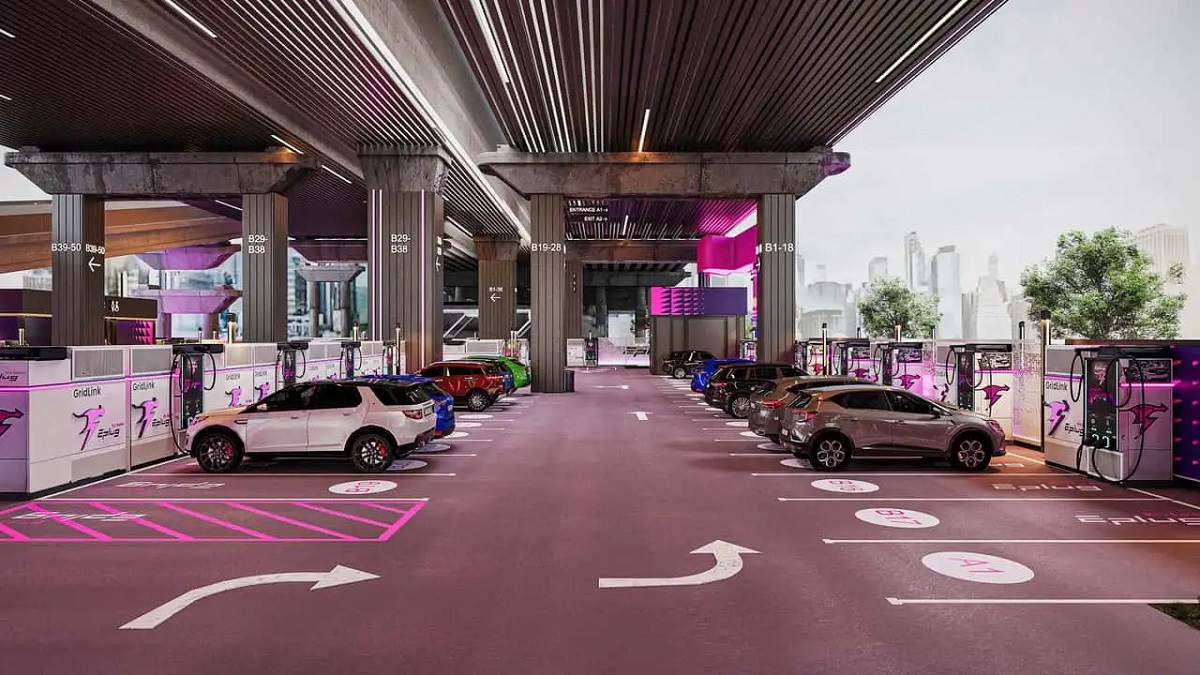
Mega charging station in New York, the largest EV charging hub in the U.S.
New York is on track to become the first Western city to host the most ambitious electric vehicle charging station in America. The XCharge station, scheduled to come online by the second quarter of 2026, will feature 88 parking spaces and 44 charging units, supported by a total of 9.46 MWh of energy storage. The project is being developed by XCharge North America, the U.S. arm of the German company, in partnership with local firm Energy Plus, and will be located in Williamsburg. At full capacity, the hub will be able to recharge up to 126 battery electric vehicles, assuming an average battery size of 75 kWh.
Electric vehicles gain momentum in the U.S. market
In 2025, electric vehicles accounted for around 7.8 percent of total car sales in the United States on an annual basis. During the third quarter of the year, the market reached a record 12 percent share, driven largely by consumers accelerating purchases ahead of the expiration of federal incentives. Despite this growth, the U.S. market still lags behind China and Europe in overall electrification. Projects like the mega charging station in New York, however, point to a potential shift in direction, signaling a more structural approach to charging infrastructure.
GridLink batteries and the role of large-scale energy storage
By leveraging energy storage through GridLink batteries, the project helps ease the pressure that growing electrification places on U.S. roads and power grids. Electricity is drawn during off-peak hours and delivered when demand is highest, reducing grid stress and optimizing costs. GridLink’s proprietary technology and bidirectional energy flow enable decentralized power delivery that strengthens local infrastructure.
The real added value of this hub lies in its energy storage and distribution architecture. Unlike conventional charging stations that draw power directly from the grid in real time, this facility relies on a large-scale battery storage system. Energy is stored in lithium-ion battery containers that act as buffers, accumulating electricity during periods of low demand and releasing it during charging sessions. This approach improves efficiency, resilience, and overall grid stability.
What the mega charging station in New York signals for BEVs in the U.S.
“XCharge North America provides cutting-edge technology and hardware, and we build the infrastructure here with American local labor,” said Moshe Lefkowitz, founder of Energy Plus. “Together, we are not only creating a model that can be replicated in any U.S. city, but also laying the foundation for Eplug, a network designed for real urban life, reliable, familiar, and as easy to use as stopping by your favorite coffee shop.”
Energy Plus’ Eplug model aims to extend the New York experience to other major U.S. cities. Beyond serving everyday drivers, the network will also offer dedicated solutions for fleets, designed for predictable scheduling, fast response times, and high uptime. These services are intended to support both daily operations and long-term electrification planning for commercial fleets.