The world’s largest offshore solar plant reaches grid connection in Shandong
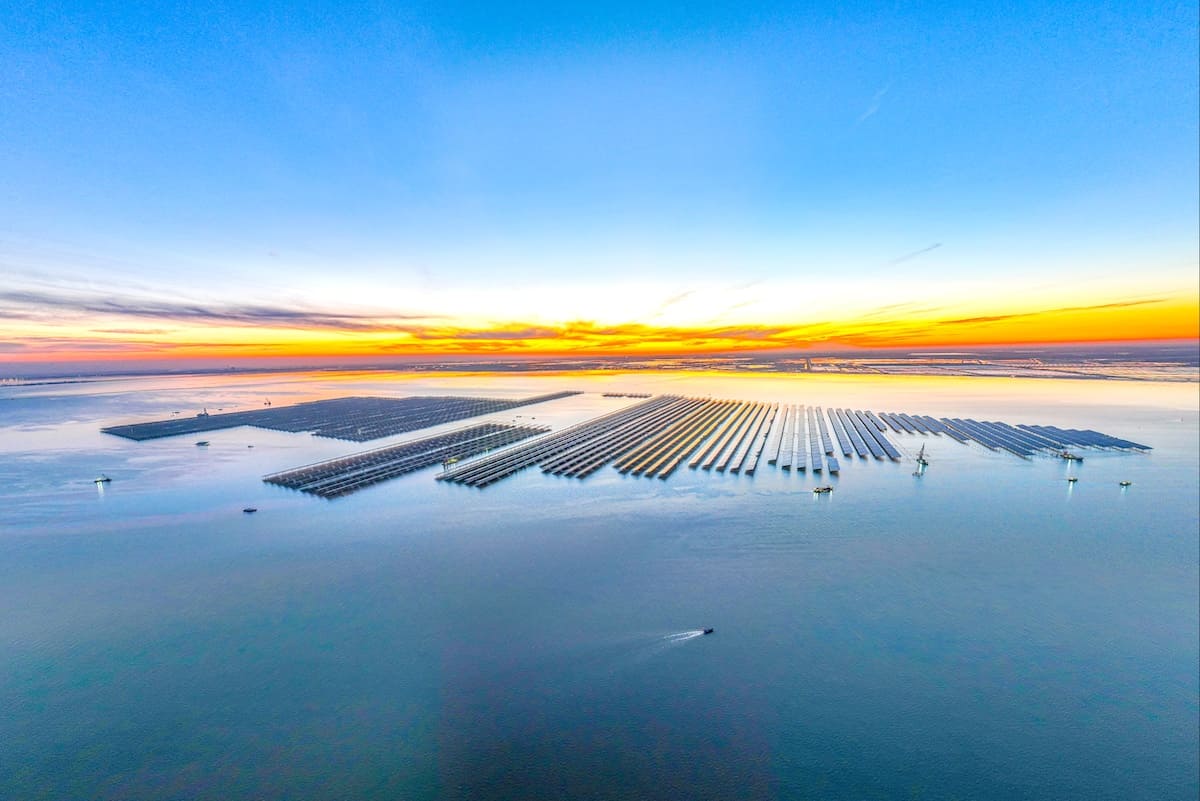
China has once again claimed the global lead in large scale solar. This time, however, the milestone is not a conventional ground mounted installation but a 1 GW offshore solar project, the first of its kind worldwide to reach this capacity at sea.
The Guohua Investment Shandong HG14 Offshore Project, located off the coast of Dongying in eastern Shandong province, in the Yellow Sea, has recently completed grid connection. Local media reported the news, highlighting another major achievement in domestic energy engineering.
A challenging marine environment
Beyond its sheer size, the HG14 offshore solar project had to overcome significant technical challenges linked to harsh environmental conditions. The site lies about eight kilometers from the coast of Laizhou Bay, in Kenli district, an area where winter air temperatures can drop below minus 10 degrees Celsius. Because the bay is shallow, surface water temperatures also fall sharply, leading to the formation of ice sheets.
Winter conditions are further complicated by Siberian winds. These not only place mechanical stress on the structures but also drive saline spray onto equipment, which can freeze on contact and affect plant components.
To understand how the project addressed these pressures, it is useful to look more closely at its design and construction choices.
Inside the Guohua Investment Shandong HG14 offshore project
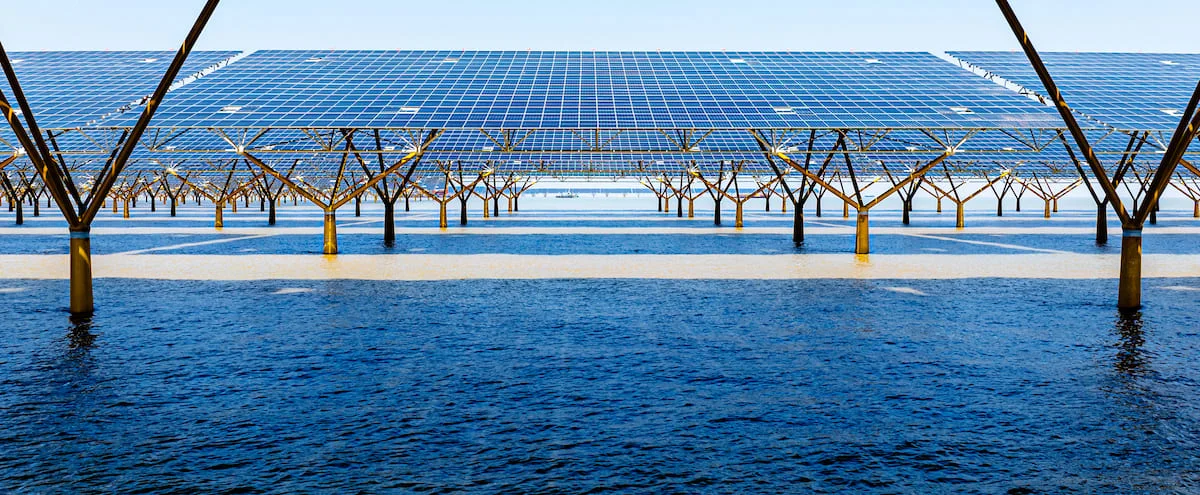
The world’s largest offshore solar plant was developed at the initiative of state owned energy group China Energy Investment Corporation, which invested around 8 billion yuan and assigned execution to its subsidiary Guohua Energy Investment. The offshore platforms hosting the photovoltaic modules were built by China State Construction Engineering Corporation and consist of 930 fixed piers anchored to the seabed with piles.
Technical details remain limited. What is known is that the plant sits eight kilometers offshore in relatively shallow waters and covers more than 12 square kilometers. Seabed depths of between one and four meters allowed engineers to opt for fixed mounting platforms rather than floating systems. According to the designers, this solution improves structural stability given the risks posed by ice formation and strong winds.
Modules, grid connection, and expected output
For the solar modules, the project selected bifacial N type TOPCon Tiger Neo panels supplied by JinkoSolar. These modules feature double glass, semi tempered glass, and POE encapsulation to withstand humidity and salt mist corrosion, making them suitable for prolonged exposure to seawater, high winds, and extreme temperatures. The configuration also improves energy yield.
The modules were further customized for marine conditions. According to the manufacturer, degradation is up to 20 percent lower than standard panels over an 18 month period.
Electricity is transmitted to shore using a 66 kV submarine cable system, deployed for the first time nationally, connected to a new 220 kV onshore substation.
Local media report that once fully operational, the HG14 project will generate around 1.78 million MWh of electricity per year, covering roughly 60 percent of Kenli district’s electricity demand.