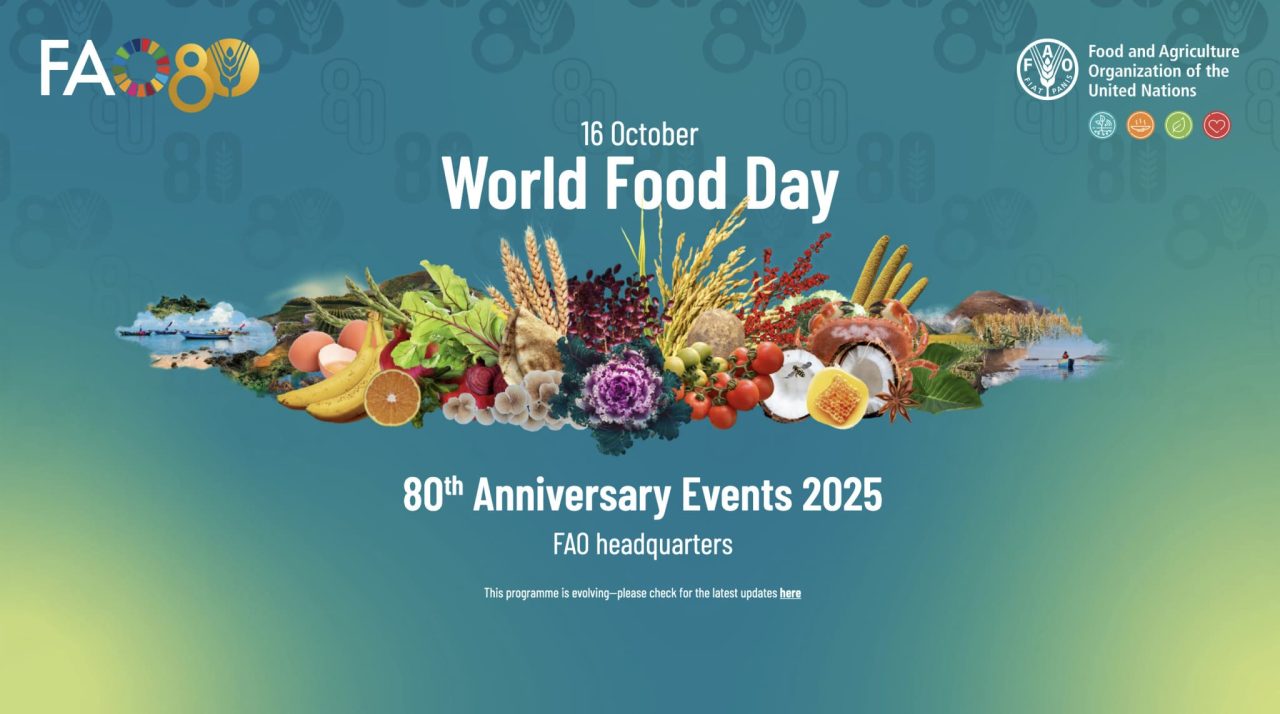
The challenges facing World Food Day 2025
Harvest yields are falling year after year, showing that these are no longer isolated events but structural crises. The consequences go beyond the fields, affecting economies, communities, and the quality of food itself.
Across every sector, the strain is evident. Dairy cows are suffering from heat stress, with summer temperatures reducing milk output by an average of 15%, reaching as high as 30% in southern Italy. Mild winters followed by spring frosts are devastating crops, such as cherry orchards in Puglia, where losses have reached between 70% and 100%. Almond and hazelnut production is facing similar outcomes in other regions.
Other fruits like pears, peaches, and apricots have also seen better seasons. The case of apricots is emblematic: high costs and mounting risks have led many farmers to abandon cultivation altogether. Only olive oil and wine show some positive trends.
Climate change is redrawing the agricultural map
These production collapses have a direct impact on consumers, as food prices soar, a phenomenon now known as climateflation, the inflation driven by climate impacts.
Yet, necessity is driving innovation. In southern regions like Calabria, Puglia, and Sicily, farmers are experimenting with tropical fruit cultivation, including mangoes and avocados, even for export. While this “Made in Italy” tropical produce might please consumers, it signals profound climatic shifts. Climate change, in effect, is reshaping the agricultural geography of the Mediterranean.
Healthy food must be a right for all
This principle is universal, but on World Food Day 2025 it becomes even more pressing: healthy food must be recognized as a right for everyone.
Humanity lives in a state of nutritional imbalance, some die of hunger, while others die from eating too much and too poorly. This stark contrast contradicts the Zero Hunger goal of the UN 2030 Agenda, which still seems far from reach.
Food is essential for survival, but a healthy and balanced diet is essential for well-being. Proper nutrition reduces the risk of chronic diseases such as diabetes, hypertension, cardiovascular conditions, and certain cancers.
The Mediterranean diet, globally recognized as both healthy and sustainable, remains an effective model. Yet many children and teenagers in Italy are moving away from it, drawn instead to fast food and processed meals.
When food becomes a commodity
In 2024, 673 million people worldwide suffered from chronic hunger, while 295 million faced acute food insecurity. At the same time, 1.3 million tons of food were thrown away.
This paradox reflects one of the greatest distortions of our time: food reduced to a mere commodity, a market good subject to overproduction, waste, speculation, and volatile prices.
True sustainability of food systems remains elusive, as they are responsible for about one-third of global greenhouse gas emissions. While Europe has made progress, the widespread use of synthetic chemicals, seed patents favoring monocultures, intensive farming, and limited crop diversity continue to erode biodiversity and worsen environmental impacts globally.
Pope Leo XIV: hunger as a weapon of war
In his address to the FAO on World Food Day 2025, marking the organization’s 80th anniversary, Pope Leo XIV delivered a powerful message:
“Hunger denies human dignity, undermines development, forces countless people to abandon their homes, and obstructs peace among nations.”
Achieving Zero Hunger, he said, will be possible only through “a genuine will to act, not just solemn declarations.” Behind the statistics, the Pope added, are human lives, and their deaths represent “a collective failure.” He condemned the use of hunger as a weapon of war, depriving innocent civilians of their right to life.
The apathy that normalizes hunger
“We speak of solidarity while remaining in a fatal slumber,” warned Pope Leo XIV.
“We cannot aspire to a fairer society if we remain apathetic, treating hunger like background noise we’ve grown accustomed to, an unsolvable problem or someone else’s responsibility. We cannot demand action from others if we do not honor our own commitments. Through our omission, we become complicit in the perpetuation of injustice.”
The educational power of school meals
Food education goes beyond explaining what a balanced diet is or why it’s healthy. Schools, as communities, should teach children the value of food, its origins, environmental footprint, and connection to human health.
Teaching respect for food means teaching citizenship, helping students understand the economic and social implications of their dietary choices. Food is deeply tied to local territories and communities.
Comprehensive food education must also engage families and local institutions. In this process, the school cafeteria plays a vital role, teaching sustainable habits by offering balanced menus, reducing waste, and prioritizing local products.
Awareness grows through dialogue: families should build upon what children learn at school, bringing those lessons to the dinner table.
FAO’s poster contest for World Food Day 2025
To engage young people, the FAO has launched the World Food Day Poster Contest 2025, open to children and teens aged 5 to 19. Participants are invited to create a poster on the theme of food and submit it online by November 7, 2025.