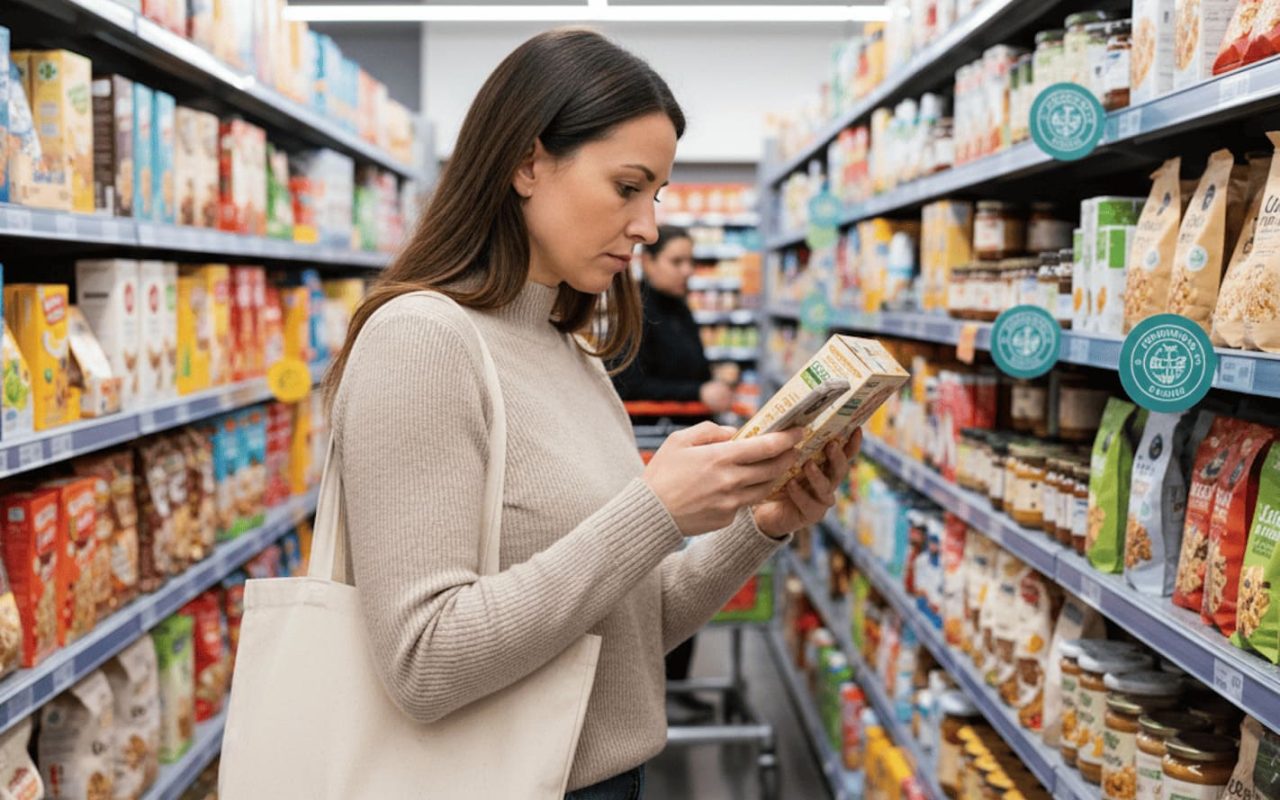
How sustainability labels can positively influence the market
Do food product labels reflect real sustainability standards? Researchers from Utrecht University in Germany have participated in an evaluation of international sustainability standards applied to food labels sold in the Dutch market.
The results have been included in a comprehensive guide published by Milieu Centraal, a consumer-oriented platform that helps people navigate the multitude of labels found on food products.
Sustainability labels as a guide for conscious choices
There are many quality marks, or so-called quality marks, on the market, and not all are equally reliable. Milieu Centraal analyzes the sustainability claims behind these food labels to reveal their true level of transparency, credibility, and environmental or social impact.
For consumers seeking to strengthen their environmental and social awareness, sustainability certifications, identified by their logos, have become more than a decorative detail. They serve as a valuable compass for making informed purchasing decisions.
Thirteen labels that make a difference
Milieu Centraal categorizes various product sectors, not limited to food, based on respect for the environment, animal welfare, human health, and workers’ rights.
René Verburg and Pita Verweij, researchers at Utrecht University’s Copernicus Institute of Sustainable Development, focused particularly on sustainability standards for tropical products such as coffee, tea, cocoa, fruit, and vegetables.
After a year-long assessment, the experts identified thirteen labels that achieved the most ambitious sustainability results, those that truly make a difference for both food and the environment.
The research method
Twenty-two independent experts evaluated around 80 standards across 11 product groups. The 13 labels that ranked highest in sustainability performance are:
ASC, Beter Leven 3 stars, Demeter, EU-biologisch, EKO-NL 3 stars, Fair for Life, Fairtrade, Fair Trade Certified, MSC, Pro Terra, Rainforest Alliance, RSPO, and Sustainable Rice Platform.
Comparing sustainability standards helps identify both progress achieved and challenges still to be faced. As Verweij explains, “this knowledge helps policymakers, retailers, and other stakeholders in the value chain improve practices within global supply chains.”
Why food product labels matter
Food product labels help consumers identify items that meet internationally recognized sustainability standards. In a vast and complex market, they act as a vital shortcut to credible environmental and ethical information.
As the Utrecht researchers emphasize, the most “ambitious” labels direct consumers toward choices that actively support the environment and local communities.
Many sustainability standards, especially those for tropical products, adopt a holistic approach that goes beyond environmental impact alone. For example:
- Biodiversity and soil and water quality: compliance ensures that food production does not harm planetary health.
- Working conditions and fair income: these social sustainability standards guarantee fair compensation for workers, particularly in global supply chains like coffee, tea, cocoa, and tropical fruit.
- Impact on local communities: this means promoting socio-economic development in production areas, contributing to a positive overall impact on territories and societies.