Strategies for more energy-efficient data center cooling
The increasingly massive use of artificial intelligence is making IT infrastructure a predominant factor in global energy demand. This constantly growing hunger does not only depend on server demand. Up to 50% of the energy consumed can indeed be allocated to data center cooling. How can this share be minimized? For a group of researchers at the New York University Tandon School of Engineering, the answer might lie in zeolite, a natural and synthetic mineral widely used today in the petrochemical industry, construction, agriculture, and even cosmetics.
Starting from this mineral, NYU Tandon scientists designed a thermal storage system for use in an open cooling circuit, also envisioning and evaluating a series of implementation configurations, along with geographic and coordination requirements for large-scale adoption. To understand the project, however, it is necessary to take a few steps back.
What are zeolites?
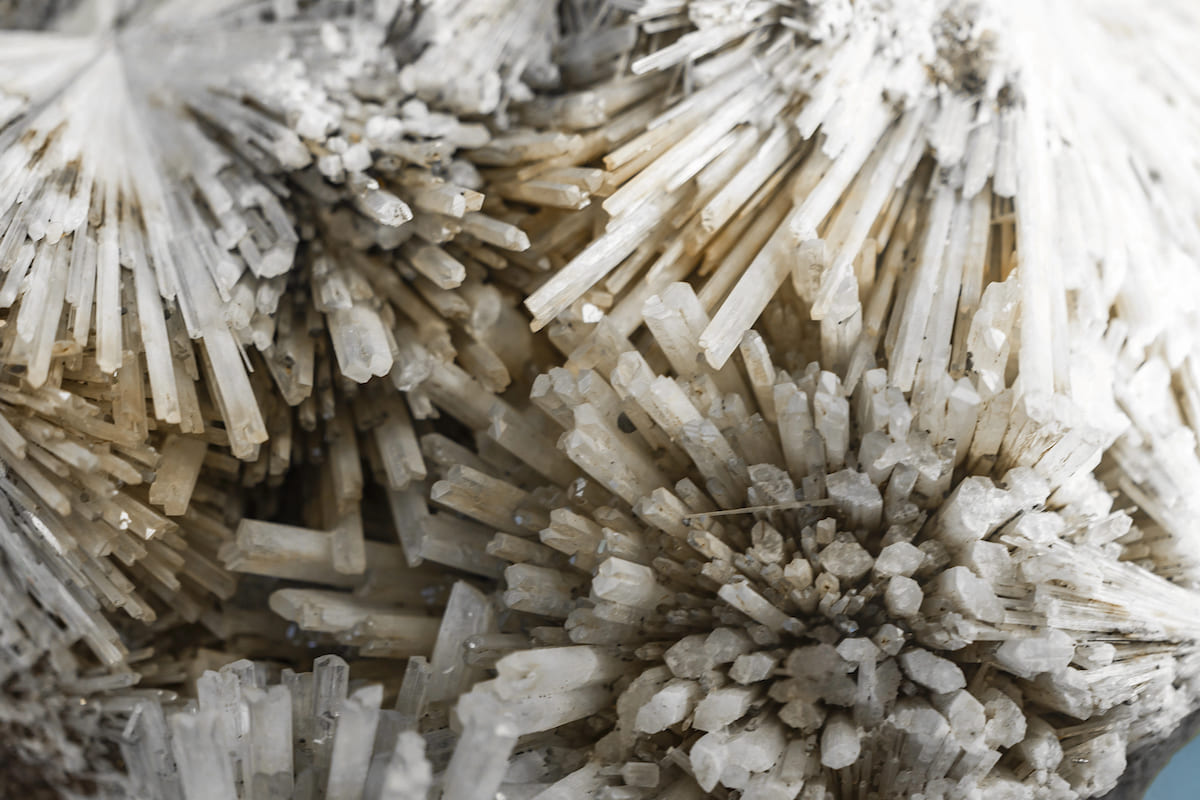
Zeolite, also known as the “boiling stone,” is an aluminosilicate characterized by a highly porous crystalline structure, whose cavities can be filled with water.
As observed by the first mineralogist who named them, this mineral can retain water like a sponge and release it after heating at high temperatures. A moderately inexpensive material, zeolites are currently used to create efficient molecular sieves in the petrochemical field, to optimize seawater desalination, to combat soil aridity, and even to create detergents for washing machines and dishwashers suitable for particularly hard water. And as associate professor Pavel Kots, co-author of the study published in ChemRxiv, explains, also to create useful thermal batteries.
Zeolite-based thermal “sponges”
In detail, the team modeled a zeolite-based thermal storage device as a new cooling tool for data centers, replacing more traditional chillers. The system would operate through two temporally and spatially decoupled phases:
- the charging phase or desorption, where the zeolite is exposed to heat;
- the discharging phase or adsorption, where the zeolite is exposed to water vapor.
The idea is to utilize low- to medium-temperature waste heat (<200 °C) from industrial plants to heat the zeolite and “dry” it. The thermal battery charged in this phase would then be transported to the data center to reverse the process. In an industrial plant, such as a chemical plant or a refinery, waste heat is used to “charge” the thermal battery by drying the zeolite. The evaporated water is condensed and recovered. The charged zeolite is then transported, via truck or rail, to a data center.
Here, heat dissipated by servers or absorbed in refrigerating fluids would be used to evaporate water. The water vapor, in turn, would be absorbed by the dried zeolite, without the need for an electric compressor. The resulting heat of adsorption would be expelled at a higher temperature, making cooling towers much more efficient compared to a standard compression cycle. And the cycle could begin again.
Advantages of this approach for energy-efficient data center cooling
Using detailed thermodynamic modeling, the NYU team compared their proposed system with a conventional configuration (chiller cooling). The result? Across a wide range of operating conditions, the team estimated that the proposed approach can reduce the total electricity consumption for data center cooling by up to 86%. In terms of energy efficiency, this translates to a 12% improvement in power usage effectiveness (PUE).
It’s worth noting: the energy spent on transporting the zeolite back and forth must also be considered in the final calculation. The team’s geospatial analysis of current data center and industrial plant locations shows that the two are usually quite “close” (average distance of 57 km). Consequently, even considering the energy requirements for transportation, for example via an electric truck, system-level electricity savings could be up to 45% in many scenarios.
Attention to the water footprint
The issue appears more complex from a water perspective. The combined system would consume a greater overall quantity of water, approximately 15-25% more. However, researchers point out that water released during the zeolite charging process can be reused on-site, partially closing the cycle. And that the analysis did not consider variations in indirect water use, i.e., those associated with electricity production for the plant, which could partially or totally offset increases in direct water use, depending on the composition of the electricity supply.
Read the full research Zeolite based thermal energy storage to leverage industrial waste heat for data center cooling, published in ChemRxiv (2026).