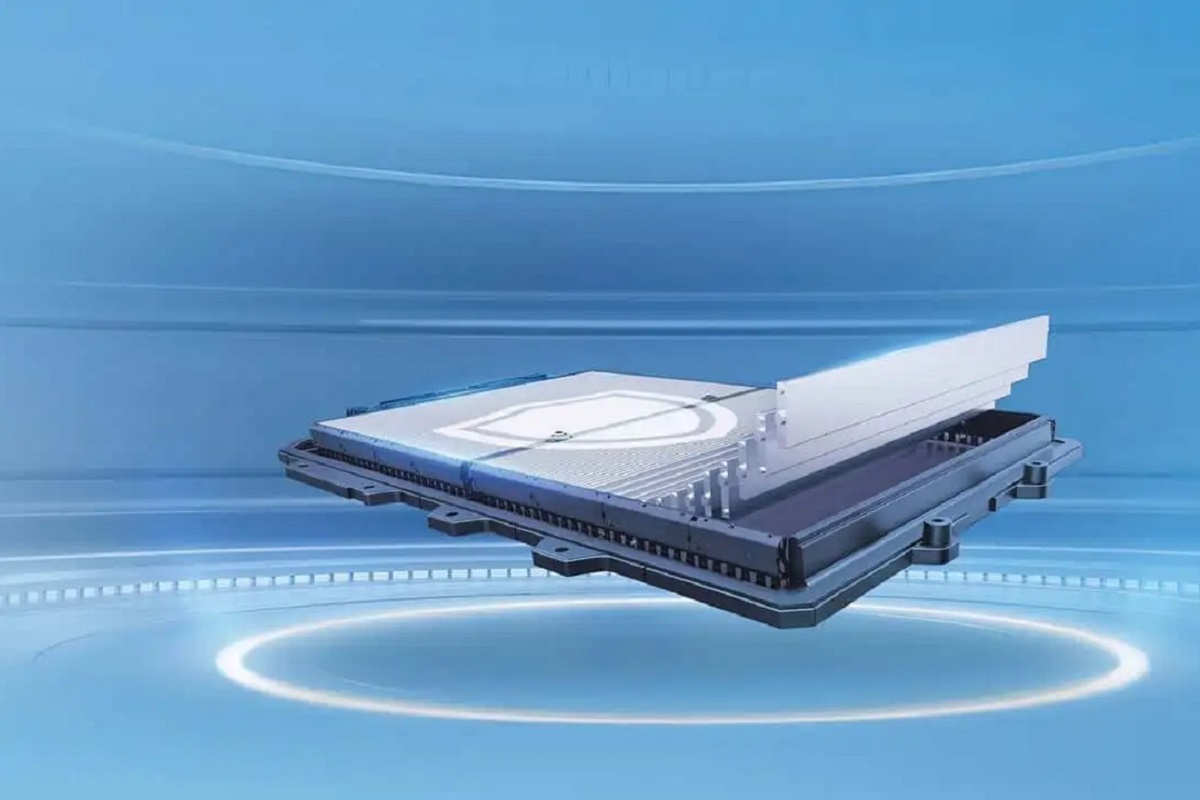
Solid-state battery, BYD is getting closer
The race to commercialize the solid-state battery is accelerating, and BYD wants to be among the first across the finish line. The Chinese giant, which manufactures both electric vehicles and their batteries, is targeting 2027 for the debut of its first vehicle equipped with the technology.
Stella Li, BYD’s executive vice president, outlined the timeline in an interview with Carwow, saying the company plans to showcase its first solid-state battery-powered vehicle in 2027.
The initial rollout will not represent mass production. Instead, BYD is expected to deploy a limited number of vehicles to demonstrate the potential of the new energy storage technology. The company is working on a sulfide-based solid-state battery, which its roadmap calls for reaching technological maturity by 2030, paving the way for broader industrial-scale production.
What we know about BYD’s solid-state battery
BYD is competing for leadership in the field with fellow Chinese battery giant CATL, which focuses on battery technology rather than manufacturing vehicles. But the race extends well beyond the two companies. Automakers including Toyota, Mercedes-Benz, Nissan, Changan and Geely are also developing solid-state battery technologies.
For now, however, BYD’s announcement leaves several major questions unanswered. The company has not disclosed key specifications such as battery capacity, driving range or charging speed. Even so, the timeline is likely to attract significant attention from both investors and the global auto industry.
FinDreams, BYD’s battery division, has been developing inorganic sulfide-based solid electrolytes, using materials including lithium, phosphorus, sulfur and chlorine. The work has already produced two prototype cells, rated at 20 Ah and 60 Ah, as the company works toward an energy density approaching 400 Wh/kg.
With 2027 rapidly approaching, the next few years should provide a clearer picture of how much of that laboratory performance BYD can translate into a commercially viable vehicle.
Why solid-state batteries matter
Solid-state technology promises several advantages that could help accelerate electric vehicle adoption, particularly in Europe and the United States, where EV penetration remains less advanced than in China.
Compared with conventional lithium-ion batteries using liquid electrolytes, which currently power most battery-electric and plug-in hybrid vehicles, solid-state batteries have the potential to deliver higher energy density. That could allow battery packs to become smaller and lighter while storing the same amount of energy. Solid electrolytes could also reduce some fire risks associated with conventional battery designs.
For drivers, one of the most significant potential benefits is straightforward: greater driving range from a smaller and lighter battery pack. If manufacturers can deliver that improvement at competitive costs, solid-state technology could address one of the factors that continues to shape consumer decisions around electric vehicles.
Mass production, however, remains some distance away. Conventional lithium-ion batteries are also unlikely to disappear when solid-state systems reach the market.
Lian Yubo, BYD’s chief scientist, has said liquid-electrolyte lithium-ion batteries and solid-state systems could coexist for at least 15 to 20 years, suggesting the transition will be gradual rather than immediate.
What to expect from BYD in 2027
Based on the company’s current plans, the 2027 debut will take place on a relatively small scale, involving around 1,000 vehicles. The technology is expected to appear first in higher-end models, potentially including vehicles from Denza, BYD’s premium brand.
Full-scale production remains targeted for 2030. Cost is one of the biggest hurdles. Specialized sulfide precursors used in solid-state batteries can still cost many times more than conventional materials used in liquid electrolytes, making large-scale manufacturing economically challenging.
BYD is not developing the technology alone. The company is participating in China’s All-Solid-State Battery Collaborative Innovation Platform, or CASIP, a government-backed initiative bringing together battery manufacturers, automakers and research institutions.
The platform is linked to a state research and development program reportedly worth around $830 million, underscoring how strategically important solid-state battery technology has become in China’s push to maintain its position at the center of the global battery industry.