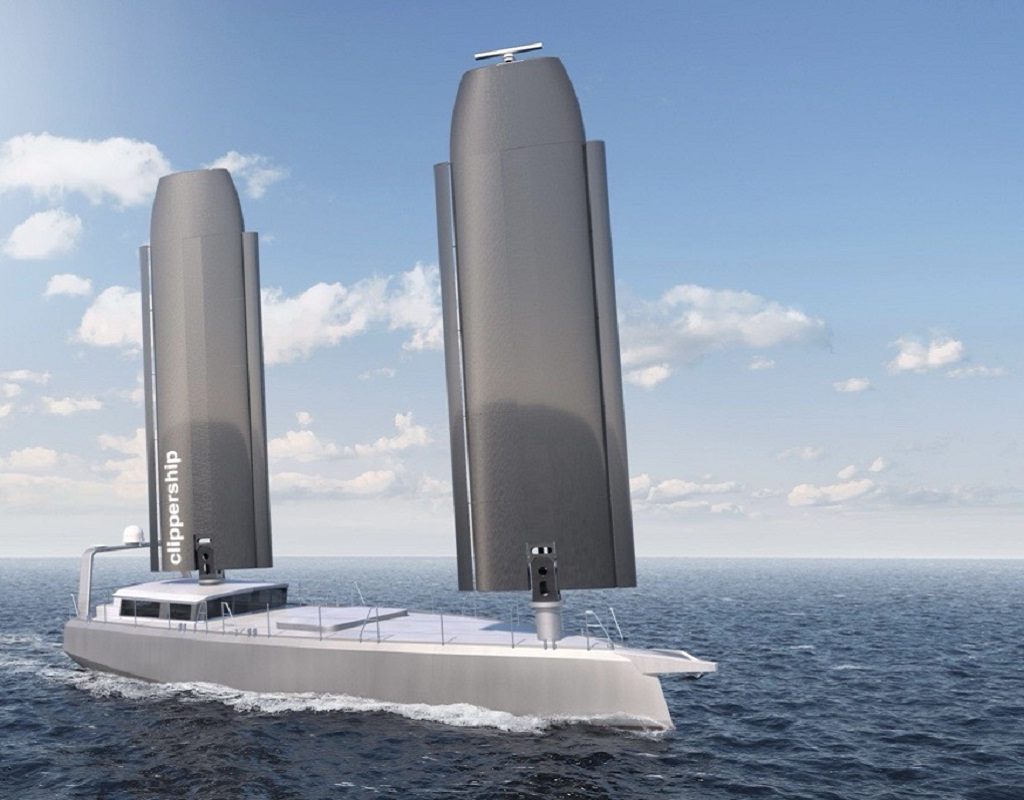
Sailing cargo ship powered by wind, the KM Yachtbuilder project
Maritime vessels are becoming increasingly futuristic as the shipping industry looks for concrete ways to reduce or even eliminate its environmental footprint. From the Dutch shipyards of KM Yachtbuilder comes a 24 meter sailing cargo ship with near zero emissions, designed to operate on regional European routes as well as international crossings, including transatlantic voyages.
The technological core of the vessel, designed by the US based firm Clippership, lies in its two rigid, foldable wings. These structures are engineered to provide primary propulsion by harnessing wind energy, making wind the main driving force rather than a supplementary one.
This innovative ship represents a significant step forward in maritime decarbonization. It introduces a new class of small wind powered cargo vessels designed to serve both regional and transoceanic routes with dramatically lower emissions, accelerating the market entry of practical wind shipping solutions.
What are Wind Assisted Propulsion Systems
The rigid wings belong to the category of wind assisted propulsion systems, commonly referred to as WAPS. These systems reduce fossil fuel consumption by limiting the use of auxiliary engines to operational phases where wind propulsion alone is not sufficient.
WAPS rely on aerodynamic devices installed on the deck that generate thrust when interacting with wind. This additional force allows vessels to reduce engine power demand, cut fuel consumption, whether fossil or alternative, and significantly lower CO2 emissions and other pollutants.
These systems are managed through automated controls, often integrated with route optimization software that factors in wind conditions, weather forecasts, and the vessel’s operational profile. The ship is also designed to operate autonomously on the open sea, using advanced route planning and decision making algorithms that combine meteorological and oceanographic data.
Toward a new model of maritime cargo
Despite its compact size of 24 meters, the vessel is engineered for professional cargo operations. Its climate controlled hold can accommodate up to 75 Euro-pallets, the standard European unit for goods handling and logistics, making it suitable for transporting high value cargo, sensitive goods, or supplies destined for islands and secondary ports.
The launch is scheduled for the end of 2026, followed by the start of commercial operations on transoceanic pilot routes. These initial voyages will serve as a real world testbed to validate the operational model and the performance of wind propulsion systems under commercial conditions.
Flying the Maltese flag, the ship is designed to fully comply with international safety and commercial navigation regulations. This regulatory alignment is a key objective for Clippership, which aims to demonstrate that modern sailing cargo ships can integrate into existing classification frameworks, addressing one of the main barriers to the broader adoption of wind powered shipping.