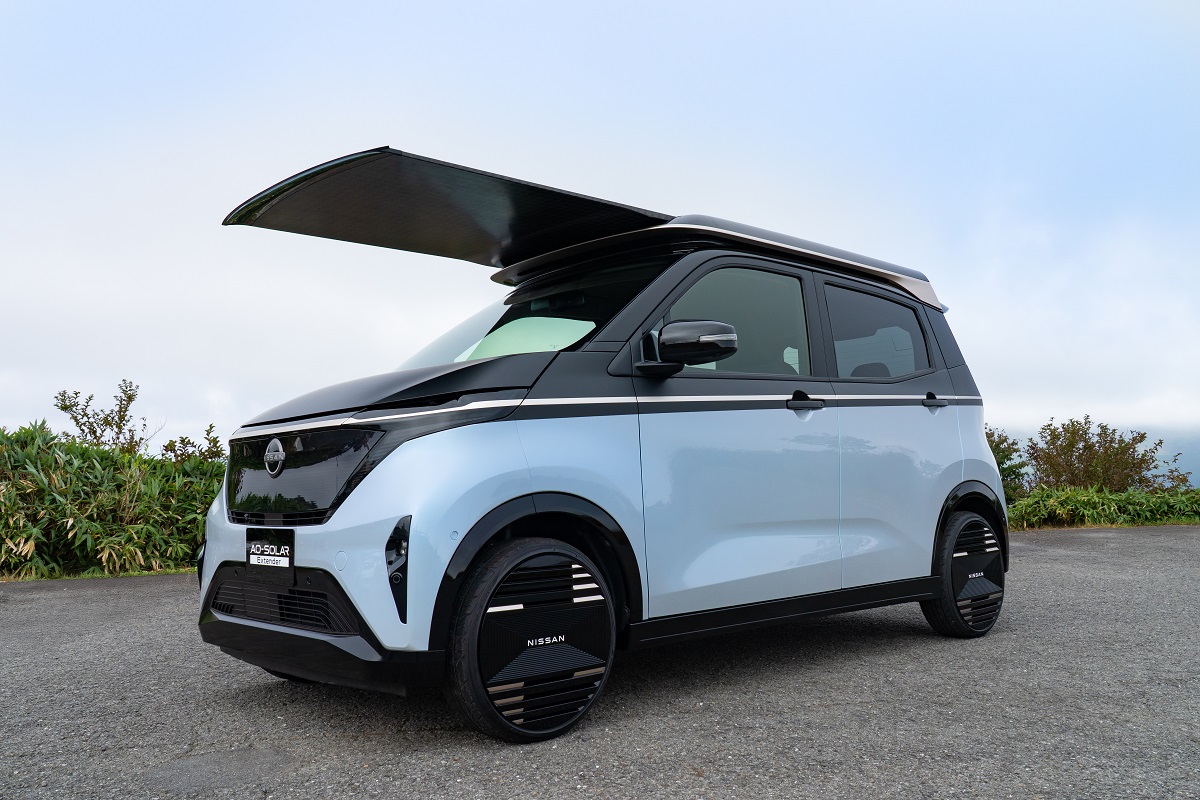
Nissan unveils its solar-powered electric car
A fully electric car equipped with solar panels. Rechargeable through sunlight and capable of delivering up to 3,000 kilometers of free driving per year. This is Nissan’s latest innovation, showcased at the upcoming Tokyo Mobility Show. The model, named Ao-Solar Extender, is an add-on system designed for Nissan Sakura, Japan’s best-selling electric mini vehicle.
How Nissan’s solar car works
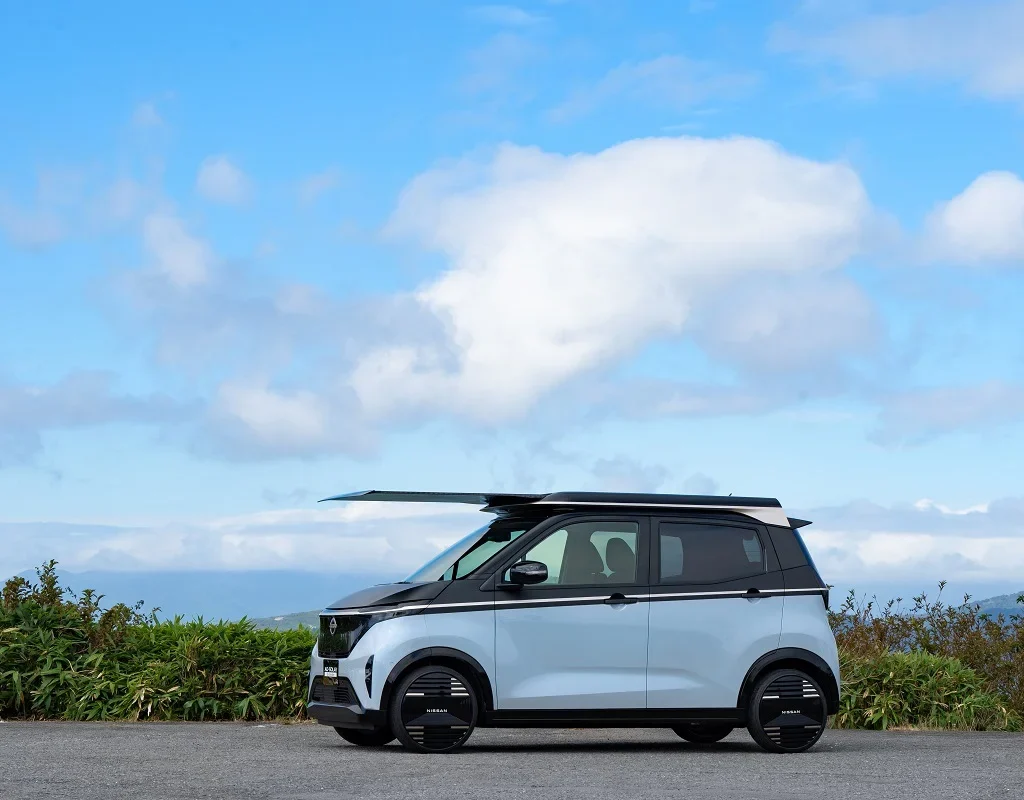
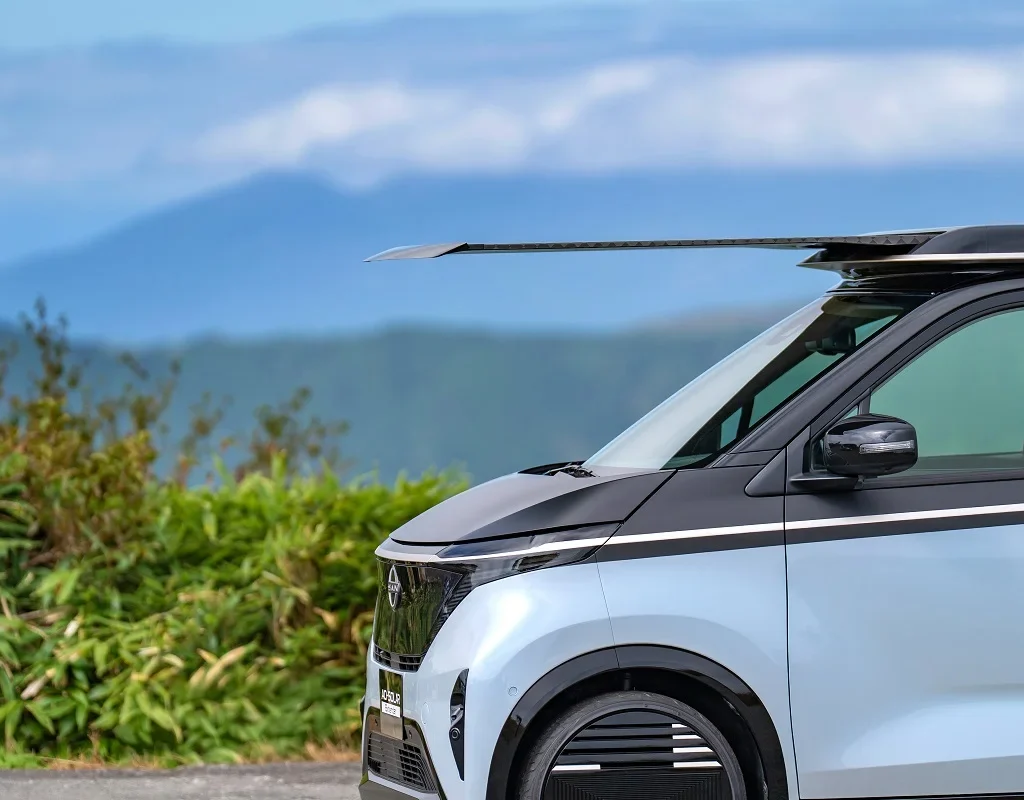
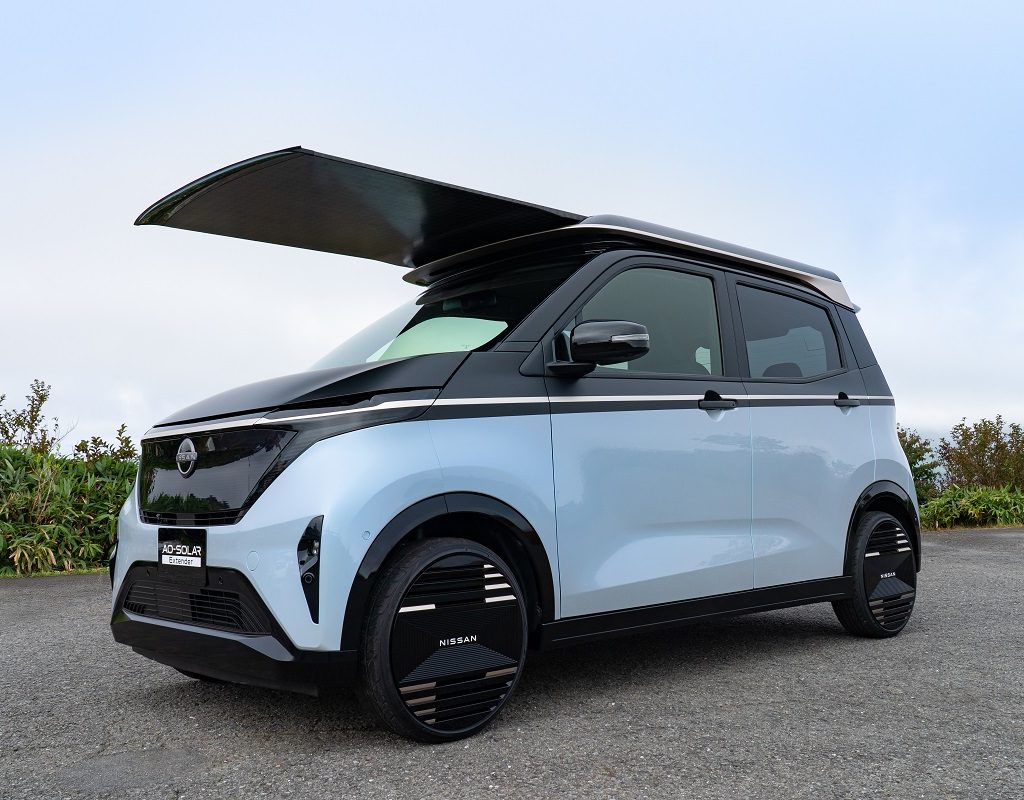
The compact BEV (battery electric vehicle) integrates advanced photovoltaic technology. When parked, the solar roof can be expanded to reveal an additional panel that boosts energy generation capacity by over 60%, bringing total peak power to around 500 watts.
According to Nissan, the car with solar panels can deliver up to 3,000 kilometers of annual range, virtually eliminating the need for grid charging for short daily commutes, such as city travel or commuting to work.
Integrating solar technology into the Sakura exemplifies Nissan’s commitment to innovative and sustainable mobility solutions in Japan’s highly competitive Kei vehicle segment. “We want to create a car that needs neither gasoline nor grid charging,” said Junichi Inoue, head of the project.
The Ao-Solar Extender mounted on the roof can charge the vehicle both while driving and when stationary. The fixed panel captures solar energy in motion, while the extendable module can be deployed during parking, generating extra power and shading the interior to keep cabin temperatures lower.
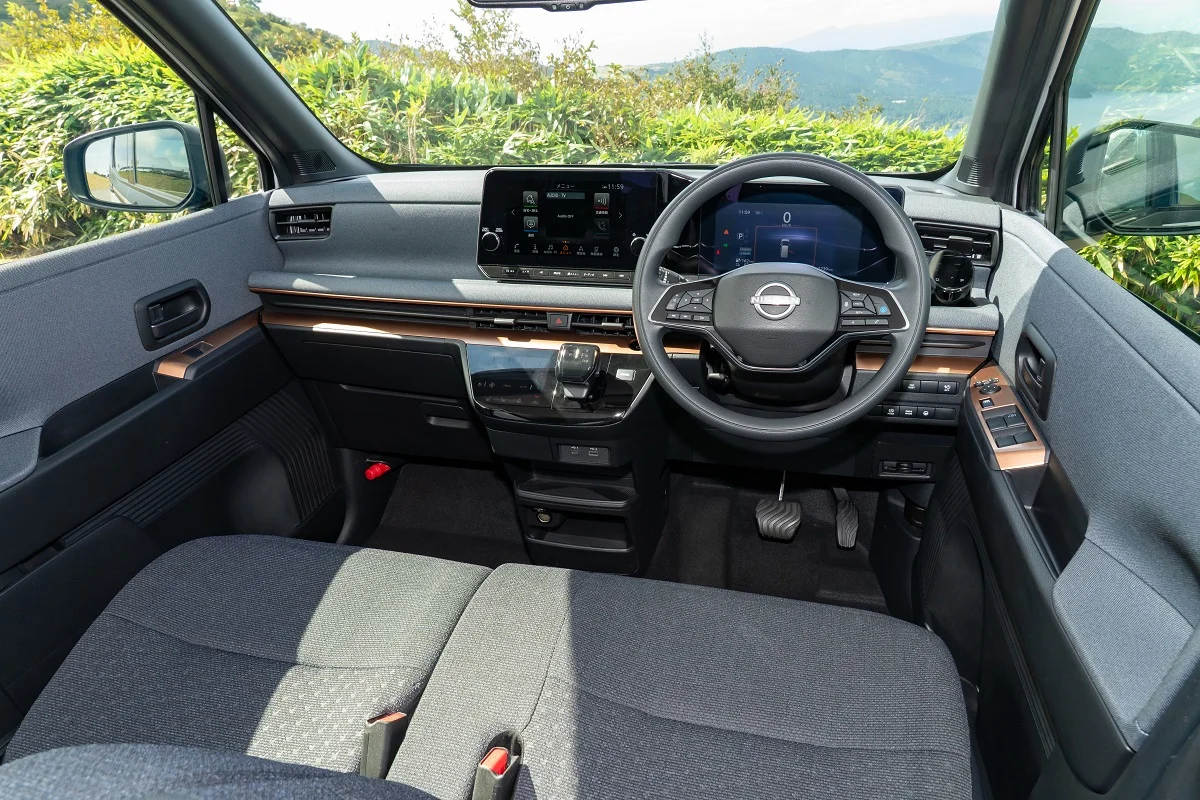
Why the Sakura
The Nissan Sakura, not available in the Italian market, has been Japan’s top-selling electric vehicle for three consecutive years. That success made it the ideal platform for introducing the Ao-Solar Extender. Nissan’s data analysis shows that most Sakura owners primarily drive short distances for daily errands, suggesting that solar power could nearly eliminate grid charging for many of them.
The new Nissan Leaf reaches up to 622 km of range
Alongside its solar-powered concept, Nissan also announced an important update: the new Nissan Leaf. This third-generation model, successor to the world’s first mass-market EV launched in 2010, introduces a more aerodynamic design and extended range of up to 622 kilometers.
The new Leaf features a sleek aerodynamic body with a drag coefficient of just 0.25, enhancing performance and efficiency. It comes with two battery options:
| Battery | Capacity | Range (WLTP) |
|---|---|---|
| Standard | 52 kWh | Up to 440 km* |
| Extended | 75 kWh | Up to 622 km* |
On highways, the car achieves up to 330 km at 130 km/h and 430 km at 110 km/h, with energy consumption as low as 13.8 kWh per 100 km. Fast charging at 150 kW DC enables up to 420 km of range in only 30 minutes.
Its smart battery thermal management system works together with Google Maps’ Route Planner, identifying charging stations along the route and adjusting the battery temperature for optimal recharging efficiency.
The Leaf also supports Vehicle-to-Load (V2L) functionality, allowing it to power or recharge external devices such as kettles, lamps, or electric grills. Through a dedicated adapter, the external V2L port can supply up to 3.6 kW of power, making it practical for outdoor or emergency use.