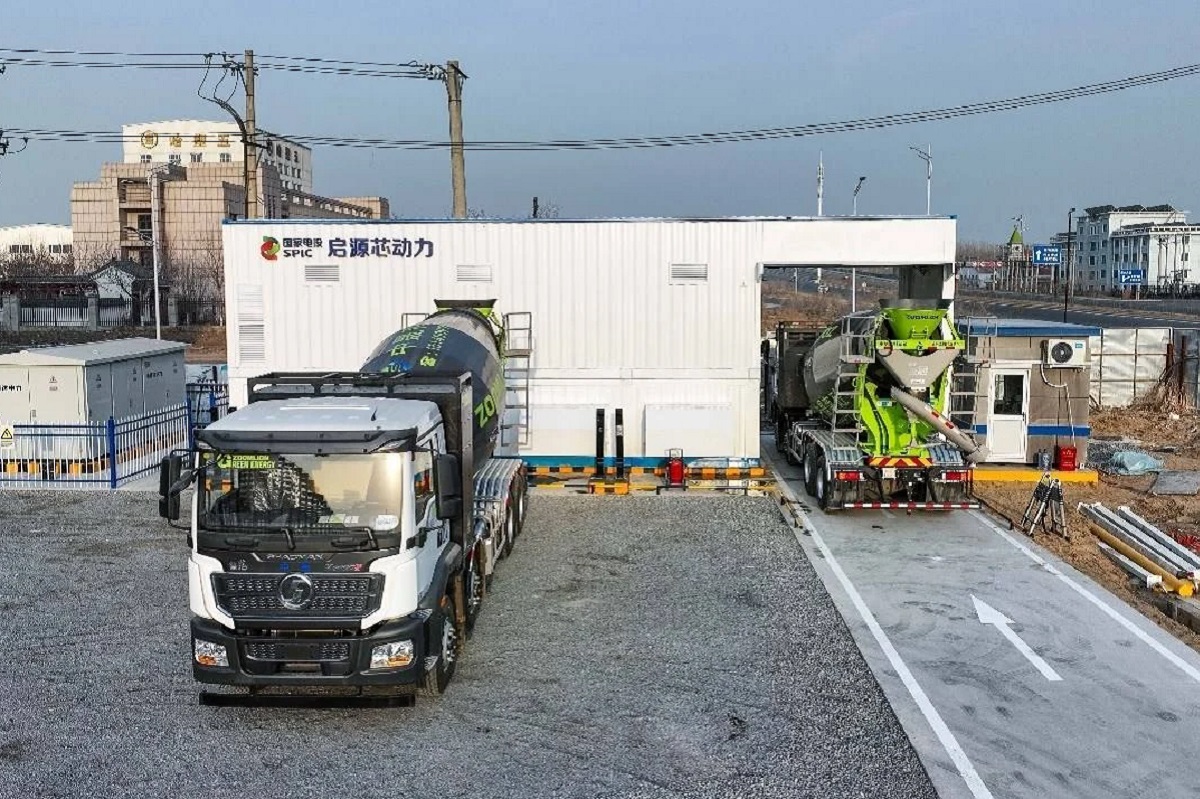
CATL, the Chinese battery giant, is looking beyond passenger electric vehicles as it moves deeper into trucking and logistics. Contemporary Amperex Technology Co. Limited has made a significant strategic move, acquiring a stake of nearly 25% in Qiyuan Green Power for $370 million. The goal is to strengthen its position in electric truck battery swapping.
The company in which CATL has become the largest single shareholder is China Power’s battery-swapping arm. China Power is controlled by state-owned energy giant SPIC, and Qiyuan operates one of China’s largest battery-swapping networks for heavy-duty vehicles.
Electric truck battery swapping brings two technologies under one roof
The deal puts CATL in a powerful position in China’s electric truck battery swapping industry. China is already the world’s most advanced market for battery swapping in passenger EVs, but the electric truck segment has developed around two distinct technological approaches: rear battery swapping, used by Qiyuan Green Power, and chassis-based battery swapping.
For rear-swapping systems, the battery pack is positioned behind the truck cab and can be removed and replaced at dedicated stations. Qiyuan has already deployed more than 1,600 charging and battery-swapping stations across 208 cities, primarily in closed or semi-closed operating environments such as mines, ports, steel plants and urban construction sites. Vehicles using its network have accumulated more than 4.4 billion kilometers of operation.
The second technology, chassis-based battery swapping, integrates the battery pack into the underside of the truck. The system is designed primarily for a new generation of long-haul electric trucks operating along major highway corridors.
Bringing the two technologies under a common strategy could give CATL significant influence over both specialized heavy-industry applications and China’s much larger highway freight market.
CATL’s battery swapping ecosystem continues to expand
In heavy-duty logistics, charging time translates directly into operating costs. Replacing a battery pack in just 3 to 5 minutes, potentially faster than refueling a diesel truck, could be a major advantage for electrifying fleets that operate as much as 18 hours a day.
CATL’s strategy, however, extends well beyond heavy-duty vehicles. The company is building a broader battery-swapping infrastructure that also covers passenger EVs.
Its Choco-SEB battery-swapping network already includes thousands of stations across China, with CATL targeting 3,000 operational stations by the end of the year.
The bigger picture: batteries are becoming an energy utility
Viewing CATL simply as the world’s leading manufacturer of rechargeable EV battery cells increasingly misses the bigger picture. By integrating major logistics customers, including agreements with large freight operators, with access to an extensive battery-swapping infrastructure, CATL is positioning itself as something closer to a mobile energy utility.
Controlling the swapping network creates an opportunity to generate revenue not only from battery sales, but potentially throughout a vehicle’s operating life and across every mile traveled by freight fleets.
With electric truck adoption accelerating rapidly in China, CATL’s investment in Qiyuan Green Power represents more than corporate consolidation. It signals a broader shift in electric mobility: the infrastructure used to keep vehicles moving could become one of the industry’s most strategically valuable assets.