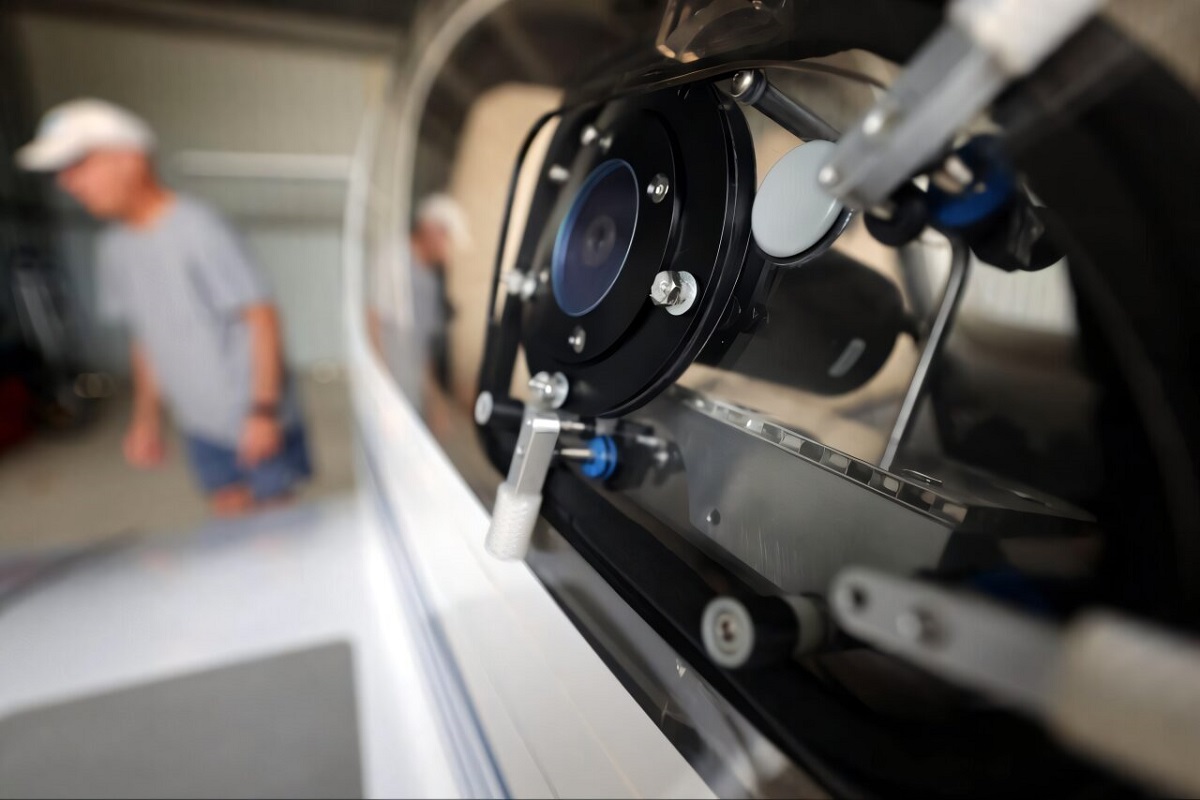
The technology behind anti-icing sensors
Ice is a major cause of both aviation and road accidents. According to available data, around 20% of road accidents are linked to adverse weather conditions such as icy roads. Ice accumulation is also involved in roughly 10% of fatal airline accidents, as it interferes with aerodynamics and flight controls.
A new technology developed at the University of Michigan could help aircraft, drones, cars, and trucks operate more safely and efficiently by detecting ice before it becomes a critical risk.
A research team led by professor Nilton Renno, a climate and space scientist as well as a licensed pilot, has developed two complementary anti-icing sensors designed to warn pilots, drivers, and autonomous systems of ice formation at a very early stage.
How anti-icing sensors work, microwaves and laser systems
Today’s aircraft typically rely on protruding probes to detect icing conditions. Because these sensors extend beyond the aircraft surface, they provide limited information about what is actually forming on the fuselage or wings.
The new anti-icing sensors take a different approach, offering much higher precision through two integrated technologies.
- The microwave sensor is installed flush with the vehicle or aircraft surface. It detects the formation of ice in real time by measuring changes in signal frequency. When water or ice begins to accumulate on the surface, the sensor immediately reports the variation.
- The laser sensor, based on Lidar technology, uses three infrared lasers with different wavelengths to scan the surrounding environment. This system can distinguish harmless ice particles from supercooled water droplets, which are particularly dangerous because they freeze instantly upon impact.
“Our technology can help airplanes, drones, cars, and trucks operate as safely and efficiently as possible,” Renno said. “Aircraft icing is a global problem that can occur at any time of year, on aircraft of all sizes, depending on flight altitude. I realized this was a problem I could help address, drawing on my experience both as a pilot and as an atmospheric scientist.”
Anti-icing sensors inspired by a Mars lander
The origins of this technology lie in space exploration. Development began after the Phoenix lander mission, which identified evidence of liquid water on Mars. Renno initially aimed to design instruments capable of measuring soil moisture on future missions and distinguishing liquid water from ice.
Applied to the automotive sector, the same principle could significantly improve road safety, especially in situations involving black ice. Laser-based detection can warn drivers, or automatically activate braking systems, seconds in advance. Research cited by the team suggests that reducing speed by just 6–15 km/h can cut the risk of severe injuries by 50% in the event of a crash.
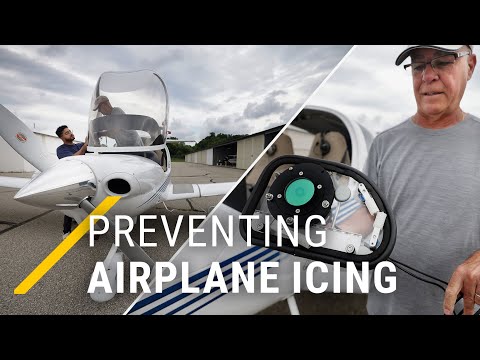
Toward safer mobility systems
The test results, published in the journal Scientific Reports, have confirmed the effectiveness of the technology. The innovation has been licensed through the startup Intelligent Vision Systems, a spin-off from the U.S. university, with the goal of bringing it to market in the near term.
As both air and road traffic continue to grow, often under increasingly extreme weather conditions driven by climate change, the integration of intelligent anti-icing sensors represents a key step toward safer and more resilient mobility systems.