Artificial intelligence aids electric vehicle charging
What matters most to an electric car driver, battery range or time management for charging? Probably both. Those who drive an electric car know well that, unlike refueling, plug-in charging times vary, depend on a set of factors, and unfortunately are sometimes unpredictable. If you want to know everything about electric car charging, you can consult our complete guide.
How the platform works
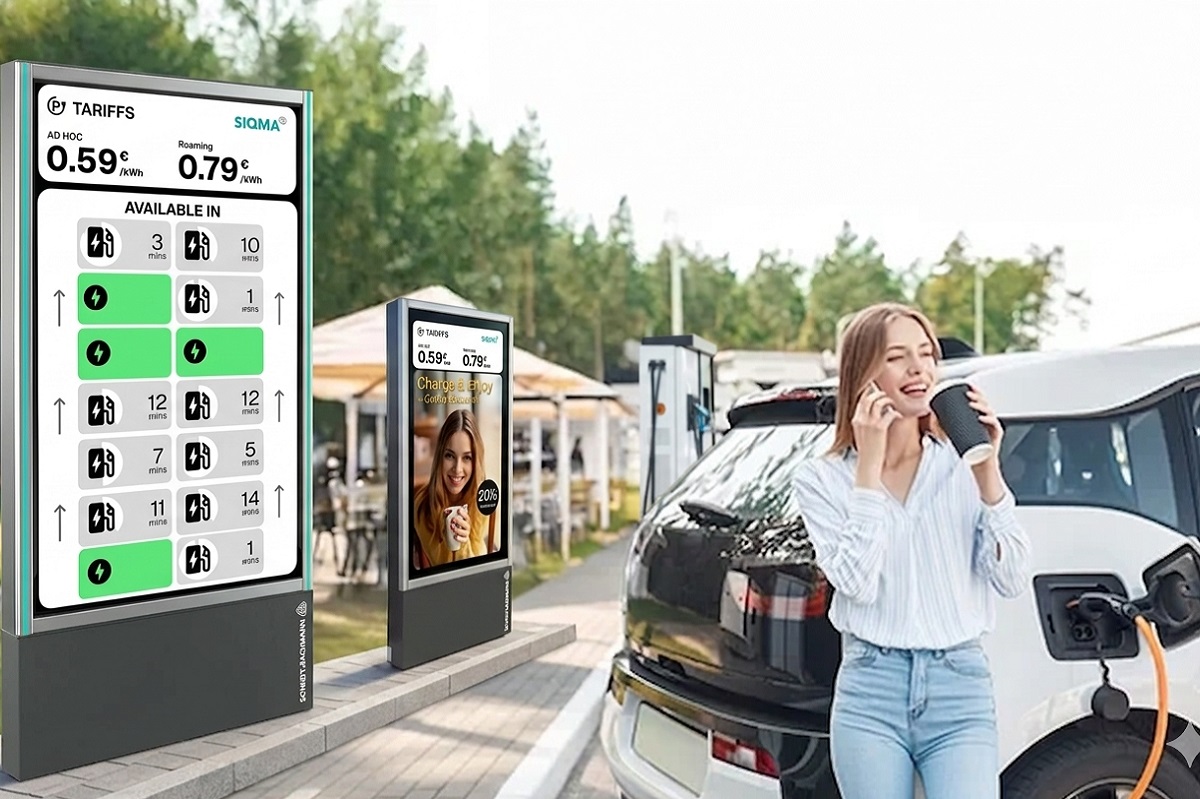
To solve this critical issue, the German company Scheidt & Bachmann Energy Retail Solutions has launched an AI-based system – SIQMA FlowMax.AI – which predicts in real time the availability of EV charging stations. But above all, it predicts the remaining occupancy times.
The AI algorithms implemented in the platform’s software don’t just read whether the charging hub is currently free or occupied. In fact, the system processes real-time information from the charging stations, cross-referenced with: the day of the week, the time, weather conditions, and even nearby services.
Thanks to this method, the software estimates with precision, within the first few minutes of a session, how long that vehicle’s stop will last. The data arriving as a constant flow continuously feeds the model, which learns from charging habits and optimizes predictions over time, ensuring ever-increasing reliability.
Transparency for the user
One of this technology’s strengths is its versatility in the user interface. The predictions generated by FlowMax.AI don’t remain hidden in a database but are distributed through various touchpoints:
- Smartphone apps and in-vehicle systems, to plan the stop even before arriving.
- APIs for operators (Application Programming Interface) and third-party roaming platforms.
- Digital displays installed directly at the charging stations.
In addition to the minutes remaining until the end of charging, displays can show dynamic pricing, local partner offers, and informational content, transforming the waiting time for BEV charging into a value-added service moment.
Electric vehicle charging: fewer queues, better planning for EV charging stations
For infrastructure operators, transparency on occupancy times translates into smoother management of parking bays, reducing congestion and increasing customer loyalty.
For motorists, the benefit is psychological and practical: having a reliable estimate of waiting times allows them to instantly decide whether it’s worth waiting their turn or heading to an alternative station, eliminating the uncertainty typical of peak hours.