A circular solution for stronger, lighter roof tiles
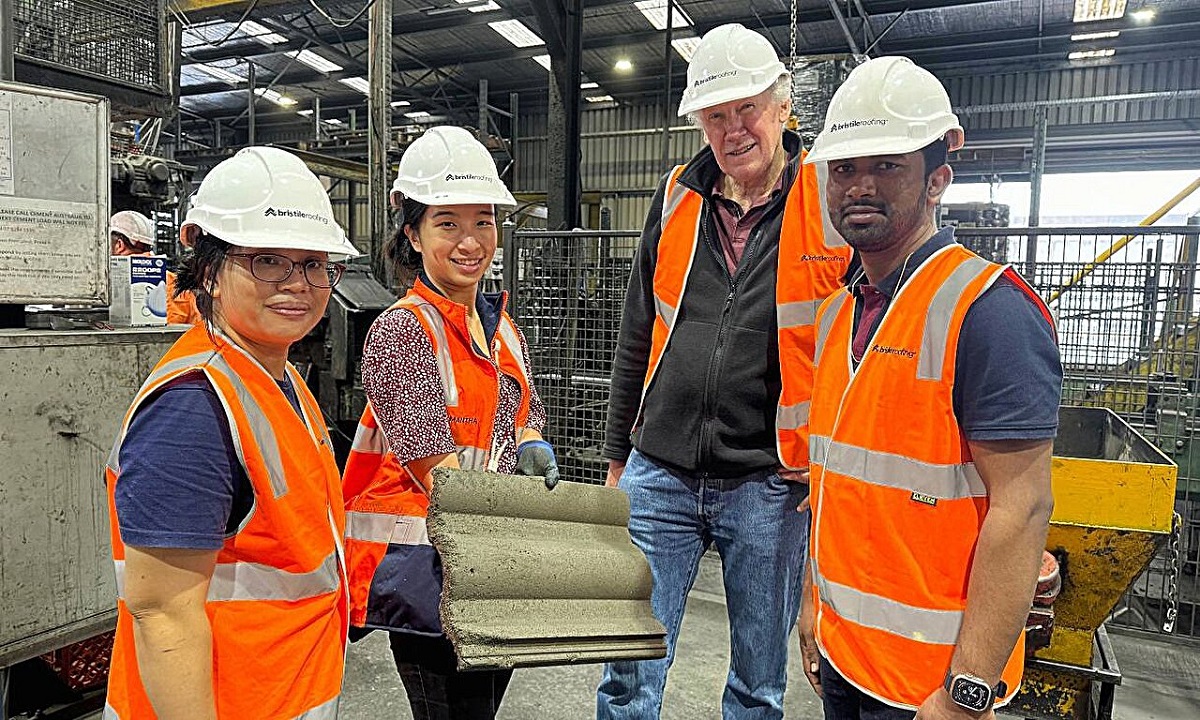
By combining two industrial waste materials, coal ash and crushed glass, researchers at RMIT University and Bristile Roofing have created sustainable roof tiles with a significantly lower carbon footprint. The large-scale experiment, conducted at Bristile Roofing’s Melbourne facility, produced hundreds of concrete tiles that not only meet but exceed Australia’s durability and fire-resistance standards.
The experiment carried out at Bristile Roofing’s Melbourne plant confirmed that the new formulation provides significant engineering improvements to the final product. These new sustainable roof tiles are not only lighter than conventional ones but also offer greater fire resistance, while meeting and even exceeding Australian standards for durability and strength.
A measurable reduction in carbon emissions
A detailed life cycle assessment revealed that the new mix reduces CO₂ emissions by 13% compared to standard concrete tiles.
“By replacing 10% of cement with recovered coal ash and 10% of river sand with unwashed crushed waste glass, we not only divert waste from landfills but also produce a higher-performance concrete with better fire resistance,” explained Dr. Chamila Gunasekara, project lead at RMIT.
The reuse of these waste materials avoids energy-intensive processing and effectively substitutes virgin materials. According to RMIT researcher Yulin Patrisia, the study confirms that large volumes of such industrial residues can be integrated without compromising product quality. While coal ash sourced from ash deposits is initially less reactive, its contribution to long-term engineering performance is essential.
Beyond roof tiles: bricks with improved energy efficiency
The benefits of this sustainable concrete mix extend beyond roofing. The research team applied the same circular approach to produce concrete bricks made with 35% waste content: 15% coal ash and 20% unwashed crushed glass.
The result is a brick with enhanced thermal efficiency: waste-derived materials reduced heat loss by 30% compared to conventional concrete bricks. “This is more than a lab success. We are ready to scale it for industry,” the researchers said. Their next step is to identify local waste resources that can provide consistent quality and supply for large-scale production.
Read the full study “Advanced manufacturing of waste-integrated concrete roof tiles: Scaling up to TRL 6” in Sustainable Materials and Technologies.