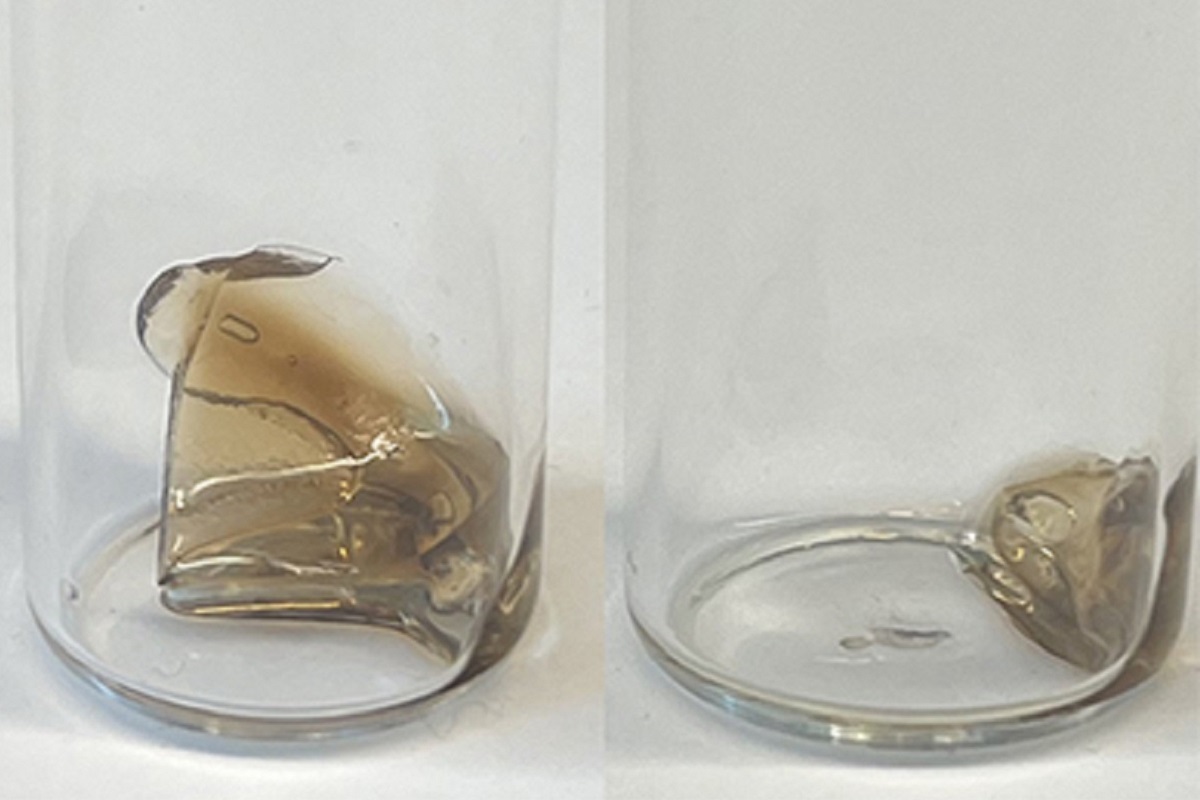
How self destructing plastic can be programmed to degrade
In nature, some polymers break down quickly while others, like conventional plastics, take centuries to decompose. After walking a mountain trail littered with discarded plastic bottles, chemistry researcher Yuwei Gu began asking a simple question. Why do synthetic polymers remain unchanged for so long? The answer lies in their chemistry.
Natural polymers such as DNA and proteins contain helper groups, chemical units embedded in the molecular chain that make it easier for bonds to break at the end of their life cycle. Gu and his team at Rutgers University replicated this principle, creating artificial plastics that behave the same way without the need for recycling.
In a study published in Nature Chemistry, the researchers showed that they can synthesize plastics that begin to degrade spontaneously under normal environmental conditions, without heat, intense light or aggressive chemical treatments. The breakthrough is not only that the plastic can degrade, but that the process is fully programmable. The key is the precise spatial arrangement of the polymer’s chemical components.
How the degradation mechanism works
A useful comparison is a sheet of paper folded perfectly so it tears easily along the crease. In these polymers, the strategic placement of adjacent helper groups accelerates bond breakage thousands of times faster than in conventional plastic. “The most important aspect is that we discovered how the exact spatial arrangement of these groups drastically changes the polymer’s degradation rate,” Gu explains. “By controlling their orientation and placement, we can design the same plastic to break down in days, months or even years.” What began as a quiet observation in a park has become one of the most promising advances for a zero waste future.
Toward highly sustainable materials
The team’s approach allows degradation to be programmed without weakening the material during use. It offers a potential answer to the accelerating growth of plastic waste worldwide. The researchers also showed that degradation can be activated or paused using external triggers such as ultraviolet light or metal ions, adding a valuable level of control for users and waste management systems. The implications are substantial:
- Short term packaging: takeout containers or single use packaging that could disintegrate naturally within days.
- Long term industrial components: materials used in vehicles or agricultural equipment that remain durable for years, then degrade only at the end of their life cycle.
“Our strategy provides a practical chemistry based method to redesign these materials so they perform well during use, then degrade naturally afterward,” Gu says. Early testing also indicates that the resulting decomposition liquid is not toxic, although further research is underway to confirm full environmental safety.
The team is now exploring how to integrate this chemical mechanism into traditional plastics and existing manufacturing processes for large scale adoption. They are also examining possibilities in other fields, including smart polymer materials for medicine, such as controlled release drug capsules, and self erasing coatings.