EV battery recycling gets a one-step green chemistry process
As electric vehicles become more widespread, so does the number of batteries that eventually reach the end of their useful lives and need to be disposed of, or preferably recycled, as supplies of the critical materials they contain remain under pressure.
One of the most promising solutions is direct electrode recycling, a process designed to regenerate cathode and anode materials while preserving their original crystalline structure. A new approach developed at the Korea Institute of Energy Research (KIER) in South Korea takes that concept further with a fast, single-step process that requires neither elevated pressure nor temperature.
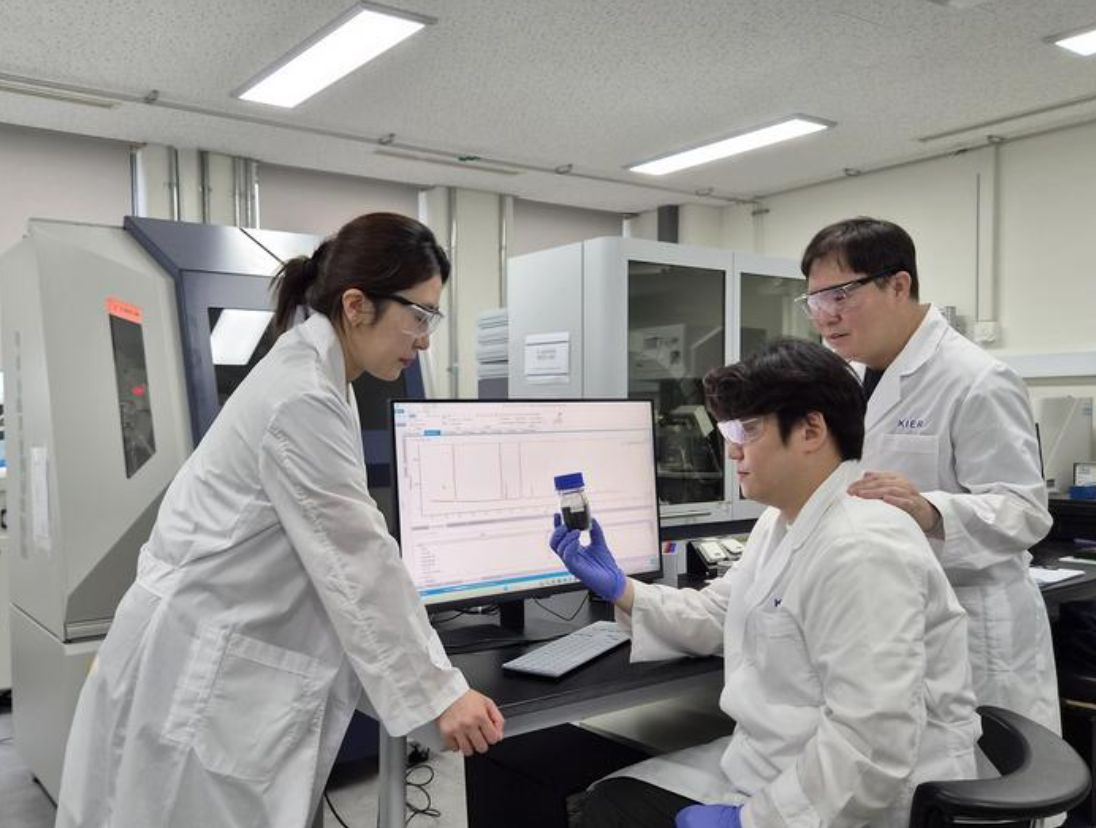
That is the breakthrough achieved by a research team led by Jung-Je Woo. The scientists developed a technique that can efficiently regenerate spent cathode materials and restore their performance to levels comparable with new materials.
The looming wave of end-of-life EV batteries
The research addresses an increasingly urgent challenge. Most electric vehicle batteries have a lifespan of roughly 10 to 15 years, and the first major wave of lithium-ion batteries reaching the end of their useful lives is rapidly approaching.
The volumes could be substantial. According to the Global Battery Alliance, end-of-life EV batteries could reach 11 million metric tons per year worldwide by 2035.
From a geopolitical and resource-security perspective, rather than simply an economic or environmental one, these batteries cannot simply be discarded. Their constituent resources need to be recovered and returned to industrial supply chains.
That is particularly true for graphite, lithium, nickel and cobalt, materials officially included on the European Union’s list of critical raw materials.
In practical terms, these are materials for which viable substitutes are limited or nonexistent, many consuming countries depend heavily on imports, and global supplies are often dominated by just one or a handful of producers.
The problem is that many of the recycling processes currently used for waste electrical and electronic equipment are poorly suited to EV batteries. Conventional treatments such as pyrometallurgy and hydrometallurgy can recover key metals including nickel, cobalt and lithium, but they can require large amounts of energy and generate significant volumes of wastewater.
Why direct EV battery recycling could offer an alternative
Direct recycling is considered one of the most promising approaches for processing lithium-ion batteries because it can recover active cathode materials without destroying their structure.
Compared with conventional methods, it can use less energy and lower costs while preserving the materials’ electrochemical properties.
The technology, however, remains far from widespread commercial deployment and is still largely confined to the laboratory stage.
One major obstacle is the need for labor-intensive pretreatment to separate the cathode from the aluminum current collector, often involving toxic organic solvents.
Even then, existing processes may fail to completely remove the metal, leaving microscopic aluminum contaminants that can undermine the performance of the recovered material.
To overcome this limitation, the South Korean researchers developed an integrated process that can both detach the cathode from the aluminum foil and regenerate the electrode material, whether it is NCM 622 or LFP.
Crucially, the entire process takes place under ambient conditions, with minimal energy consumption and in a single step.
How the Korean one-step recycling process works
The researchers’ approach uses diethylene glycol, or DEG, a low-cost, environmentally preferable solvent, combined with a lithium salt.
When the electrode is immersed in the solution in open air, the solvent partially oxidizes to form glycolaldehyde while dissolving the polymer binder that holds the cathode material to the aluminum foil.
At the same time, lithium ions from the salt enter the electrode’s crystal structure, replenishing lithium lost through side reactions during years of battery operation.
In tests, the researchers regenerated both NCM and LFP cathode materials, restoring 99.1% and 99.7% of their original capacity, respectively.
According to South Korea’s National Research Council of Science & Technology, the technology was also applied to degraded cathode material recovered from a 50 Ah electric vehicle battery. Researchers used the regenerated material to produce a small pouch cell.
Its discharge capacity increased from 30.6 mAh to 34.6 mAh, demonstrating the process’s potential to regenerate cathode materials recovered from real-world EV batteries.
The study, “Efficient Direct Recycling of Spent Batteries: Integrated Lithiation and Delamination,” was published in Advanced Science in 2026.