Universities, researchers and companies join forces to shape the future of agriculture
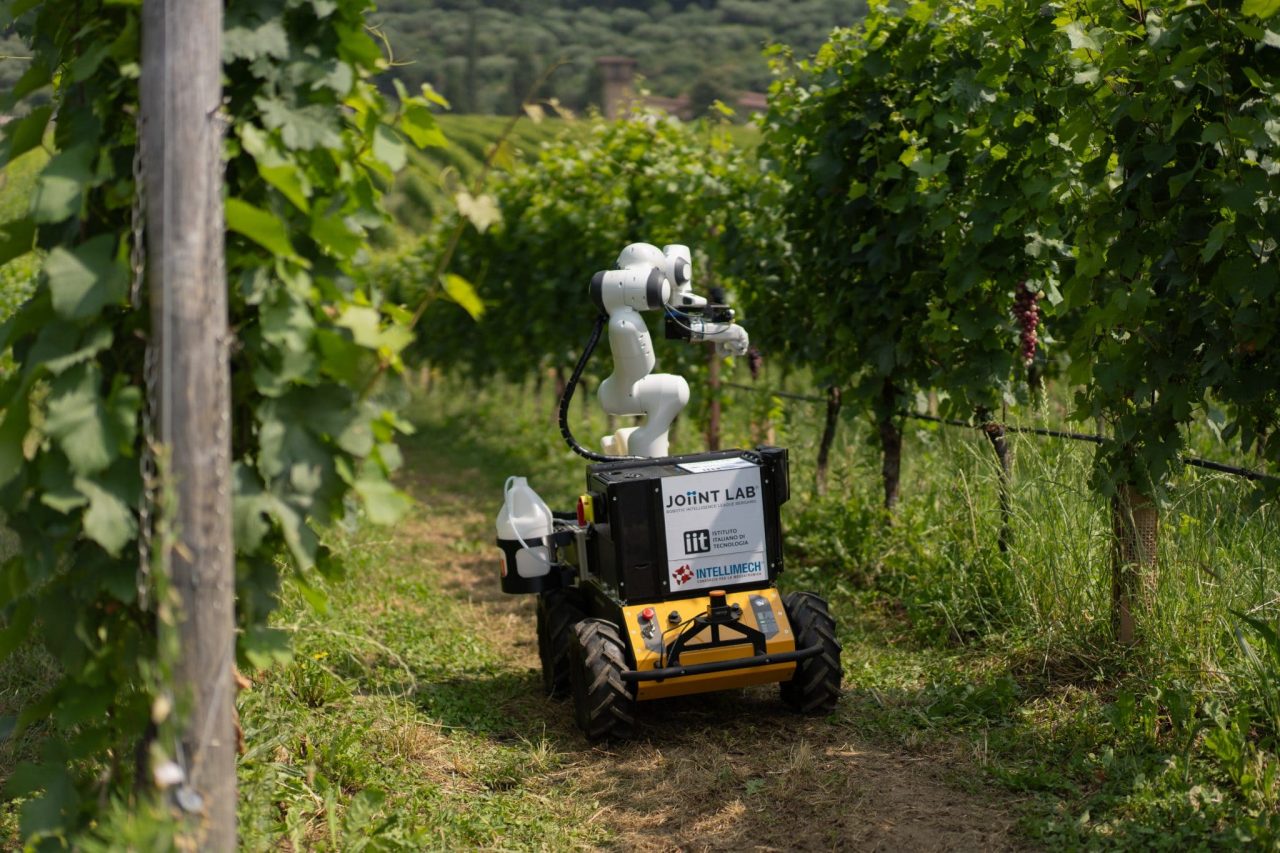
Frasky is a robot designed to work in vineyards. At first glance it may look like a sci-fi character, but in reality the prototype is the result of research by the Italian Institute of Technology (IIT), one of Italy’s leading scientific institutions.
The “think tank” behind Frasky is the Soft Robotics for Human Cooperation and Rehabilitation unit at IIT.
The JOiiNT LAB
JOiiNT LAB is a joint research laboratory created through collaboration between IIT and Intellimech, a consortium of more than 70 mechatronics companies, together with Confindustria Bergamo, the University of Bergamo, Kilometro Rosso Innovation District and regional businesses.
Its core research areas include industrial robotics and mechatronics, as well as collaborative robotics, remote control and artificial intelligence.
The lab’s ambitious objectives are to:
- train highly specialized professionals,
- connect scientific research with industry,
- accelerate technology transfer,
- promote innovation in manufacturing,
- strengthen the competitiveness of Italian companies.
Robotics and AI for precision agriculture
According to Manuel G. Catalano, researcher at IIT and coordinator of JOiiNT LAB and the Frasky project, “integrating robotics and artificial intelligence into agriculture will enable increasingly advanced models of precision farming. This means more efficient use of resources, lower environmental impact and real support for farmers and winemakers, especially amid labor shortages and climate change challenges.”
Achieving this ambitious goal, Catalano stressed, requires close cooperation among research institutes, academia and industry to integrate different perspectives and skills.
Challenges for agriculture and how frasky responds
Agriculture faces daily hurdles, from labor shortages to the effects of climate change, from water scarcity to sustainability pressures.
Could Frasky provide answers? The integration of robotics and artificial intelligence, Catalano explained, has the potential to revolutionize precision farming.
But designing a robot able to navigate fields is highly complex. Terrain is uneven and constantly changing with the seasons, weather and plant growth. For example, dense foliage can reduce visibility or block access to vines.
What the robot can do
The robot must avoid obstacles, collect data on crop conditions and perform delicate interventions. Harvesting grapes requires particular care to prevent damage.
Frasky is built for all these tasks. Mounted on a mobile platform with four drive wheels suited for outdoor use, it features a modular and flexible design. Both hardware and software can integrate different tools, such as a robotic hand with a nozzle to deliver targeted vineyard treatments.
The software behind frasky
Frasky operates with software developed by the IIT team, structured into three main modules:
- navigation, which enables the robot to orient itself and reach target points while avoiding obstacles,
- perception, which analyzes the environment and identifies grape clusters,
- manipulation, which guides the robotic arm during operations.
Data collected by the perception module can be used to map the vineyard or sent directly to the manipulation module, enabling precise actions such as grape picking, visual inspection or treatment application.
Benefits of frasky
Frasky’s technology reduces environmental impact and improves farmer safety by limiting exposure to hazardous chemicals.
Additional advantages include:
- more accurate digital monitoring of vineyards,
- support for repetitive tasks, with a graphic interface for real-time control and monitoring,
- higher precision in applying treatments and less chemical dispersion.
From lab to vineyard
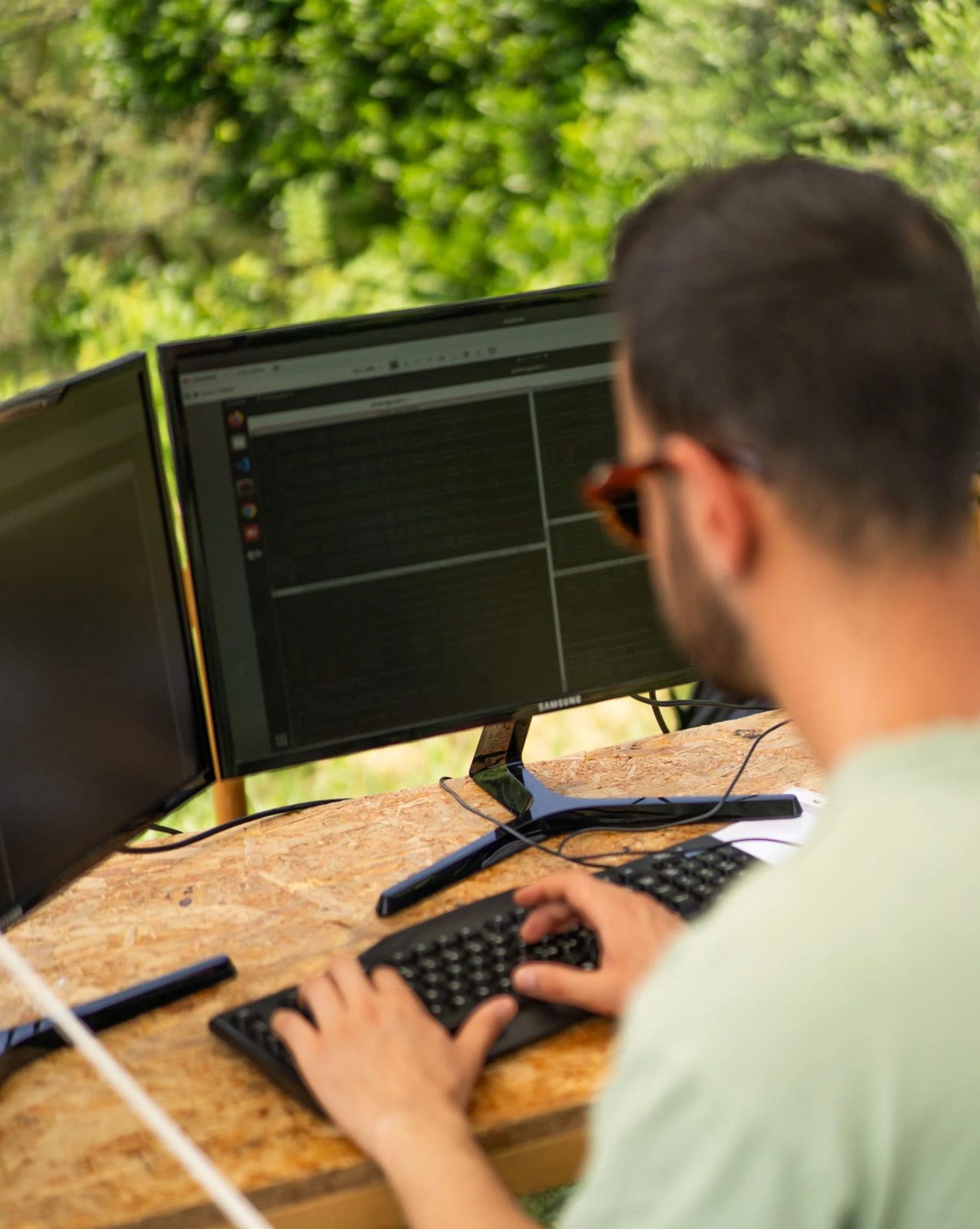
After lab testing, Frasky underwent field trials at the “Le Corne” winery in Grumello del Monte, Bergamo. In real conditions, the robot successfully moved, mapped the vineyard and applied treatments autonomously.
Fabio Previdi, professor at the University of Bergamo, highlighted the importance of connecting research and business: “Working closely with companies gives students practical, interdisciplinary experiences that are essential to develop the skills truly required by industry and to prepare them for the challenges of digital transformation.
Direct involvement of our students in laboratory projects allows them to actively contribute to the development of advanced solutions and to technology transfer, creating benefits for both businesses and the academic system”.