Trump threatens U.S. diesel export ban to Europe
From one dependency to another, and from one war to the next, Europe remains heavily reliant on fossil fuels and exposed to the consequences of political decisions made elsewhere. Now the continent is confronting President Donald Trump’s threat of a potential U.S. diesel export ban, a measure intended to lower domestic fuel prices ahead of the November midterm elections.
As European inventories begin to tighten, Trump, now on the campaign trail, has said he is considering a diesel export ban “very seriously.” The United States, the world’s largest exporter of the fuel, supplied nearly half of Europe’s diesel imports in August.
U.S. urges France and Germany to release diesel reserves
Reuters reported that the Trump administration has asked Germany and France to tap their emergency diesel reserves to help ease global fuel prices, warning that failure to do so could increase the likelihood of U.S. restrictions on diesel exports.
The administration is reportedly particularly frustrated with the French and German governments, which, according to U.S. officials, have not fully honored previous commitments to release emergency stocks of crude oil and petroleum products.
“It is in Europe’s best interest to work with the United States as we pursue multiple avenues to increase the supply of refined products and reduce costs for consumers,” a U.S. official said.
A second official, this time from Europe, told Reuters that the United States had asked the EU to release 120 million barrels of diesel over the next six months. U.S. Energy Secretary Chris Wright also said the Trump administration expects announcements from Europe on diesel supplies in the near future.
French President Emmanuel Macron and Trump reportedly did not discuss the issue during their meeting on the sidelines of the United Nations General Assembly in New York last week. Macron, however, plans to convene a videoconference with G7 leaders to discuss fuel prices and the global supply of refined products, including the possibility of coordinating reserve releases with the International Energy Agency.
Diesel prices hit record highs
Europe has become increasingly dependent on U.S. diesel after banning Russian imports following Russia’s invasion of Ukraine and after the U.S.-Israeli war with Iran disrupted fuel supplies from the Middle East.
Ahead of the colder months, EU Energy Commissioner Dan Jørgensen sent a letter to the bloc’s 27 member states recommending that they reduce gas and electricity consumption “for as long as necessary.” Jørgensen told reporters that he had also urged Washington to consider the impact of a diesel export ban.
In Italy, Environment and Energy Security Minister Gilberto Pichetto Fratin is in contact with Washington to clarify the potential effects of any restrictions.
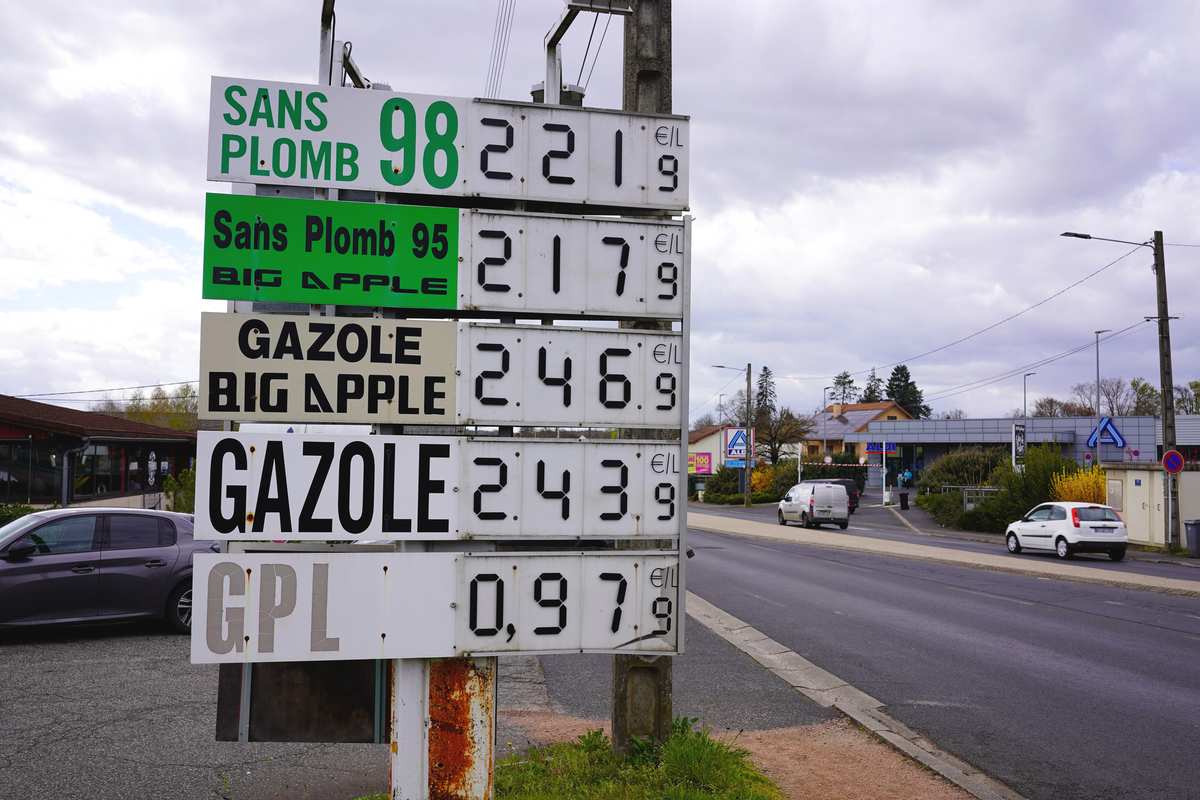
Amid the conflict in the Middle East, the average EU diesel price reached a record €2.23 per liter last week, rising as high as €2.40 per liter in France. Jørgensen also said the EU has spent more than €100 billion extra on energy imports since the war began, “without receiving a single additional molecule of gas or oil.”
A U.S. diesel export ban would initially lower U.S. prices by about 25 cents per gallon each week, roughly 4% from the current $6.50 per gallon, while raising European wholesale prices by $3 per barrel, or around 2%, according to Goldman Sachs analysts in a Sept. 26 report.
The release of Europe’s strategic diesel reserves could partially offset the potential increase in European prices, the analysts added.
United States becomes Europe’s leading diesel supplier
In its effort to reduce dependence on Moscow, Europe has increased imports from the United States, a shift that has also come amid pressure from Washington.
Europe does not refine enough diesel to meet its own demand, while traditional supplies have fallen sharply following restrictions on Russian products in 2023 and 2026 and steep cuts in exports from the Middle East, Russia and India. To fill the gap, Europe has increasingly turned to the United States.
U.S. diesel now accounts for 32% of EU imports, up from 17% in 2025, and about 57% of imports into northwestern Europe. France sources 36% of its diesel imports from the United States, while the United Kingdom gets 26%.
Rather than accelerating electrification and expanding domestic renewable energy production, Europe has replaced one form of energy dependence with another source of vulnerability. Could the continent have reduced its exposure to the economic consequences of the U.S.-Israeli war with Iran? Greater electrification, renewable generation and diversification of energy supplies could have reduced that vulnerability.
According to Vortexa data, the United States supplied 41% of Europe’s diesel imports in September 2026, equivalent to about 400,000 barrels per day. That was above year-earlier levels, although slightly below the record high reached in August.
Shipping U.S. diesel across the Atlantic is also becoming more expensive. Freight rates for MR2 tankers on the Houston-Amsterdam route reached $90 per metric ton on Sept. 29, up 73% in one week.
Any U.S. export restrictions would therefore put current supply volumes at risk. European diesel arrivals could decline in October even without a U.S. export ban.