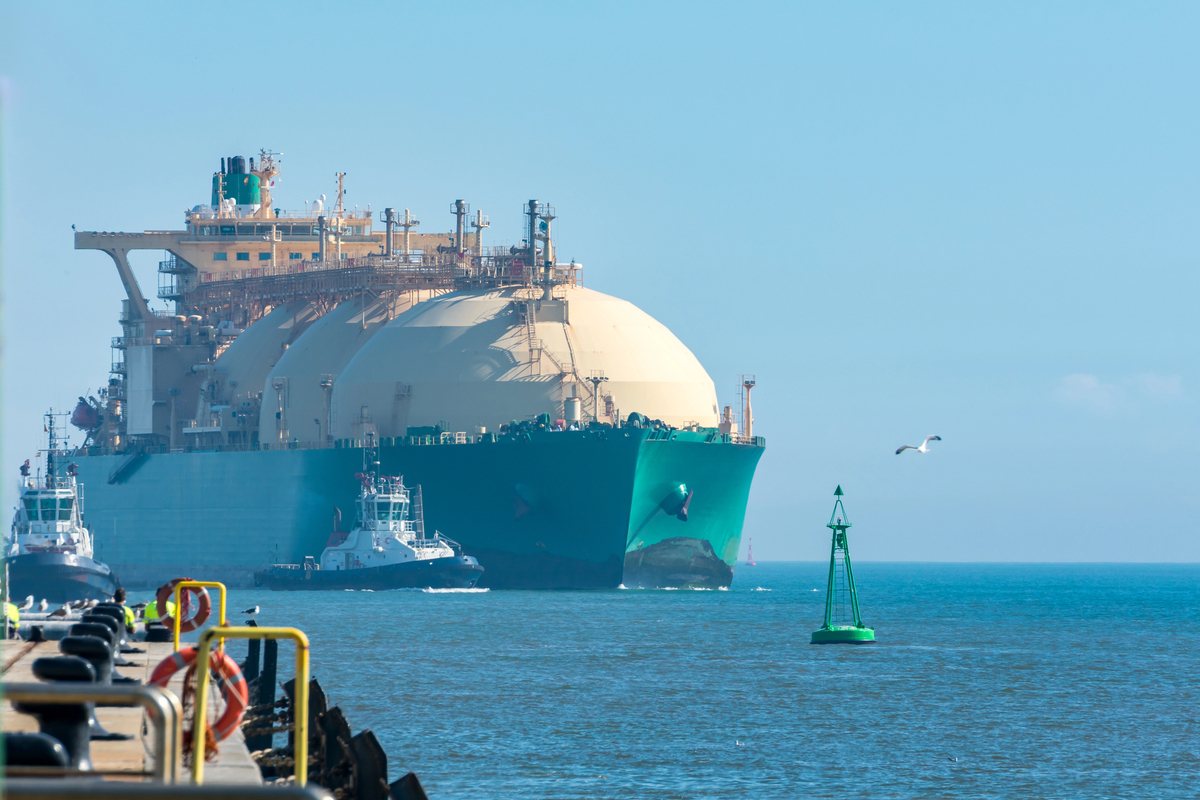
Global natural gas demand weakens as supply constraints reshape the market
Global natural gas demand is expected to decline by 0.5% in 2026, according to the latest quarterly market report from the International Energy Agency (IEA). The slowdown is primarily driven by lower expected gas consumption in both industry and power generation. If confirmed, 2026 would mark the third annual decline in global gas demand in just seven years.
The IEA expects worldwide gas consumption to contract for the third time over that period, although additional LNG supplies from producers outside the Middle East should help offset losses caused by lower regional output. Even so, the impact of the war will continue to reshape the global natural gas market throughout 2026, tightening supply and keeping prices elevated, with significant consequences for demand across key markets.
The Middle East conflict has fundamentally disrupted the global gas market
The Gas Market Report for the third quarter of 2026 assesses how markets have responded to major disruptions in gas shipments through the Strait of Hormuz, a route that handled roughly 20% of global liquefied natural gas (LNG) supply before the conflict that began in February. The report reviews market developments during the first half of 2026 while providing a full-year outlook.
Its conclusion is clear: the conflict in the Middle East has profoundly distorted the global natural gas market. It has placed significant pressure on global supply balances, while damage to regional export facilities has altered the medium-term outlook.
Although LNG tanker traffic through the Strait has increased since the United States and Iran reached a preliminary agreement in mid-June to end hostilities and reopen the waterway, shipping volumes remain well below pre-conflict levels. Considerable uncertainty also continues to surround future trade flows. Natural gas prices in both Asia and Europe have eased from their March peaks but remain substantially higher than in 2025.
IEA data indicate that global natural gas demand contracted during the first half of 2026 compared with the same period a year earlier. The decline follows weaker consumption in the Middle East, where tighter supply and damage to gas-intensive industries reduced demand. Gas consumption also weakened across Asia as higher prices and government policies encouraged lower consumption and greater fuel switching, particularly from gas to coal in the power sector.
According to the report, LNG supply from Qatar and the United Arab Emirates fell sharply, with production declining by nearly 80% between March and June compared with the same four-month period in 2025. However, total LNG supply for 2026 is still expected to remain broadly unchanged from last year, supported by higher production in other regions and new LNG projects coming online in North America, Africa and Australia.
The report warns, however, that if the full reopening of the Strait of Hormuz is delayed beyond the beginning of the fourth quarter, global LNG supply could record its first annual decline since 2012.
The effects of the Middle East conflict on LNG supply are also expected to extend beyond 2026. Short-term supply disruptions and damage to gas infrastructure, including facilities at Ras Laffan in Qatar, the world’s largest LNG liquefaction complex, are expected to slow the expansion of Qatar’s LNG export capacity. The report projects that these supply constraints will be most evident throughout 2026 and 2027, leaving global gas markets tighter than previously anticipated over the next two years.
Geopolitical and climate risks continue to threaten LNG trade
“The conflict in the Gulf has damaged LNG infrastructure, clouded the outlook for the region’s expansion projects, and subjected Asian buyers to uncertainty over supply flows and higher prices,” said Andrea Stegher, President of the International Gas Union (IGU).
The Strait of Hormuz is widely recognized as the world’s most critical maritime chokepoint for LNG. However, according to the 2026 World LNG Report published by the IGU, potential supply disruptions extend well beyond this corridor, as other strategic shipping routes remain exposed to geopolitical tensions and, in some cases, climate-related risks.
Traffic through the Bab el-Mandeb Strait, which links the Gulf of Aden with the Mediterranean via the Red Sea, has yet to fully recover because of ongoing security incidents linked to Houthi attacks. Meanwhile, the Panama Canal, a key route for U.S. LNG cargoes heading to Asian markets, has also demonstrated its vulnerability. In this case, disruptions were not geopolitical. Instead, severe drought conditions in 2023 reduced water levels in Gatún Lake, limiting vessel transits.
Beyond these major corridors, incidents involving LNG shipping in open waters, including attacks on LNG carriers reported in recent years, underscore the broad exposure of global LNG trade flows to security-related risks.