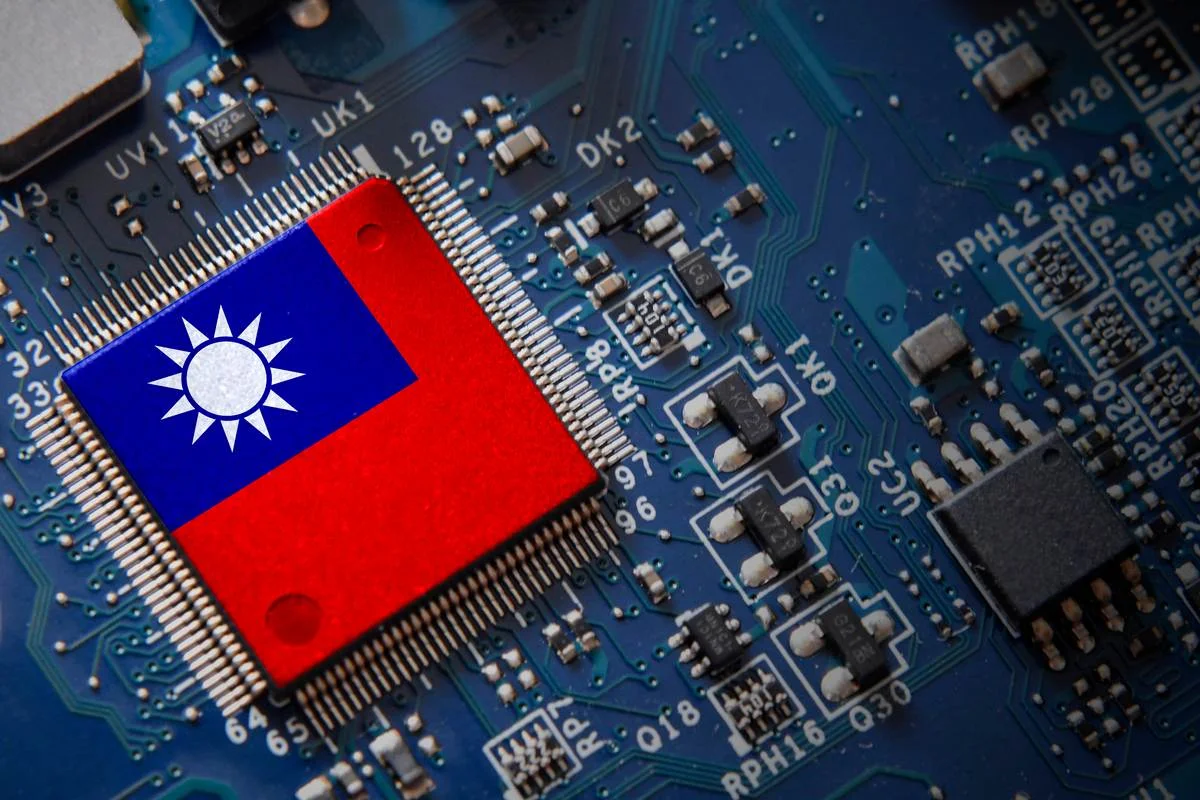
The China-Taiwan crisis has become one of the most significant geopolitical risks facing the global economy. The stability of technology supply chains is deeply tied to the geo-economic balance of the Taiwan Strait, where the world’s most advanced semiconductor manufacturing is concentrated.
Taiwan sits at the center of global chip production, an irreplaceable ecosystem whose disruption, whether through a naval blockade or a gradual economic takeover by Beijing, would severely slow technological progress worldwide. The consequences would extend far beyond the electronics industry, undermining global decarbonization, disrupting financial markets, and weakening economic growth.
For this reason, several analysts argue that a China-Taiwan crisis could inflict economic damage far greater than a closure of the Strait of Hormuz.
How the China-Taiwan crisis could affect global decarbonization
International strategies to reduce carbon emissions depend on energy efficiency and the digitalization of industrial and public infrastructure.
The advanced semiconductors manufactured in Taiwan are essential for:
- Artificial intelligence infrastructure and data centers: AI-driven systems that optimize industrial energy consumption require massive computing power. Modern data centers, powered by NVIDIA AI processors manufactured by TSMC, rely on highly energy-efficient hardware. Any disruption in semiconductor supplies would slow the transition toward greener and more efficient computing infrastructure.
- 5G telecommunications networks and edge computing: Smart grids and renewable energy integration depend on advanced sensors and logic chips capable of processing data in real time to balance electricity supply and demand.
- Industrial automation and electric vehicles: Automakers rely heavily on Taiwanese semiconductor production for battery management systems, power electronics, and the control systems that enable modern EVs.
Without Taiwan’s advanced chips, the world would lack the hardware needed to deliver on global decarbonization plans. In that sense, the future of climate action is closely tied to the long-term stability of the Taiwan Strait.
The scale of Taiwan’s semiconductor industry
According to data published by the Industrial Economics and Knowledge Center, or IEK, at Taiwan’s Industrial Technology Research Institute, the total production value of Taiwan’s integrated circuit industry reached a record $165.6 billion in 2024, up 22.4% from 2023. The industry is divided into four strategic segments, each holding a leading position in the global market:
- Chip manufacturing: The segment was valued at $106.5 billion in 2024, a 28.4% year-over-year increase. Within this category, the wafer foundry business drove overall growth, generating $101.1 billion in revenue, up 30.1% from 2023.
- IC design: The segment reached $39.6 billion in 2024, an increase of 16%.
- IC packaging: Revenue totaled $13.2 billion, up 7.7%.
- IC testing: The segment was valued at $6.2 billion, representing growth of 5%.
Data for 2025 point to a further expansion of Taiwan’s semiconductor ecosystem, with estimated growth of 19.1% expected to bring the industry’s total value to $197.2 billion. Wafer foundries alone were projected to reach $125 billion, while the IC design segment was estimated at $45.1 billion.
This long-term shift reveals an extraordinary degree of structural concentration. Foundries’ share of Taiwan’s semiconductor industry rose from 41.5% in 2014 to 61% in 2024 and was projected to reach 63.4% in 2025. These figures show how deeply the global economy depends on the island’s factories for the physical production of advanced chips.
TSMC’s dominance and its strategic partnership with NVIDIA
In the first quarter of 2025, the world’s 10 largest semiconductor foundries generated combined revenue of $36.4 billion. TSMC alone accounted for $25.52 billion, consolidating a commanding 67.6% share of the global foundry market.
The gap with its competitors is substantial. South Korea’s Samsung, the second-largest player, held just 7.7% of the market, with revenue of $2.89 billion. China’s leading state-backed foundry, SMIC, ranked third with a 6% share, equivalent to $2.25 billion.
Taiwan’s advantage is not only quantitative. It is also technological and qualitative, as highlighted in a report by the Taipei Representative Office in Singapore.
TSMC’s advanced manufacturing processes, using nodes of 7 nanometers or smaller, accounted for 73% of its total wafer sales. That technological lead has translated into exceptional profitability. TSMC reported a net profit margin of 43.1%, compared with just 6.1% for China’s SMIC, whose revenue remains heavily dependent on mature, lower-value manufacturing nodes.
This dominance has enabled the emergence of a critical strategic partnership between TSMC and U.S. fabless semiconductor companies, most notably NVIDIA.
In the first quarter of 2025, the world’s 10 largest chip-design companies generated a record $77.4 billion in combined revenue. NVIDIA dominated the sector with revenue of $42.37 billion, capturing 54.7% of the market and far outpacing Qualcomm at 12.2%, Broadcom at 10.8%, and AMD at 9.6%.
NVIDIA’s growth has been driven by AI data center chips, including its H100 and B100 processors. That business alone generated $39.1 billion, up 73% year over year.
NVIDIA designs the architecture of its processors but does not own the factories needed to manufacture them. TSMC turns those designs into silicon using its advanced foundries. Without Taiwan’s technological capabilities, NVIDIA’s most powerful chips could not be produced. At the same time, without surging demand for AI computing, Taiwan’s foundries would not have recorded such rapid revenue growth.
A China-Taiwan crisis would sever that relationship, potentially bringing the production of nearly all of the world’s most advanced chips to a halt.
A blockade could trigger a global semiconductor supply shock
Any move by Beijing to bring Taiwan under its control would not necessarily require a military invasion or an amphibious assault. China could seek to achieve its political objective through a naval and economic blockade, cutting off the island’s trade flows and maritime connections.
The global semiconductor market, estimated by the World Semiconductor Trade Statistics organization at $710.4 billion in 2025, would face an immediate and severe supply disruption.
Market trends show that while total chip shipment volumes fell from 274.9 billion units in the first quarter of 2021 to 236.8 billion units in the first quarter of 2025, the average selling price increased by 57.7% over the same period, rising from $0.449 to $0.708 per unit.
That increase reflects the growing value of individual chips in consumer products, data centers, electric vehicles, telecommunications systems, and power-grid infrastructure. It also shows why a China-Taiwan crisis would represent far more than a regional geopolitical confrontation. It would threaten the technological foundation of the global economy and the hardware required for the clean energy transition.
The global economic fallout of a China-Taiwan crisis
A naval blockade of Taiwan would halt exports of critical electronic components, bringing global assembly lines for laptops, smartphones, and telecommunications equipment to a standstill. The economic damage would extend far beyond semiconductor manufacturers, cascading across downstream industries, from automotive production and logistics to cloud computing, as companies would no longer be able to upgrade electronic devices, servers, and digital infrastructure.
As Chinese military patrols around Taiwan have intensified, Taipei has stepped up contingency planning to ensure continued access to fuel and other essential supplies should Beijing attempt to isolate the island, according to The New York Times.
A Chinese air and naval blockade of Taiwan could reduce global GDP by 5%, an economic shock even greater than the 2008-09 global financial crisis or the downturn triggered by the Covid-19 pandemic. In the even less likely scenario of a full-scale war, a conflict between the United States and China could inflict more than $10 trillion in losses during the first year alone, equivalent to 9.6% of global GDP, according to Bloomberg estimates.
Those projections do not include potential disruptions to supplies of critical minerals, many of which are heavily dependent on China, nor a sharp slowdown in capital investment for artificial intelligence infrastructure. As a result, the overall economic impact of a China-Taiwan crisis could be even more severe.
Taiwan’s security and the impact of Trump’s policy choices
Chinese President Xi Jinping views Taiwan’s integration into China as a cornerstone of both his political legacy and his vision of the country’s “national rejuvenation,” a goal he has set to achieve by 2049. Although U.S. intelligence has concluded that China’s military has been instructed to be prepared for military action by 2027, Xi is widely believed to prefer gaining control of Taiwan without resorting to force. As Foreign Affairs has argued, such an approach would allow Beijing to avoid crippling economic sanctions and minimize risks to domestic political stability.
According to this interpretation, Xi may see President Donald Trump as offering the most favorable political environment, given Trump’s long-standing skepticism about the costs of defending Taiwan.
Following his meeting with Xi in Beijing in May, Trump froze a $14 billion arms package intended for Taiwan. He reportedly discussed the package directly with the Chinese leader, departing from the long-established U.S. policy of not consulting Beijing on weapons sales to Taipei, a highly significant precedent.
Trump later expressed strong reluctance to involve the United States in a military conflict thousands of miles from home, weakening what many analysts consider a key element of deterrence against Chinese action.
“I don’t want anybody declaring independence. And, you know, we’d have to travel 9,500 miles to fight a war. That’s not what I want. I want them to calm down. I want China to calm down,” Trump said in an interview with Fox News.
Taiwan’s ruling Democratic Progressive Party, however, is not pursuing a formal declaration of independence and has consistently responded cautiously to Chinese military pressure.
At the same time, Defense Secretary Pete Hegseth made no reference to Taiwan during the Shangri-La Dialogue, the Asia-Pacific region’s premier security forum, another development viewed by many observers as a notable diplomatic signal.
Meanwhile, China has continued increasing maritime pressure around the island, laying the groundwork for a potential future quarantine or blockade. Taken together, these developments have raised concerns about stability in the Taiwan Strait. A reduced U.S. commitment to Taiwan, an outcome Trump has appeared increasingly willing to consider, could weaken broader international efforts by the G7, the European Union, and the United Kingdom to preserve peace, shift the regional balance of power further in Beijing’s favor, and increase the likelihood of China ultimately bringing Taiwan under its control.