Strait of Hormuz crisis deepens as military escalation resumes
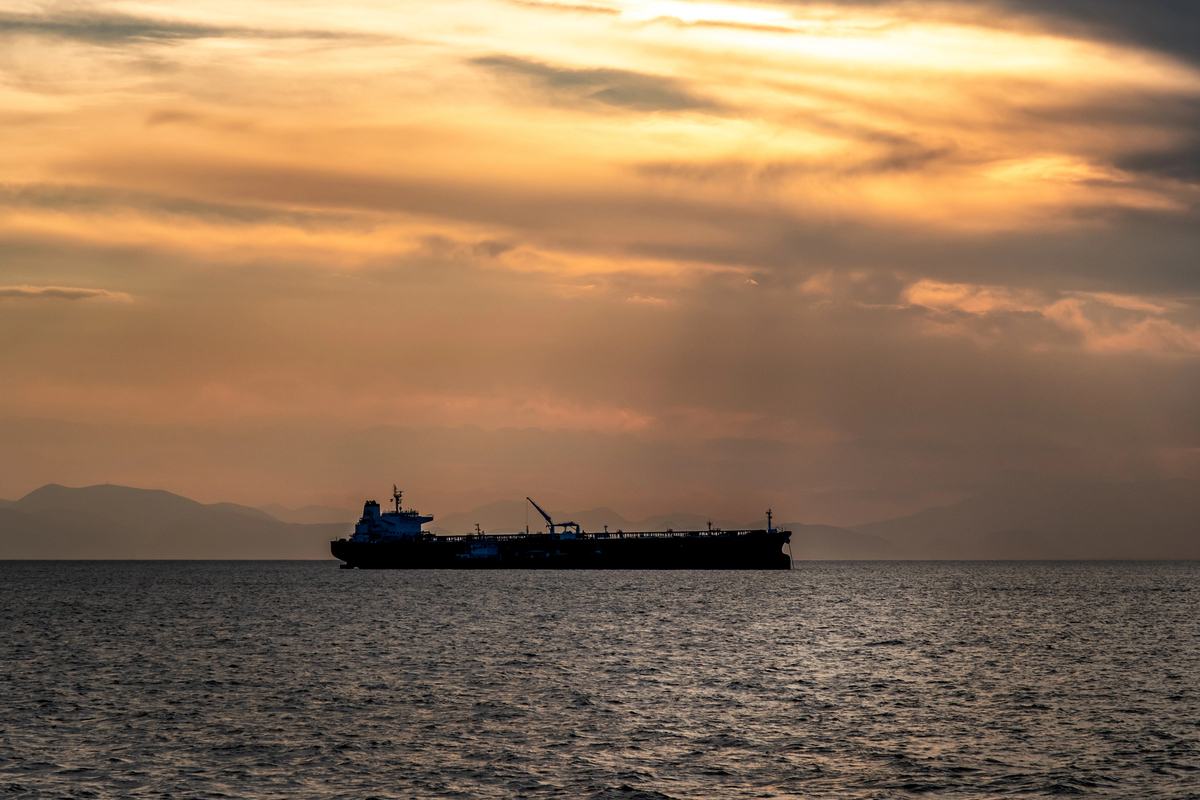
The situation in the Strait of Hormuz has deteriorated sharply. With commercial shipping reduced to a minimum and the United States revoking temporary oil waivers granted to Iran, the latest escalation is once again disrupting one of the world’s most strategic maritime chokepoints and forcing global energy markets to reassess supply routes.
Shipping traffic through the strait has nearly come to a standstill once again. The United States carried out strikes against Iran for a second consecutive day, while Iranian forces responded by targeting sites in Kuwait and Bahrain. The latest exchange of attacks followed the assault on three commercial vessels attempting to transit the strait and came only hours after President Donald Trump declared that the provisional ceasefire reached with Tehran in June was effectively “dead and buried.”
The United States also revoked this week the temporary waivers that had allowed limited Iranian oil sales under the provisional memorandum of understanding. According to analysts at ING, “although revoking the waivers does not fundamentally alter oil market dynamics, it was significant from a market sentiment perspective.” The move had already fueled expectations that the agreement was on the verge of collapse.
According to Bloomberg, only a handful of vessels have managed to transit the strait in recent days. Among the largest ships observed were a U.S.-sanctioned supertanker and an Iranian-flagged container ship. On Wednesday, July 8, only 14 merchant vessels reportedly crossed the waterway in both directions, the lowest daily traffic level since the provisional agreement reached in mid-June.
These developments point to a dramatic deterioration in the Strait of Hormuz compared with recent weeks. After Washington and Tehran reached their fragile understanding to reopen the waterway, shipping had gradually resumed despite persistent maritime security concerns.
The unresolved shipping provisions in the Hormuz memorandum
The temporary agreement signed by Trump helped restore a degree of commercial traffic. However, it left significant uncertainty over how shipping would be managed, particularly regarding transit rights and possible fees. The memorandum states that Iran “will use its best efforts to ensure the safe passage of commercial vessels for a period of 60 days, without any charge.”
According to Reuters, citing diplomatic sources, Iranian negotiators interpreted this language as an implicit U.S. acknowledgment of Tehran’s right to administer the Strait of Hormuz, even without imposing tolls during the initial 60-day period while broader negotiations continued. The United States and its Gulf allies, however, viewed the text differently, arguing that it merely required Iran to facilitate safe navigation without restricting commercial shipping.
For Tehran, control of Hormuz now outweighs the nuclear issue
For Tehran, securing U.S. recognition of Iran’s authority over the Strait of Hormuz has become a higher priority than resolving disputes over its nuclear program, negotiations that the Iranian government continues to delay.
Iran’s nuclear program has dominated relations between Tehran and Washington for nearly 25 years, triggering extensive international sanctions and serving as the principal justification cited by the Trump administration for military action. Yet nuclear negotiations have gradually slipped to the bottom of the agenda under the provisional agreement aimed at ending hostilities, with substantive talks postponed to future negotiations.
Confidence in the Strait of Hormuz has been shattered
Writing in Foreign Policy, International Energy Agency Executive Director Fatih Birol argued that confidence in the Strait of Hormuz has effectively collapsed and that trust itself has become one of the world’s most valuable energy commodities. According to Birol, the global energy map is now being redrawn in real time as geopolitical risks reshape supply chains.
Middle Eastern producers have already begun searching for export routes that bypass the Strait of Hormuz. The United Arab Emirates, for example, is accelerating construction of a second pipeline carrying crude oil to the port of Fujairah on the Gulf of Oman. Other Gulf exporters are evaluating alternative strategies to reduce their dependence on Hormuz, including storing larger strategic oil reserves directly within importing countries. Outside the Middle East, producing nations are also seeking broader access to alternative export markets.
Capital spending shifts toward domestic energy sources
Since 2021, Birol notes, energy-importing countries have significantly redirected capital investment toward domestic energy production. That shift is driving stronger demand for renewable energy, electric vehicles, and battery storage, while in some markets it is also leading to increased coal consumption.
The consequences of geopolitical instability extend well beyond oil and natural gas. Last year, China also leveraged its dominant position in the rare earth supply chain as a geopolitical tool.
The global economy is adapting to recurring energy crises, and the strategic weight of the Strait of Hormuz is unlikely ever to return to what it once was. Tehran has demonstrated that maintaining a persistent level of instability is enough to force traders and shipping companies to build a permanent geopolitical risk premium into oil prices.
Rather than simply choosing the lowest-cost supplier, governments and businesses will increasingly assign higher risk premiums to energy supplies transported through routes that once appeared secure. As Birol concluded, price will increasingly be weighed against predictability. The key question now is how long Iran will consider continued pressure on the Strait of Hormuz to be in its strategic interest.