Brazil data center tax incentives come with renewable energy requirements
While the European Union is still working on its Rating scheme for data centres in the EU, with the proposed regulation currently before EU lawmakers, Brazil is moving ahead with its own sustainability requirements for digital infrastructure.
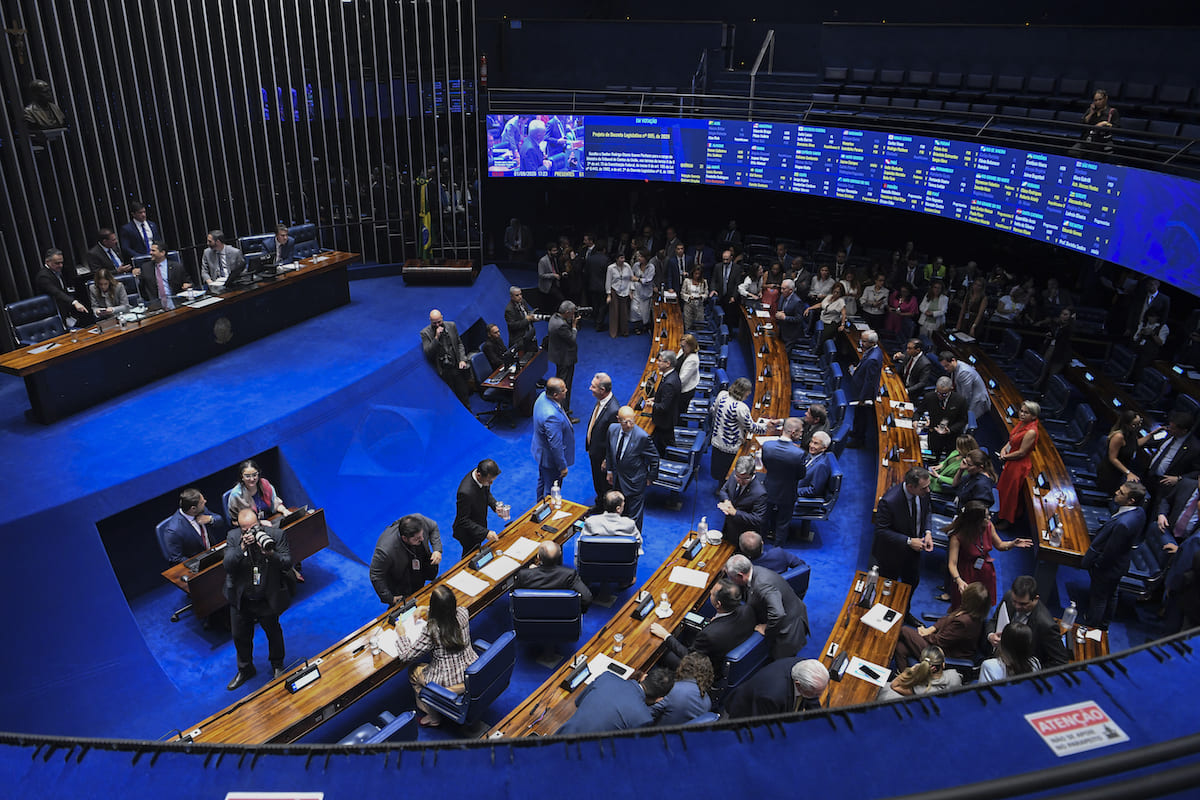
On Sept. 1, Brazil’s Federal Senate approved legislation considered pivotal to the country’s digital development: REDATA, short for Regime Especial de Tributação para Serviços de Datacenter, or Special Tax Regime for Data Center Services.
The legislation establishes new tax incentives for data centers in Brazil, but ties those benefits to a series of requirements covering energy use, water efficiency and sustainability.
The move comes as little surprise. Brazil currently accounts for 49% of installed data center capacity in Latin America, with more than 210 facilities in operation, including roughly 40 large-scale or hyperscale sites. The country is already the region’s leading digital hub, and analysts expect its domestic data center market to approach $6 billion by the end of the decade.
According to consulting firm Aurora Energy Research, Brazil’s data center capacity is expected to quadruple, exceeding 4 GW in the early 2030s.
The country also offers several advantages for investors, including large amounts of relatively inexpensive land, Export Processing Zones, known locally as ZPEs, open to digital service providers, and highly competitive electricity prices.
Brazil has also stepped up public investment in the sector. In 2024, with the launch of its Artificial Intelligence Plan, the federal government committed $4.2 billion to further strengthen the country’s technology infrastructure. REDATA represents the next step in that strategy.
How REDATA works
Companies participating in the regime will benefit for five years from the suspension of taxes on domestic purchases and imports of electronic components used in their infrastructure. At the end of that period, the suspended taxes will become permanently exempt.
The tax relief applies to purchases made both domestically and abroad, with two exceptions. For Brazil’s Tax on Industrialized Products, or IPI, goods that are also manufactured in the Manaus Free Trade Zone and already receive tax benefits are excluded. For imports, the exemption applies only to products for which there is no domestically manufactured equivalent.
In return, companies will have to meet strict requirements on resource use and innovation.
The legislation approved by Congress requires the exclusive use of renewable or low-carbon energy, with hydropower, biogas and biomass included in the latter category. Companies can comply either by signing long-term electricity supply agreements or by developing generation facilities for their own consumption.
For equipment cooling, data centers must achieve a Water Usage Effectiveness, or WUE, of no more than 0.05 liters per kilowatt-hour (L/kWh), based on annual measurements.
For comparison, the EU’s proposed rating system sets a WUE of 0.10 L/kWh or less for its highest water-efficiency class.
The Brazilian legislation also requires participating companies to comply with a set of sustainability indicators, whose detailed criteria will be established through implementing regulations.
An amendment introduced by the Chamber of Deputies requires beneficiaries to publish a dedicated report detailing their water-efficiency metric, the sources of electricity they use and other sustainability indicators.
Finally, the legislation requires at least 10% of the services provided by participating data centers to serve the Brazilian market, even if domestic demand is deemed insufficient.
According to Brazil’s Federal Senate, the goal is to ensure that the tax incentives have a direct impact on the domestic economy while also strengthening the country’s technological sovereignty.
Read also: How to manage data center energy demand without overloading the power grid