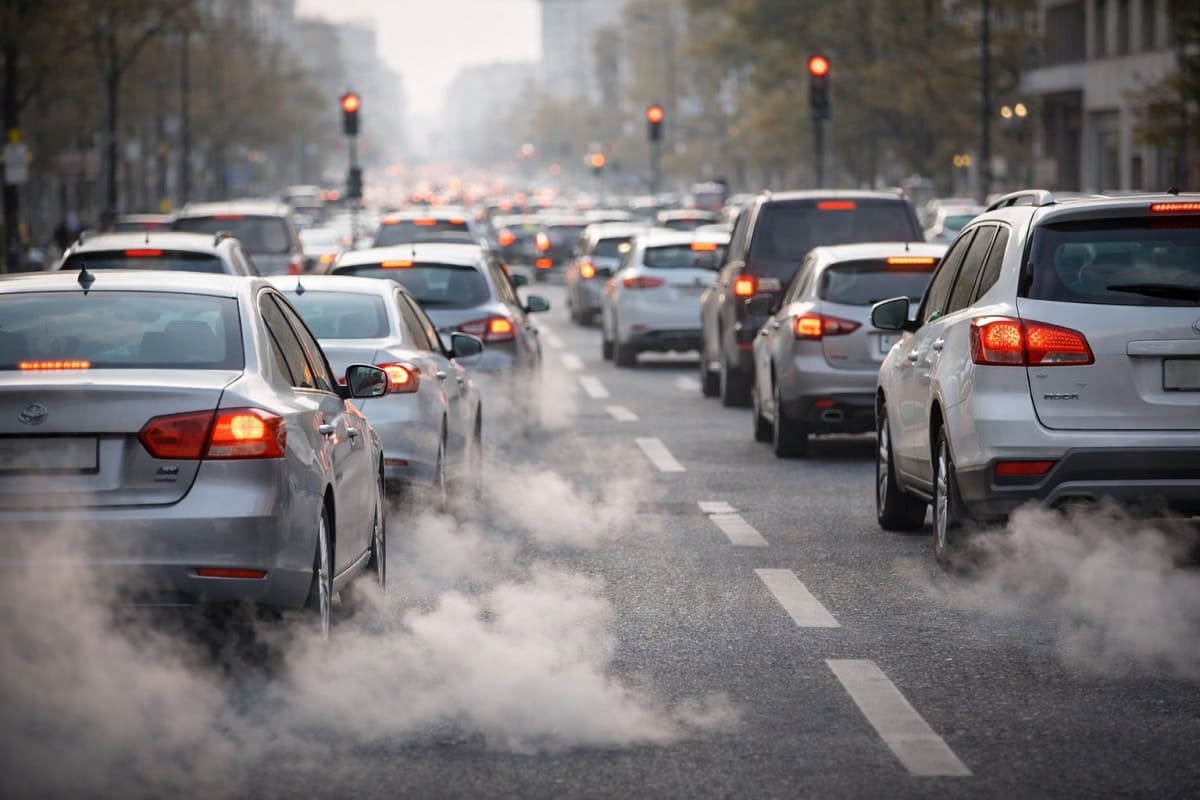
Car pollution and fine particles tied to Alzheimer’s risk
Breathing in air pollution for years, including smog generated by combustion engine vehicles and industrial activity, may contribute directly to the development of Alzheimer’s disease. A new peer-reviewed study published in the open access journal PLOS Medicine identifies fine particulate matter, PM2.5, as a significant risk factor for the most common form of dementia, which affects about 57 million people worldwide.
While air pollution has long been associated with chronic conditions such as hypertension, stroke and depression, all of which are also linked to Alzheimer’s, clear evidence of a direct relationship between fine particles and dementia had remained limited.
Large-scale analysis of PM2.5 exposure
To investigate the link, researchers from Emory University analyzed data from more than 27.8 million Medicare beneficiaries in the United States aged 65 and older between 2000 and 2018. The study assessed individual exposure levels to air pollution over time.
The findings show that higher exposure to PM2.5 was associated with an increased risk of Alzheimer’s disease. The association appeared slightly stronger among individuals who had previously experienced a stroke, while hypertension and depression contributed only marginal additional risk.
According to the authors, the results suggest that air pollution may contribute directly to the onset of Alzheimer’s rather than acting solely through other chronic diseases.
“Our findings suggest that reducing air pollution could provide broad cognitive health benefits for older adults,” the researchers wrote. “Targeted interventions may be particularly important for those with cerebrovascular disease or multiple chronic conditions.”
Car pollution and the automotive sector’s role
Fine particulate matter, PM2.5, refers to particles smaller than 2.5 micrometers in diameter and represents a major component of traffic-related air pollution.
Focusing specifically on vehicles, electric cars significantly reduce tailpipe emissions compared with combustion engine models. However, all vehicles generate particulate pollution through brake wear and tire abrasion.
Tires are made from complex mixtures of natural and synthetic rubber, polymers and chemical additives. As vehicles move, friction between the tire and the road surface gradually wears down the rubber. This process releases microscopic fragments into the air and onto road surfaces, where they can enter waterways or remain suspended as airborne particles.
Heavier vehicles, including SUVs as well as buses and trucks, tend to wear down tires more quickly, potentially producing higher levels of this type of particulate matter.
Braking also contributes to particulate emissions. When brake pads press against metal discs, high-temperature friction erodes pad material, which contains metals such as copper and iron along with ceramic compounds. The resulting fine dust can settle on wheel rims or disperse into the air.
Hybrid and electric vehicles use regenerative braking systems, which slow the vehicle by using the motor as a generator. This reduces reliance on mechanical braking and, consequently, lowers brake-related particulate emissions.
The study adds to growing evidence that car pollution, particularly fine particles, represents not only a respiratory and cardiovascular concern but also a potential risk factor for long-term cognitive health.