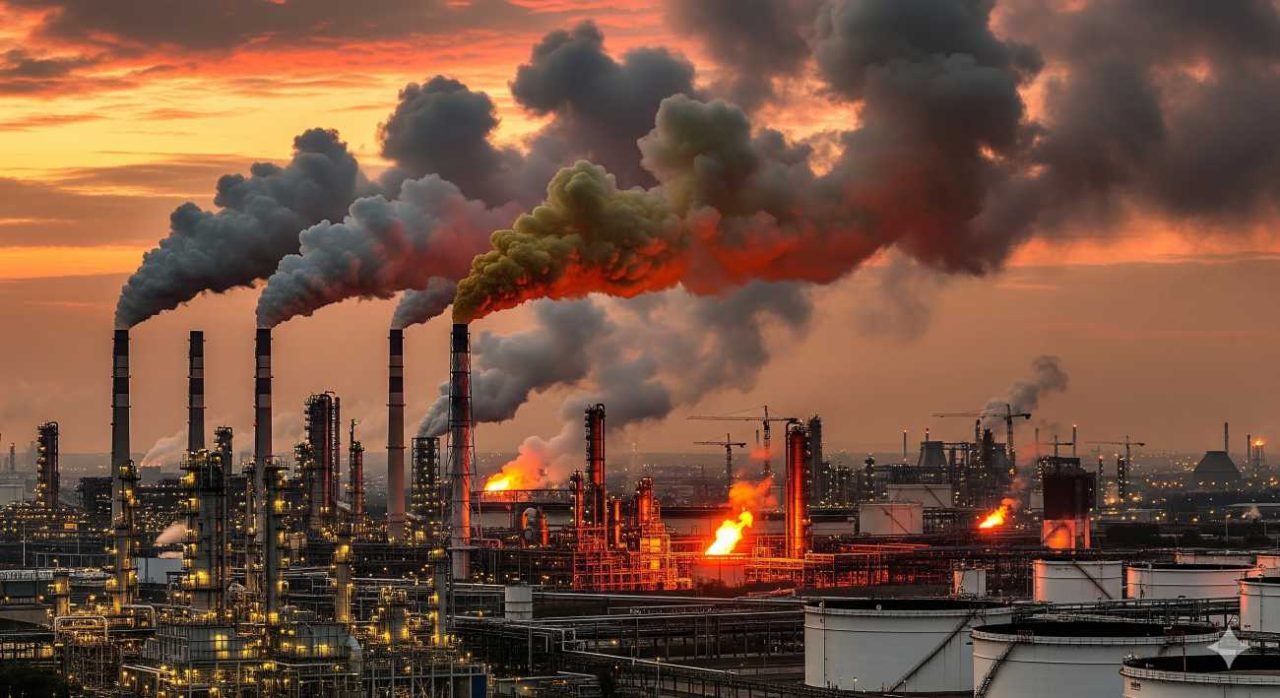
Heat waves intensified by fossil fuel and cement emissions
Heat waves have been made more likely and intense by emissions from 180 fossil fuel and cement companies. That is the finding of a study published in Nature and led by ETH Zürich, the Swiss Federal Institute of Technology. For the first time, the research directly linked 213 major extreme events recorded between 2000 and 2023 to the responsibility of specific corporations, including U.S. giants ExxonMobil and Chevron. The results show that the activities of major carbon producers have substantially influenced phenomena that would have been nearly impossible without global warming.
The growing role of major carbon emitters
Data show that the probability of heat waves has surged exponentially since the preindustrial era: about 20 times higher between 2000 and 2009 and up to 200 times higher between 2010 and 2019. One in four of the events analyzed would not have occurred without climate change. According to the study, emissions from major companies alone accounted for half of the increase in heat wave intensity. Depending on the producer, individual contributions were sufficient to make possible between 16 and 53 events that would have been impossible in a preindustrial climate.
The weight of global emitters
Emissions statistics reveal that the top 20 fossil fuel companies are responsible for more than one-third of global CO₂ emissions since 1965. Oil and coal giants each account for shares ranging between 2% and 5%.
Overall, the 180 companies analyzed by ETH Zürich and Nature are linked to nearly half of the observed increase in the intensity of modern heat waves. The breakthrough lies in being able to attribute responsibility for specific extreme events to particular industrial actors with scientific rigor.
Climate models and historical data reveal the impact of companies on heat waves
The study uses a systematic attribution approach, combining climate models with historical emissions data. This method allowed researchers to calculate the contribution of individual companies to the rising frequency and intensity of heat waves.
The analysis shows that emissions from the 180 largest fossil fuel and cement producers accounted for 75% of cumulative CO₂ released between 1850 and 2023. The 14 biggest corporations, including ExxonMobil, Chevron, BP, Shell, Gazprom, Saudi Aramco and Coal India, are alone responsible for 30% of global emissions.
This weight is reflected in the events studied: the former Soviet Union alone made 53 heat waves at least 10,000 times more likely, while Coal India was linked to 51. Other companies such as BHP, Santos and INPEX also played a significant role, with emissions sufficient to cause about 50 of the 213 analyzed events each.
Legal implications of heat waves
Scientific progress is finding an echo in the legal arena. In late July, the International Court of Justice in The Hague issued an advisory opinion establishing that states can be held accountable for failing to meet climate obligations.
According to court president Yuji Iwasawa, the negative impacts of a destabilized climate undermine fundamental rights such as health and an adequate standard of living. In cases of violation, states may be required to provide restitution, compensation and reparations. While proving direct causation between emissions and damages remains complex, the judges stressed it is not impossible.
A new framework of accountability
The Hague’s opinion, initially requested by the Pacific nation of Vanuatu, provides legislators and courts worldwide with a new tool to hold governments, and potentially companies, accountable.
Heat waves are no longer just natural phenomena intensified by global warming but events for which science can identify clear responsibilities. The combination of new scientific evidence and international legal instruments could open the door to compensation claims and stricter obligations to protect the climate for present and future generations.