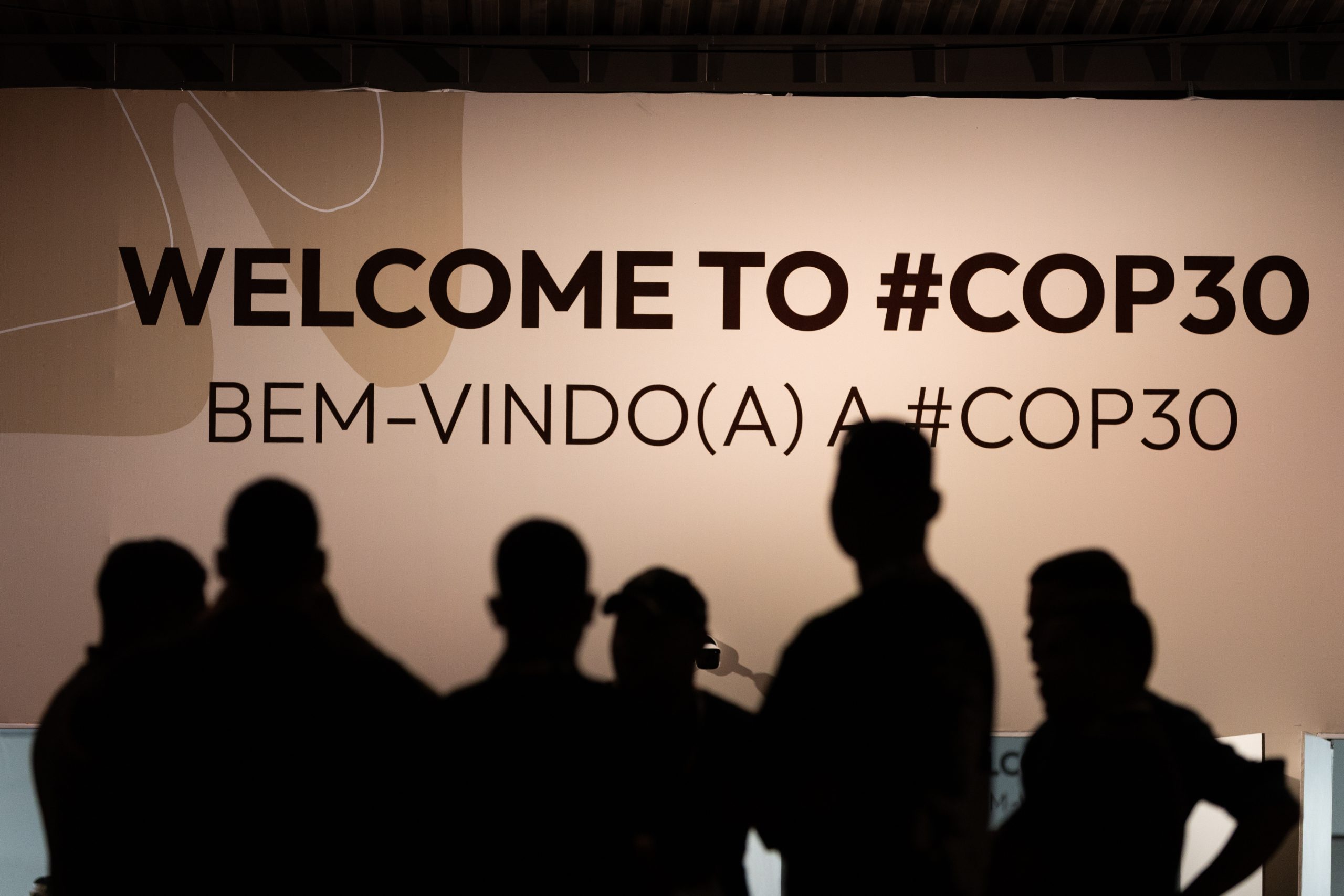
A Global Summit, With One Key Absence
As delegations from around the world gather in Belém, Brazil, for the UN Climate Change Conference, COP30, one big player will be missing: the United States.
For the first time, the US will not send federal representatives to the global climate talks, a major retreat from the international stage as global emissions continue to rise. While California Governor Gavin Newsom will attend on his own, along with other state and local officials attending independently, the absence of official US representation highlights the growing gap between state-level ambition and federal gridlock. And the bigger question: can the world move forward on climate when one of the biggest emitters decides to sit out?
UN Secretary General António Guterres kicked off the summit with a stark warning: “This COP must be a decade of acceleration and delivery.” However, with Washington absent, many fear momentum will stall before it even starts. Without America’s political and financial muscle, the world’s most critical climate negotiations could lose direction and credibility.
Trump’s Return and a Familiar Climate Retreat
The decision comes amid the Trump administration’s retreat from climate diplomacy, instead shifting its focus to a stronger economy and national security, according to an administration spokesperson.
The Trump administration is calling it sovereignty, not isolation. “We’re not sending bureaucrats to Brazil to be lectured by global elites who fly in on private jets,” Trump said before the summit. “America will lead on our own terms, not through globalist climate schemes.”
Behind the words is a familiar playbook: expand fossil fuels, reject financial commitments to developing countries, and turn climate diplomacy into a national strength symbol. Officials close to the administration say “energy dominance”, not emissions reduction, is America’s new contribution to global security.
The decision not to attend comes eight years after Trump first removed the United States from the Paris Climate Accord, back in 2017. At the beginning of his second term earlier this year, Trump again removed the United States’ commitment to the Agreement, cancelling former U.S. President Joe Biden’s reinstatement in 2021. The decision also comes as the global temperatures hit record highs, with 2025 being one of the warmest years yet, as record greenhouse gas concentrations drive record heat, according to the World Meteorological Organization.
Newsom’s Message: The “Other America” Steps In
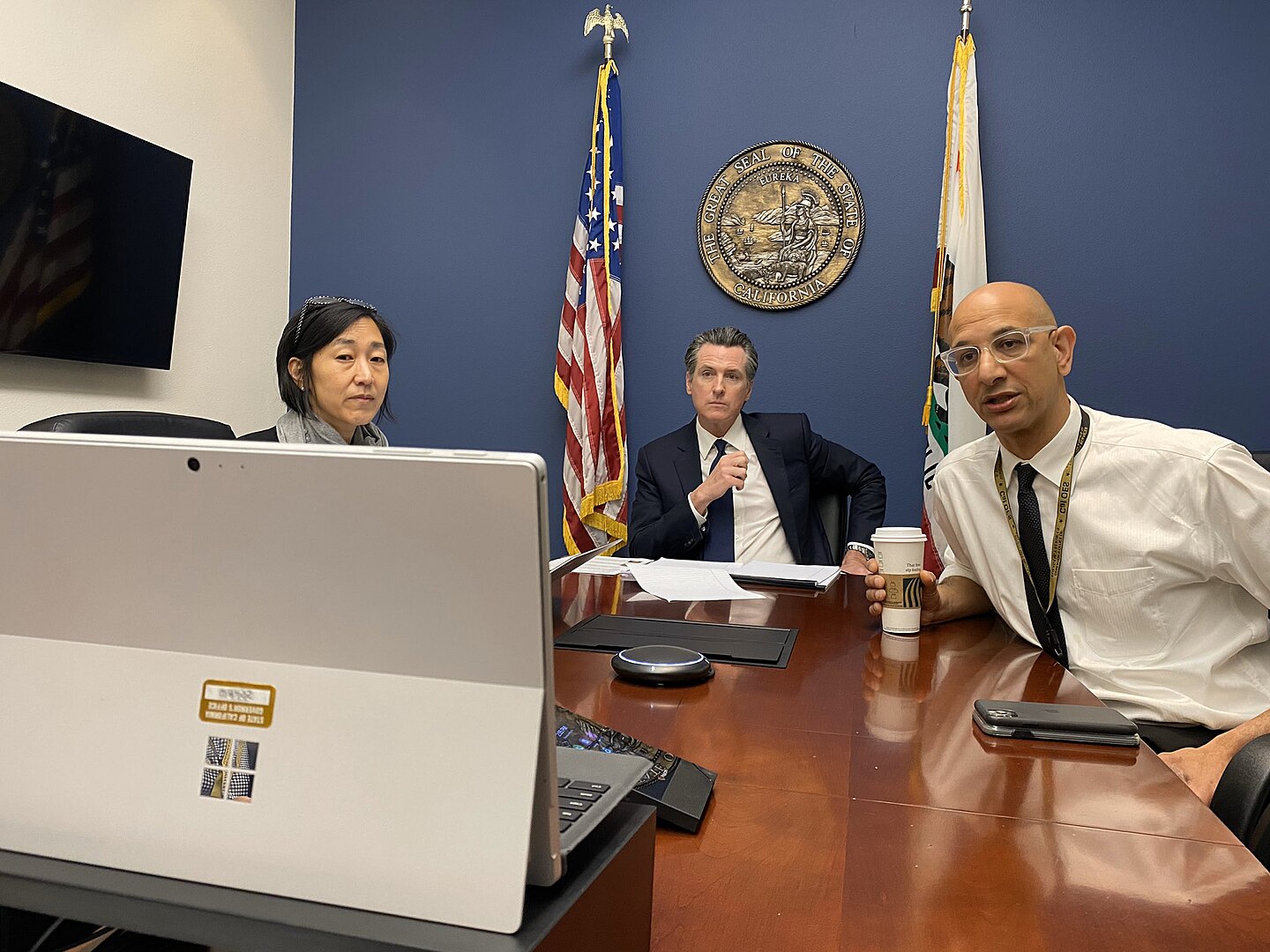
The U.S. will not be entirely absent, however. As Washington takes a step back, California Governor Gavin Newsom will attend with a delegation of his state. Leading the world’s fourth-largest economy, Newsom is attending with dozens of state and local officials, including New Mexico Governor Michelle Lujan Grisham, Wisconsin Governor Tony Evers, and Kate Gallego, Mayor of Phoenix.
While the federal government is staying home, Newsom is in Belém not as an official US delegate but as a representative of what he calls “the other America”. His presence at COP30 is both political and symbolic: a message that parts of the country still believe in international climate cooperation even as Washington pulls out.
In his statement before he left, Newsom said, “California’s clean energy transition is creating jobs, driving investment and cutting toxic pollution”. California’s delegation includes state climate officials and energy advisers who have spent the last decade shaping some of the world’s most aggressive environmental standards, from strict vehicle emissions limits to a statewide goal of 100% clean electricity by 2045.
California’s record gives him credibility. Greenhouse gas emissions in the state are down 21% since 2000, and the economy has grown by over 80% in the same period. Two-thirds of California’s power comes from clean sources, and the state runs on 100% renewable electricity for parts of almost every day. At COP30, Newsom’s message is one of proof, not promise, that climate action and economic growth are not mutually exclusive and that the US story is not uniform.
Yet his role also highlights a deeper contradiction: a state acting on the global stage without its own nation behind it. Newsom cannot sign treaties or negotiate emissions targets, but his attendance demonstrates how fragmented American climate leadership has become. In Belém, he is both a participant and a reminder that while some U.S. leaders move forward, their country remains stuck in political gridlock.
The Numbers: A Major Emitter Without a Seat
But even California’s progress cannot mask a harder truth: on a national scale, the United States remains one of the world’s largest polluters. According to the EPA’s Inventory of the US Greenhouse Gas Emissions and Sinks (1990-2023), the United States contributes roughly 13-14% of global emissions, second only to China. Transportation and energy sectors remain the largest sources, driven by car dependency, industrial production, and fossil-fueled power generation. Despite the declines in emissions from 2005, they have plateaued since 2020.
By comparison, China now accounts for nearly 30 percent of annual global emissions, the European Union and India each about 7 percent, yet the U.S. still holds the title of largest cumulative emitter in history. Its absence from COP 30 has left other nations questioning whether global progress can continue without one of the world’s most powerful economies at the table.
From COP30, a Reminder of What’s at Stake
Hosting the summit in the heart of the Amazon, Brazilian President Luiz Inácio Lula da Silva reminded delegates that “we don’t want the COP to continue to be an exposition or a fair for ideological climate products … we want it to be very serious, and for the things we decide to be implemented.” His statement captured the frustration of many leaders seeking action over rhetoric, a frustration amplified by the absence of one of the world’s largest emitters.
For now, the United States remains both a major contributor to global emissions and a hesitant participant in the collective response. Its absence may not halt global progress, but it leaves a void in leadership at a time when tangible implementation is most needed.