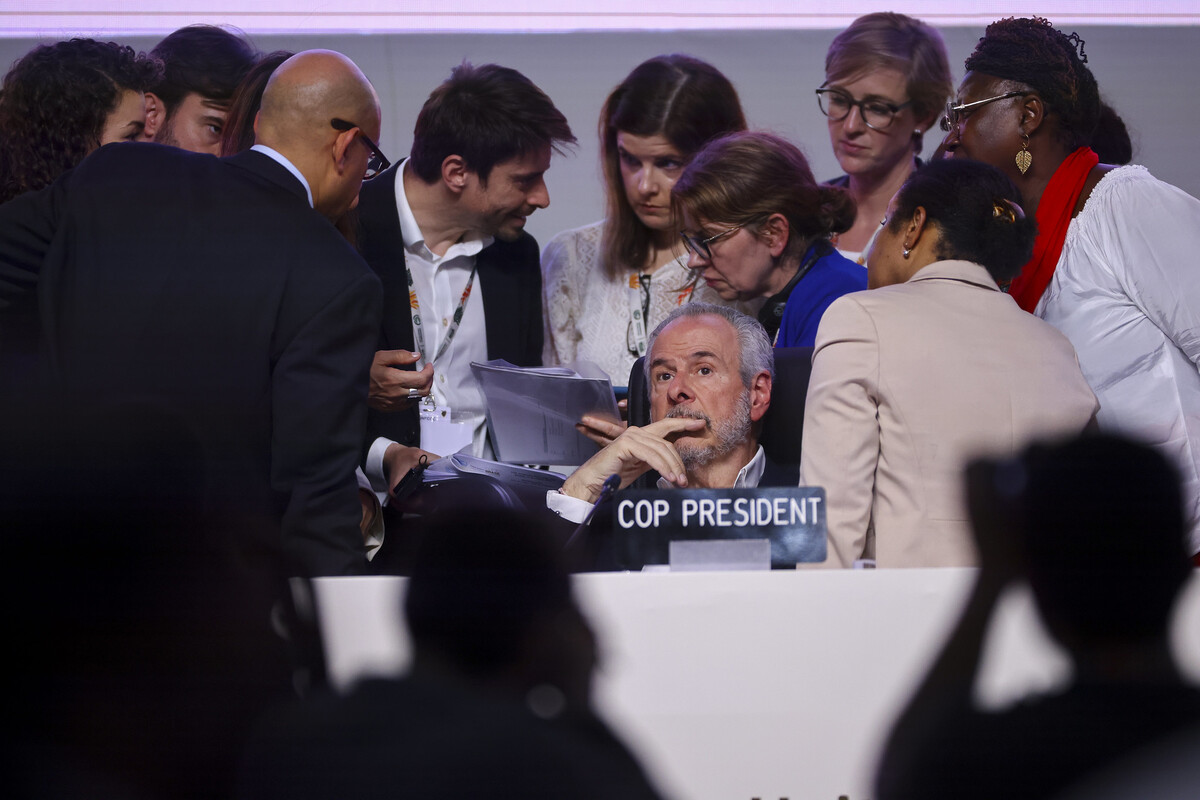
COP30 reveals a widening gap between climate urgency and global action
COP30 in Brazil was expected to be the summit of “truth and implementation,” yet it delivered neither. The fire that broke out inside the venue during the final days felt like a metaphor for global climate governance. The planet is burning, and the only response world leaders seem capable of is using fire extinguishers rather than addressing the root causes of global warming. The COP decision-making system allows a handful of countries to block the will of many, and talk of a structural reform of the COP format is now growing.
A disappointing compromise
This year’s UN climate summit concluded with a deeply disappointing compromise agreement. The core demands voiced by the majority of the nearly 200 participating countries were blocked by roughly one-third of them. The only tangible outcome was a pledge by advanced economies to triple financial support for low-income nations to strengthen their climate-adaptation efforts.
Key decisions from COP30 in Brazil
- mobilize 1.3 trillion dollars per year by 2035 for climate action
- triple adaptation finance by 2035
- launch new global initiatives, including the Global Implementation Accelerator and the Belém Mission to 1.5°C
- strengthen information integrity and counter climate disinformation
The world remains captive to fossil fuels
COP30 failed to produce any credible roadmap for a phased reduction of fossil fuels. Oil- and gas-exporting nations blocked all attempts to negotiate one, despite several countries threatening to halt the talks if the topic was removed. As a result, the summit ended without a plan capable of aligning global emissions with the 1.5°C pathway.
COP30 becomes the BRICS summit as the West remains divided
While multilateralism appeared alive, the UN framework did not lead. As one diplomat told Politico, COP30 became “the BRICS COP.” Negotiations stalled on hydrocarbons, and the notable absence of the United States, the world’s second-largest emitter and historically the biggest polluter, left the European Union isolated. Alternative alliances emerged, including Russia, Saudi Arabia, India, and South Africa, weakening climate ambition.
The Belém Action Mechanism
The final agreement establishes the Belém Action Mechanism, a new operational tool to coordinate a just transition globally. However, it contains no explicit reference to the fossil-fuel phaseout agreed in Dubai. According to Legambiente, Brazil’s COP30 presidency failed to overcome the vetoes of petro-states, despite the roadmap being supported by more than 80 countries, excluding Italy and Poland.
To secure approval of the final text, the Brazilian presidency committed to launching, together with Colombia, a new roadmap for fossil-fuel phaseout with all willing countries. Europe, including Italy, is expected to play a central role. The launch is scheduled for April 28–29, 2026, in Santa Marta, Colombia.
Climate protection: scientists react
Ten years after the Paris Agreement, Brazil had pledged to guide governments toward concrete emissions-reduction plans. The lack of any implementation framework marks a clear failure of COP30.
Johan Rockström, director of the Potsdam Institute for Climate Impact Research, said: “COP30 was presented as the COP of truth and implementation. Yet leaders in Belém failed to deliver. Our only chance to keep 1.5°C within reach is to bend the global emissions curve by 2026 and cut emissions by at least 5 percent every year thereafter.”
He added that implementation requires clear roadmaps to phase out fossil fuels and safeguard nature: “Instead, we got neither truth nor implementation. Within 5–10 years, we are likely to exceed 1.5°C, entering a danger zone. The world needs a credible plan and the policies to make it happen.”
Countries ignore the IPCC’s warnings
Ottmar Edenhofer, climate economist and director of the PIK, noted: “The clear messages of the IPCC are not being heard. Once again, the COP28 commitment to move away from fossil fuels has not been strengthened.”
“In Belém there was discussion on how to tax air and maritime transport. The debate on climate tariffs was controversial, but it helped clarify the link between climate and trade. An important initiative was launched to finance global rainforest protection. The minilateral agreements between China and the EU to finance emission reductions are emerging as a possible path for the future. Even though many of these projects still face major challenges, the COP should strengthen its role in driving momentum and assessing promising initiatives for climate action.”
Adaptation commitments remain vague
High-income countries pledged to support adaptation policies in highly vulnerable nations, but only offered a vague promise to triple funding by 2035. Environmental organizations argue that the financial resources remain far from adequate for today’s climate emergency.
Attacks on science and rising climate denial
For the first time, a COP final decision recognizes the need to combat climate disinformation, pledging to promote information integrity and resist narratives aimed at undermining science-based action.
Yet the summit is likely to be remembered for marking the end of global consensus on climate science. The UN’s Intergovernmental Panel on Climate Change is no longer treated as the primary reference for policymaking. Instead, the final text emphasizes integrating IPCC findings with reports from regional institutions.
Despite repeated scientific warnings, COP30 produced no progress on fossil-fuel phaseout or emissions-reduction goals. Brazilian researcher Carlos Nobre warned that fossil-fuel use must fall to zero between 2040 and 2045 to avoid catastrophic warming of up to 2.5°C by mid-century, which would trigger near-total loss of coral reefs, collapse of the Amazon rainforest, and accelerated melting of Greenland’s ice sheet.
At COP30, climate and trade take the stage
The EU is preparing to introduce a border tax on certain carbon-intensive imports including steel, fertilizers, cement, and aluminum. Several trading partners, including China, India, and Saudi Arabia, view the measure as a major obstacle. The climate-trade nexus gained unprecedented visibility at COP30.
European negotiators insisted that the legislation is not designed to hinder trade but to reduce emissions. They proposed that trading partners adopt their own pollution-pricing mechanisms. Economists support the idea, noting that if polluting becomes more expensive, the shift to clean energy becomes more likely. Even on this issue, however, COP30 made no decisions. The final agreement only commits countries to a continuous dialogue involving governments and actors such as the World Trade Organization.
