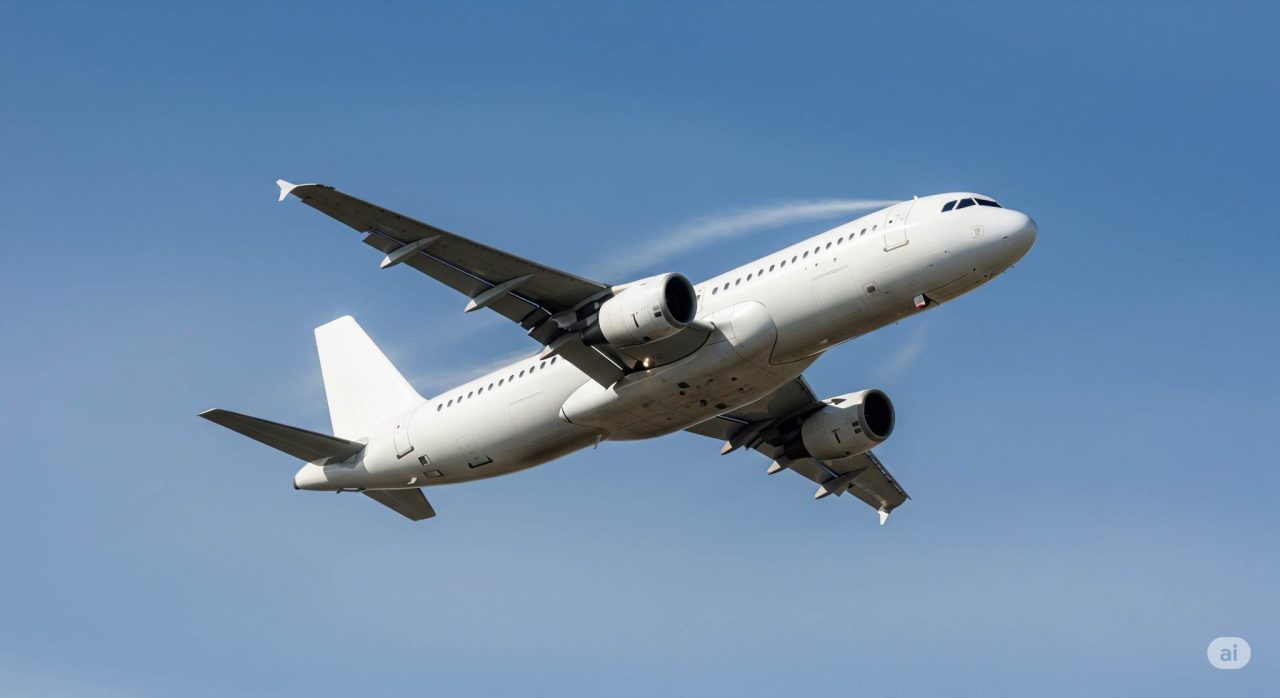
How climate change is reshaping turbulence in the skies
Will airplane turbulence become more common as global warming accelerates? The answer is simple: yes. The outcome is spilled coffee, flying tablets, and shaken passengers. Climate change is already altering atmospheric conditions and, scientists warn, air travel could become increasingly turbulent in the years ahead.
Shifts in temperature and changes in wind speed or direction at high altitudes affect the frequency and severity of turbulence, making air travel less comfortable. “In the coming decades we can expect severe turbulence to double or triple worldwide,” said Professor Paul Williams, a scientist at the University of Reading and author of multiple studies. “The 10 minutes of severe turbulence we experience today could become 20 or 30.”
Airplane turbulence and climate change
Air travel is widely known to contribute to climate change through greenhouse gas emissions. But the reverse is also true: aviation is affected by climate change, mainly through turbulence. The most concerning type is clear-air turbulence (CAT), which is particularly dangerous because it occurs in cloudless skies and is difficult to detect. CAT typically forms between 5 and 6 kilometers (3 to 4 miles) above ground, in the mid-to-upper troposphere, often associated with jet streams. Studies had already shown that by mid-century, transatlantic flights could face significantly more turbulence due to rising CO2 levels.
As climate change strengthens jet streams, CAT may occur more often in specific regions. Recent research identified areas most at risk, including East Asia, the Middle East, North Africa, the North Pacific, and North America.
Jet streams act like fast-moving ribbons of wind encircling the Earth. Turbulence arises from sudden changes in wind speed or direction over short distances, known as wind shear. Climate change is intensifying wind shear, which directly affects aircraft stability and flight paths. Warmer air from rising CO2 emissions is fueling this increase.
CAT zones usually extend 80 to 100 kilometers (50 to 60 miles), but can reach up to 500 kilometers (310 miles). Their vertical thickness ranges from 500 meters to 2 kilometers (1,600 to 6,500 feet). The risk of CAT increases significantly when vertical wind shear exceeds 5 knots per 1,000 feet.
The rise in turbulence has already begun
Data shows the trend is not just theoretical, it is already happening. Over the past 40 years, clear-air turbulence has worsened. A 2023 analysis of CAT frequency worldwide found sharp increases between 1979 and 2020 at mid-latitudes and at common cruising altitudes. Over the North Atlantic, severe CAT events rose by 55%, moderate by 37%, and light by 17%.
A case study in Europe
One striking case occurred on December 5, 2024, during a flight from London to Rome Fiumicino. The aircraft encountered sudden severe turbulence in Milan’s Flight Information Region. Aviation weather charts had not indicated any risk, nor had forecasting systems detected anomalies. The turbulence was attributed to CAT linked to a jet streak, an especially intense branch of a jet stream. The incident highlights that despite advances in forecasting models and detection technologies, blind spots remain, especially with CAT.
Should we be concerned?
Turbulence can cause serious injuries to passengers, particularly if seat belts are not fastened. Between 2009 and 2024, the U.S. National Transportation Safety Board recorded 207 severe injuries, defined as hospitalizations lasting more than 48 hours. At least 166 of those affected were crew members, likely caught standing during turbulence.
Globally, nearly 5,000 cases of severe turbulence occur annually across more than 35 million flights. The International Civil Aviation Organization reported in its 2024 safety review that almost 40% of passenger injuries in 2023 were caused by turbulence.
While turbulence can be traumatic, it rarely threatens the structural integrity of modern aircraft. Fatal crashes due to turbulence are extremely rare thanks to rigorous design standards.
But the economic impact is another matter. Flights may take longer and cost more. Avoiding turbulence and headwinds means extra flying time. Every reported turbulence event also requires safety inspections, keeping planes grounded longer. Delays, reroutes, and cancellations bring additional compensation costs for airlines.
As Italy’s Air Force notes, turbulence remains a constant reminder of the power and unpredictability of the atmosphere. Investing in better detection and forecasting systems will be essential to ensure safer and less turbulent skies in the decades ahead.