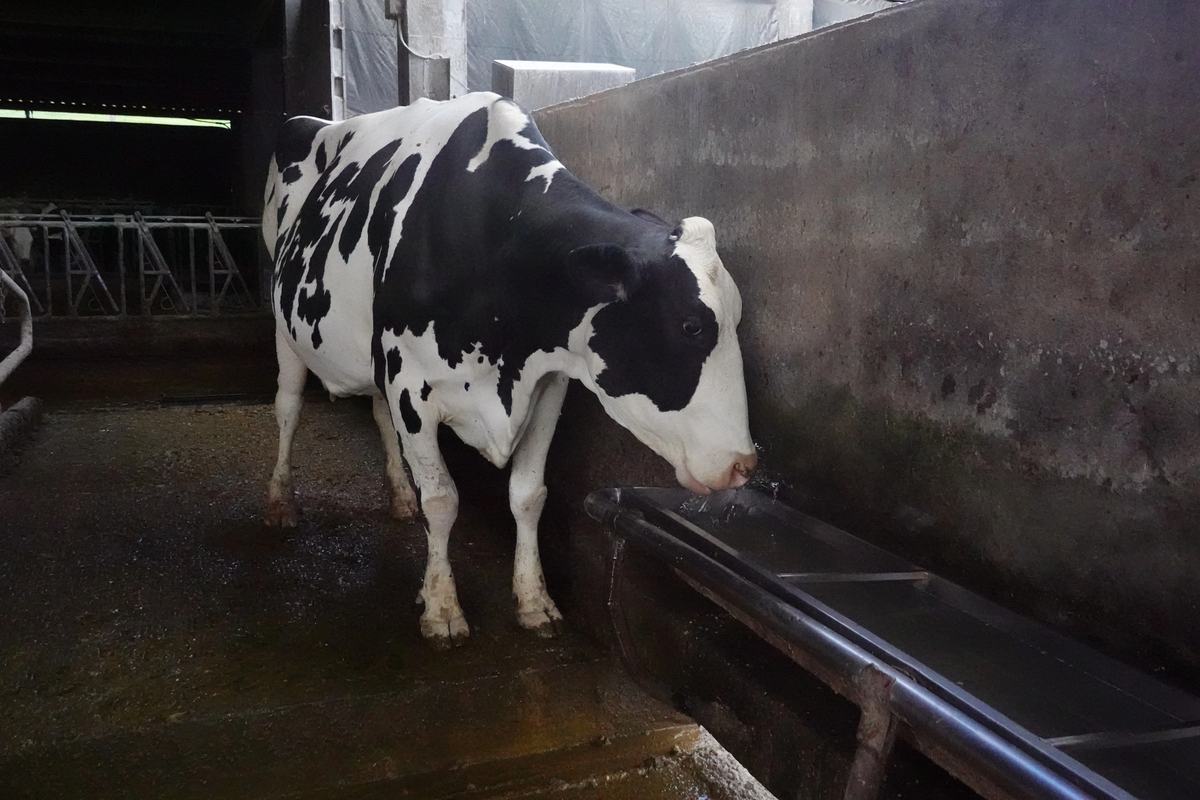
Livestock water use remains the biggest drain on US water resources
Water consumption has become one of the most controversial aspects of the artificial intelligence boom. As AI infrastructure expands, major technology companies increasingly argue that the water demands of their operations are manageable. In recent weeks, Google, Amazon, and Microsoft have each introduced new initiatives aimed at reducing or offsetting the water footprint of their AI infrastructure.
Yet, compared with other sectors of the U.S. economy, data centers consume far less water than livestock farming.
Water use by U.S. data centers reached an estimated 264 billion gallons (about 1 trillion liters) in 2025, driven largely by the rapid expansion of AI and the widespread use of evaporative cooling systems.
By comparison, nearly 90% of daily freshwater withdrawals across the contiguous United States are dedicated to crop irrigation, thermoelectric power generation, and public water supply. Together, these three categories account for approximately 224 billion gallons of freshwater per day.
Today, U.S. data centers consume approximately 2.85 billion liters of water per day, far below the 623 billion liters used daily by the livestock sector.
The environmental impact of data centers depends on where they are built
Although data centers have a much smaller overall water footprint than livestock production, their environmental impact depends heavily on location and when water demand occurs.
Water used to grow livestock feed is spread across vast agricultural regions. By contrast, data center water consumption is concentrated in relatively small geographic areas. More than 40% of U.S. data centers are located in regions already experiencing high water stress, where evaporated water directly competes with municipal water supplies.
The Phoenix metropolitan area, including Goodyear, Arizona, hosts facilities such as Meta’s data center, which alone consumes approximately 56 million gallons of drinking water each year (about 212 million liters).
Northern Virginia, widely regarded as the world’s largest data center hub with more than 300 operating facilities, saw the sector’s total water consumption approach 2 billion gallons (more than 7.57 billion liters) in 2023, a 63% increase from 2019. Loudoun County alone accounted for roughly 900 million gallons (3.4 billion liters) that year.
Under extreme workloads or during summer heat waves, a single 200 to 300 MW hyperscale data center campus can consume as much as 5 million gallons of water per day (18.9 million liters), enough to match the daily water needs of a city with 10,000 to 50,000 residents, placing significant pressure on local water infrastructure and utility costs.
Livestock remains the primary source of water stress in the United States
Despite growing attention on AI infrastructure, livestock production remains the dominant source of pressure on U.S. freshwater resources, particularly across the arid western states.
Data centers have a substantially smaller overall water footprint, but because their withdrawals are concentrated at individual sites, they can create severe local water stress in the communities where they operate.
To address these challenges, the technology industry is gradually moving away from water-intensive evaporative cooling in favor of closed-loop direct liquid cooling and immersion cooling systems, technologies expected to triple their market adoption by 2030.