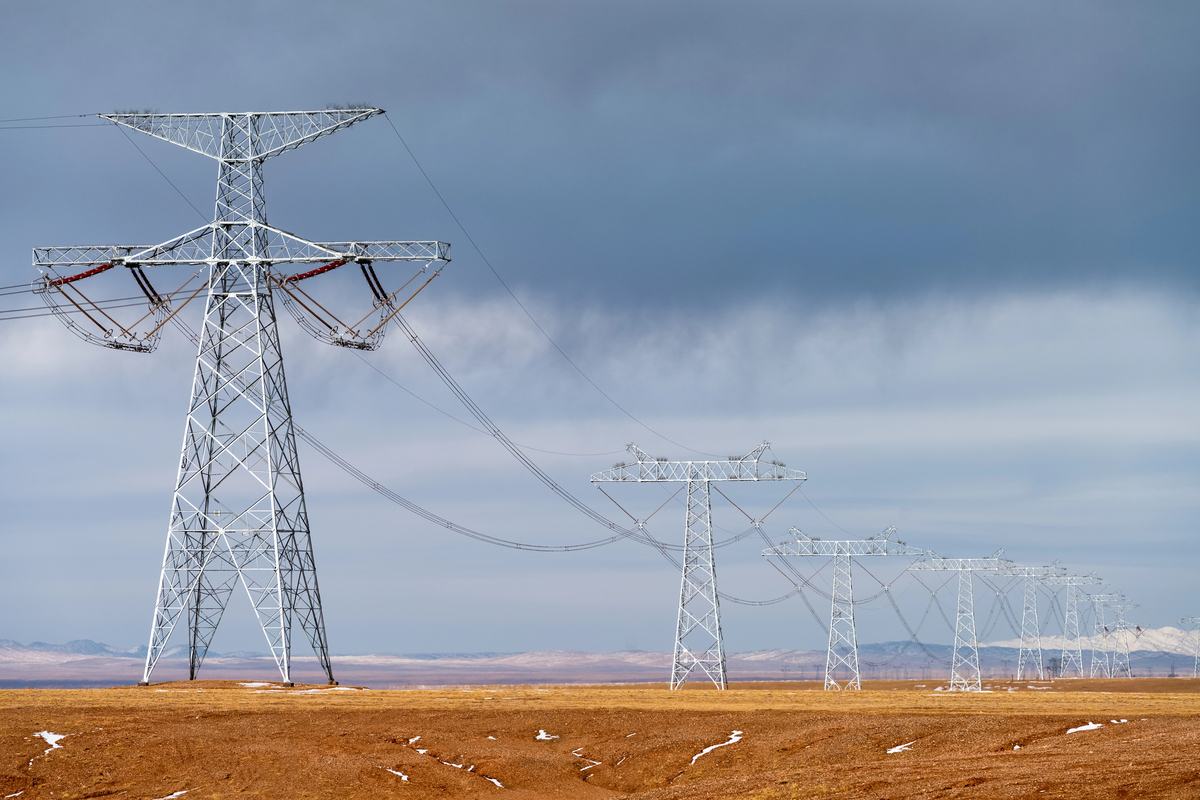
China’s renewable energy megabases are outpacing the grid
China continues to lead the global expansion of clean energy, but its transition is facing a major structural challenge: an underdeveloped transmission network and a persistent dependence on fossil fuels. According to a new report from Global Energy Monitor (GEM), the country is currently building more than 500 gigawatts (GW) of utility-scale wind and solar capacity, more than the rest of the world combined. However, severe grid bottlenecks and the continued integration of renewable generation with coal-fired power plants could extend China’s reliance on coal well into the period covered by its 15th Five-Year Plan.
The GEM report shows that China currently has a project pipeline totaling 664 GW of utility-scale solar and 698 GW of wind power. In wind alone, 251 GW is already under construction, more than twice the combined total of every other country. Once operational, those projects will generate roughly as much electricity each year as Germany’s entire power output in 2025. China’s wind development pipeline expanded by 37% over the past year, while the rest of the world remained essentially flat at -1%.
Much of this unprecedented buildout is concentrated across northern and northwestern China as part of Beijing’s strategy to develop massive renewable “energy megabases” in desert regions. At the current pace, China is on track to surpass its goal of having 50% of installed generating capacity from renewable sources well before the 2030 target date.
Transmission bottlenecks are limiting renewable energy
The report identifies electricity transmission as the most significant obstacle. Renewable electricity generated in the country’s remote western regions must travel to densely populated industrial centers along the eastern coast through ultra-high-voltage direct current (UHVDC) transmission lines. Yet expansion of that infrastructure is falling behind the pace of renewable deployment.
Transporting the 315 GW of electricity expected from the desert megabases by 2030 would require 27 new UHVDC transmission lines. However, planning under the 15th Five-Year Plan (2026-2030) includes only 10 additional lines.
As a result, growing volumes of renewable electricity remain stranded near production sites. Solar curtailment rates range between 10% and 17% in provinces including Qinghai, Xinjiang and Gansu, while wind curtailment reaches 4% to 9% across northern transmission corridors.
Coal still dominates electricity flowing through China’s grid
The transmission challenge is reflected in the electricity actually delivered through China’s UHVDC network. Today, wind and solar account for only about 20% of the electricity transported across these long-distance transmission lines, a share that has changed little since 2021. Coal-fired generation still represents the largest share, at 42%.
Infrastructure expansion plans continue to pair renewable energy with fossil fuel generation. The 11 transmission projects currently proposed for the desert megabases would combine 129 GW of wind and solar capacity with 40 GW of coal-fired power, leaving the expected electricity mix along those corridors divided almost evenly between clean and fossil energy.
According to Global Energy Monitor, developing renewable energy without fully separating it from fossil fuel infrastructure risks creating a long-term coal lock-in that could delay China’s decarbonization efforts.
The report notes that similar overlaps remain in emerging sectors such as green hydrogen, where China already leads the world with more than 10 GW of operational capacity, nearly eight times more than the rest of the world combined, while many projects remain closely linked to energy-intensive industrial hubs.
As Aiqun Yu, Research Analyst and Senior East Asia Strategist at Global Energy Monitor, explained:
“The objective of China’s renewable megabases is clear: to accelerate decarbonization nationwide. But the new Five-Year Plan still has significant room to strengthen the country’s climate leadership. Ultimately, the success of these renewable megabases will not be measured by the number of gigawatts installed, but by how much coal they actually replace.”