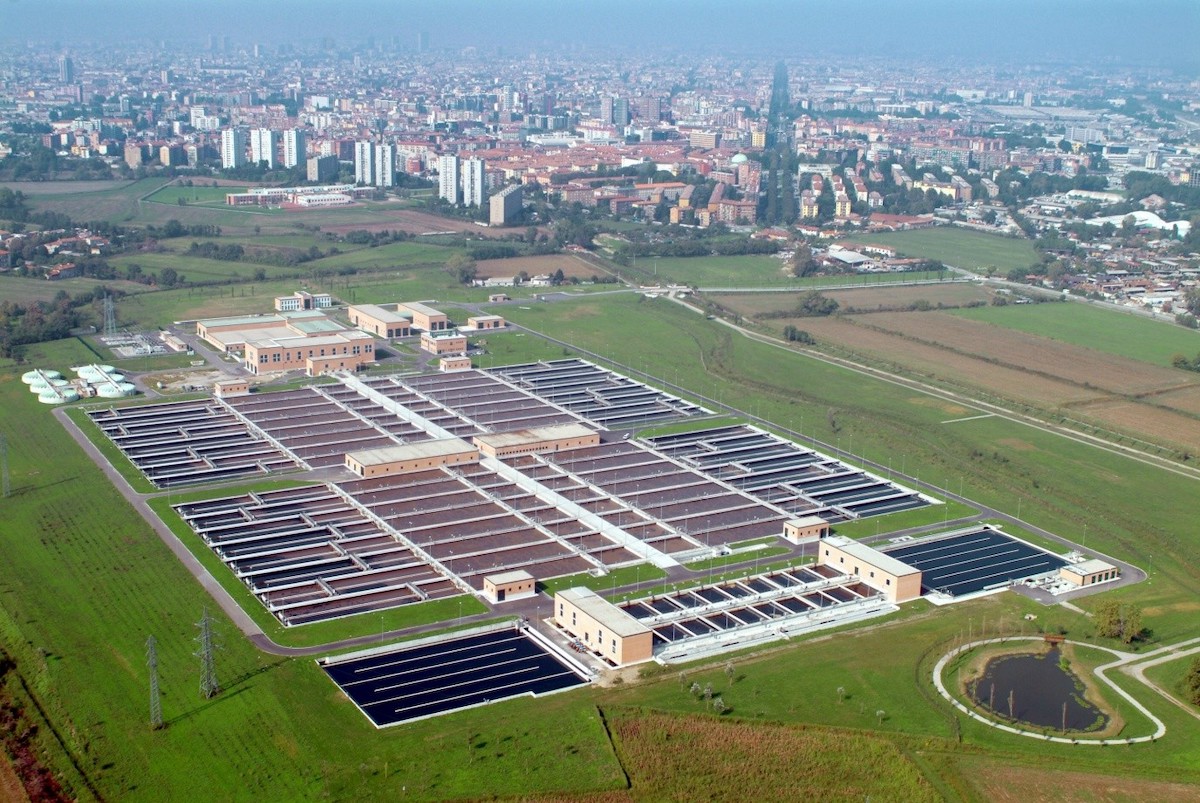
Phosphorus from wastewater, turning sewage into a strategic resource
Not just waste. Phosphorus will be recovered from Milan’s wastewater and sewage sludge, a strategic element classified by the EU as a critical raw material. The initiative is part of a circular economy approach enabled by NEOFOS.
The project is an innovative pilot funded with €1.5 million under a call promoted by the Italian Ministry of the Environment and Energy Security and led by Gruppo CAP. The program involves the Politecnico di Milano for scientific support in process modeling and optimization, and the University of Bologna for laboratory research and economic sustainability analysis. Milan’s water utility MM also participates, with the goal of developing a circular economy model that is unique in Italy.
Phosphorus recovery, why it matters
Phosphorus is a key input for agricultural fertilizers, but it is also increasingly critical to the energy transition. It is an essential component of lithium iron phosphate (LFP) batteries used in electric vehicles. As global mineral reserves decline, Europe relies heavily on imports from outside the EU. NEOFOS makes it possible to extract phosphorus directly from the residual streams generated by Milan’s metropolitan consumption.
A circular process rooted in Milan
The waste-to-resource process developed by Gruppo CAP will begin at the Bareggio treatment plant, where a first demonstration unit will be installed. The project builds on experience gained at the BioPiattaforma in Sesto San Giovanni. By anchoring the pilot phase in the Milan area, the initiative can test innovative solutions within one of Europe’s leading hubs for water treatment technologies.
Phosphorus recovery, three pillars of innovation
The NEOFOS project aims to develop advanced circular approaches for phosphorus recovery and the production of high-quality secondary raw materials along three integrated lines.
- The first focuses on so-called scavenger bacteria. Unlike traditional chemical methods, specific microorganisms capable of naturally accumulating phosphorus will be used, reducing both reagent use and energy consumption. Initial tests will take place at the Bareggio plant, followed by real-scale validation at the San Rocco and Nosedo facilities.
- The second pillar targets recovery from ashes and sludge. Phosphorus will be extracted not only from wastewater, but also from sewage sludge and the ashes produced by mono-incineration. The end products will include struvite and other purified phosphorus compounds, suitable for reintroduction into fertilizer markets or industrial supply chains.
- The third pillar addresses the End of Waste model. The objective is to define regulatory and market pathways that allow recovered materials to be certified as full-fledged raw materials, enabling a business model that can be replicated elsewhere.
At the core of the project is biological phosphorus removal from wastewater using S2EBPR technology. The process relies on bacteria that capture and store phosphorus from water, lowering chemical inputs and energy demand while complying with the EU’s stricter nutrient emission limits. Trials will be conducted on two pilot plants before assessing performance at full scale.
During this phase, MM is providing the Milan San Rocco and Milan Nosedo plants as real-world case studies for modeling biological removal processes and defining metropolitan-scale deployment scenarios.
In parallel, the project includes phosphorus recovery from sewage sludge and incineration ashes. Extracted materials will be converted into phosphorus salts or other pure compounds for use in fertilizers or industrial processes. Process optimization is expected to deliver high-quality outputs while minimizing acid use and improving overall sustainability.
Finally, the focus will shift to technology integration and scalability. Costs, environmental benefits, and large-scale application potential will be assessed, while strategies will be defined to manage recovered materials under End of Waste criteria, maximizing efficiency and sustainability. In this way, NEOFOS aims to establish a replicable phosphorus management model that combines innovation, economics, and environmental protection.
Toward resource autonomy
With the launch of the demonstration plant in Bareggio and optimized struvite production at the Sesto San Giovanni BioPiattaforma, Lombardy is positioning itself as a potential European reference point. Recovering phosphorus locally not only protects the environment, but also strengthens supply security for industry, reducing dependence on imports and supporting a more competitive and sustainable economy.