Building decarbonization faces structural social and technical barriers
Building decarbonization is emerging as one of the most decisive steps toward meeting 2050 climate goals. A study published in Energy and Buildings identifies 50 risks that hinder the adoption of efficiency technologies, electrification, and renewables. Another paper published in Nature Communications maps 95 sociotechnical barriers, largely economic and political, showing that the sector’s complexity requires dynamic, localized policies capable of acting simultaneously across multiple dimensions.
The most relevant risks concern insufficient performance, system unreliability, high costs, operational complexity, and social issues linked to labor and environmental justice. The building sector accounts for roughly 37 percent of global emissions related to energy and processes. Researchers show that the transition requires a sociotechnical approach integrating technical, economic, environmental, and social aspects across all phases of a building’s life cycle, from design to end of life.
The building sector generates 37 percent of global emissions
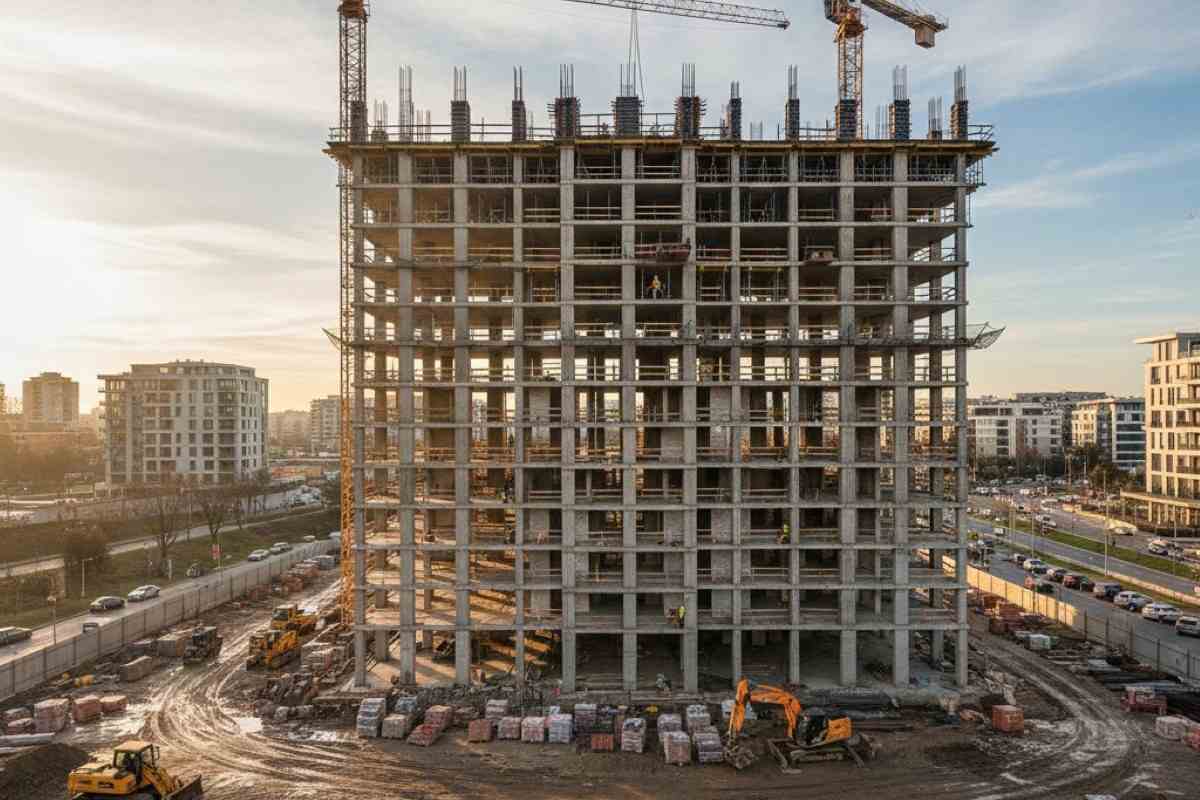
The studies depict a sector that significantly fuels climate change. The built environment produces 37 percent of global emissions generated by materials, construction, and building use. This pressure will increase as global population growth drives demand for new construction and interventions on existing buildings.
According to the researchers, the pace of the transition is slowed by a set of sociotechnical barriers that include high costs, limited awareness of technological benefits, inadequate building codes, and insufficient market demand. These obstacles are reinforced by interconnected economic, political, behavioral, and regulatory factors that collectively lock the sector into traditional, inefficient practices.
The 95 sociotechnical barriers
The study published in Nature Communications used advanced analytical techniques to examine thousands of international publications. The result is a map identifying 95 barriers across all phases of the building life cycle, including design, planning, regulatory requirements, material production, construction, operation, and maintenance.
Economic barriers dominate, particularly the high upfront costs of sustainable projects and the difficulty of accurately assessing risks and benefits associated with new technologies. A lack of awareness among owners, practitioners, and occupants is also identified as a major obstacle. Fragmentation among stakeholders, from owners to designers, contractors, and occupants, further complicates the transition, as each group holds differing priorities and risk perceptions.
50 risk categories for building decarbonization
The Energy and Buildings study categorizes 50 sociotechnical risks into six areas: performance, system operability, health and comfort, economic risks, environmental impacts, and issues of equity and human capital. The most frequently discussed risks include low durability, poor efficiency, performance gaps, grid instability, technical complexity, rising energy costs, energy poverty, safety risks, exposure to hazardous substances, and comfort-related issues such as overheating, glare, or ineffective passive systems.
Many risks are interconnected. Technological substitution, for instance, can generate new environmental vulnerabilities, such as the use of rare materials or the creation of hazardous waste. The analysis also highlights social risks, including poor working conditions, increasingly complex supply chains, and worker vulnerabilities within global contexts exposed to exploitation.
The “risk perception spiral”
One of the most innovative contributions of the research is the conceptual model named the “risk perception spiral,” which shows how risks are perceived differently depending on the stakeholder involved. Designers, contractors, owners, and occupants exhibit varying “risk proximity,” influencing decision priorities and the acceptability of solutions. Risks tied to everyday life, such as costs, health, and safety, become central, while more distant environmental or social risks tend to receive less attention.
The model also shows how the earliest and final stages of the building cycle, including design and decommissioning, are the least studied and most exposed to hidden risks, including those related to materials and waste management.
New strategies for building decarbonization
Researchers emphasize that building decarbonization demands a holistic approach integrating technologies, policies, economic models, and social dimensions. A purely techno-economic perspective is insufficient. Risk assessments must expand to consider the full life cycle of buildings, global material supply chains, working conditions, and community impacts.
The studies also highlight the need to develop strategies that reduce emerging risks without slowing climate action. Technological uncertainty, high costs, regulatory complexity, supply chain fragility, and potential social inequities must be addressed together to prevent the transition from creating new vulnerabilities rather than resolving existing ones.