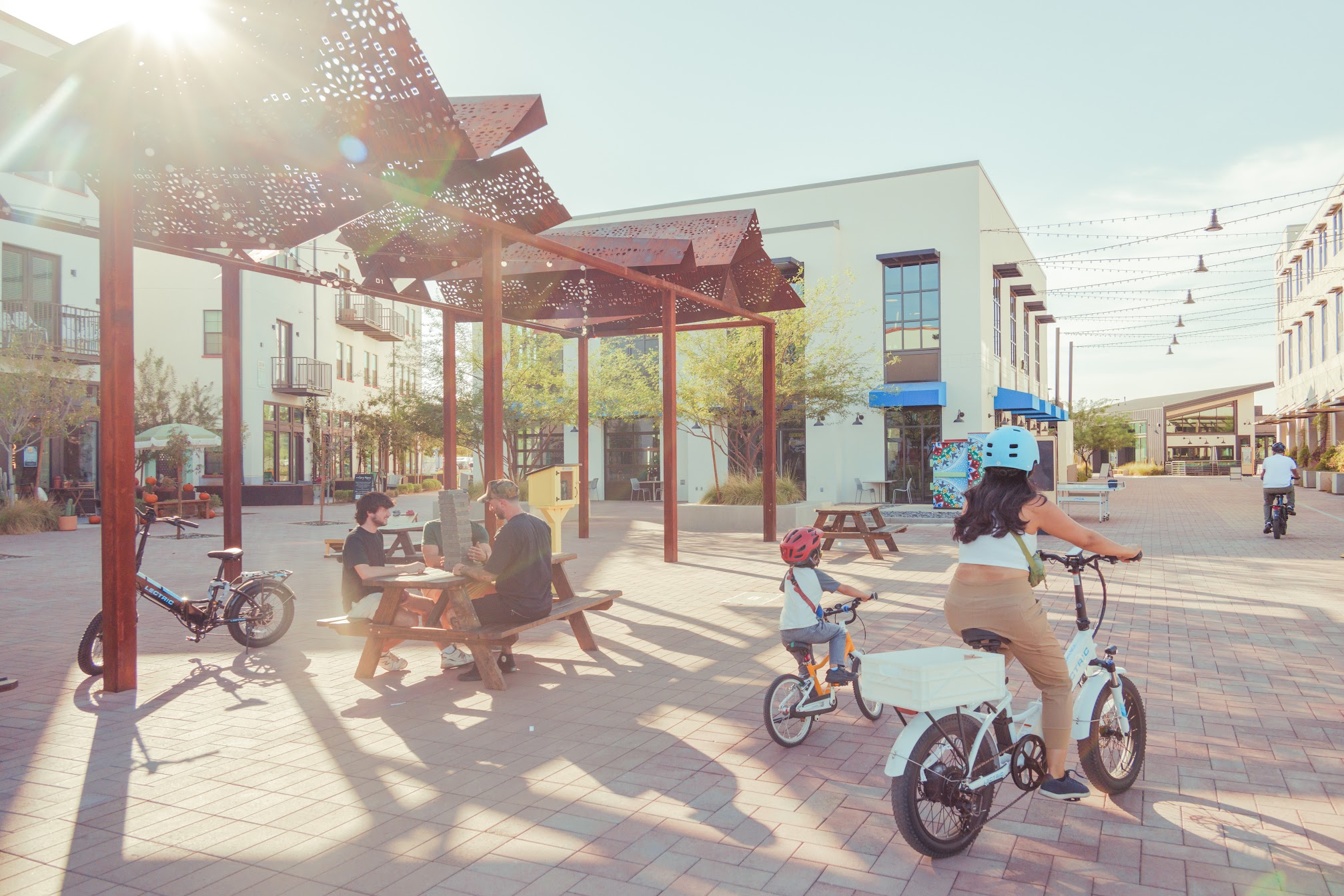
The “15-minute city” sounds like a utopian buzzword until you realize that in many places it’s already just… daily life. In much of Europe, you can walk or cycle to work, school, shops, a park, and a doctor’s office in under 15 minutes from home. Recent research on Western European metros notes that in central areas, essential services are already within a 15-minute walk or ride for most residents. An analysis for EIT Urban Mobility found that big cities like Amsterdam, Ghent, Madrid, Milan, and Munich are already “10 or even 5-minute cities” across large parts of their urban cores. What’s new is that this idea is now being taken further, beyond just proximity, into a model that combines local living with local food and local energy.
What the 15 Minute City Looks Like in North America
A recent study from Concordia University in Canada looks at what happens when you put solar power, urban agriculture, and green transport into a 15-minute neighbourhood. They used the West 5 district of London, Ontario, 0.28 km² and 2,000 residents, as the testbed for a North American 15-minute city cluster.
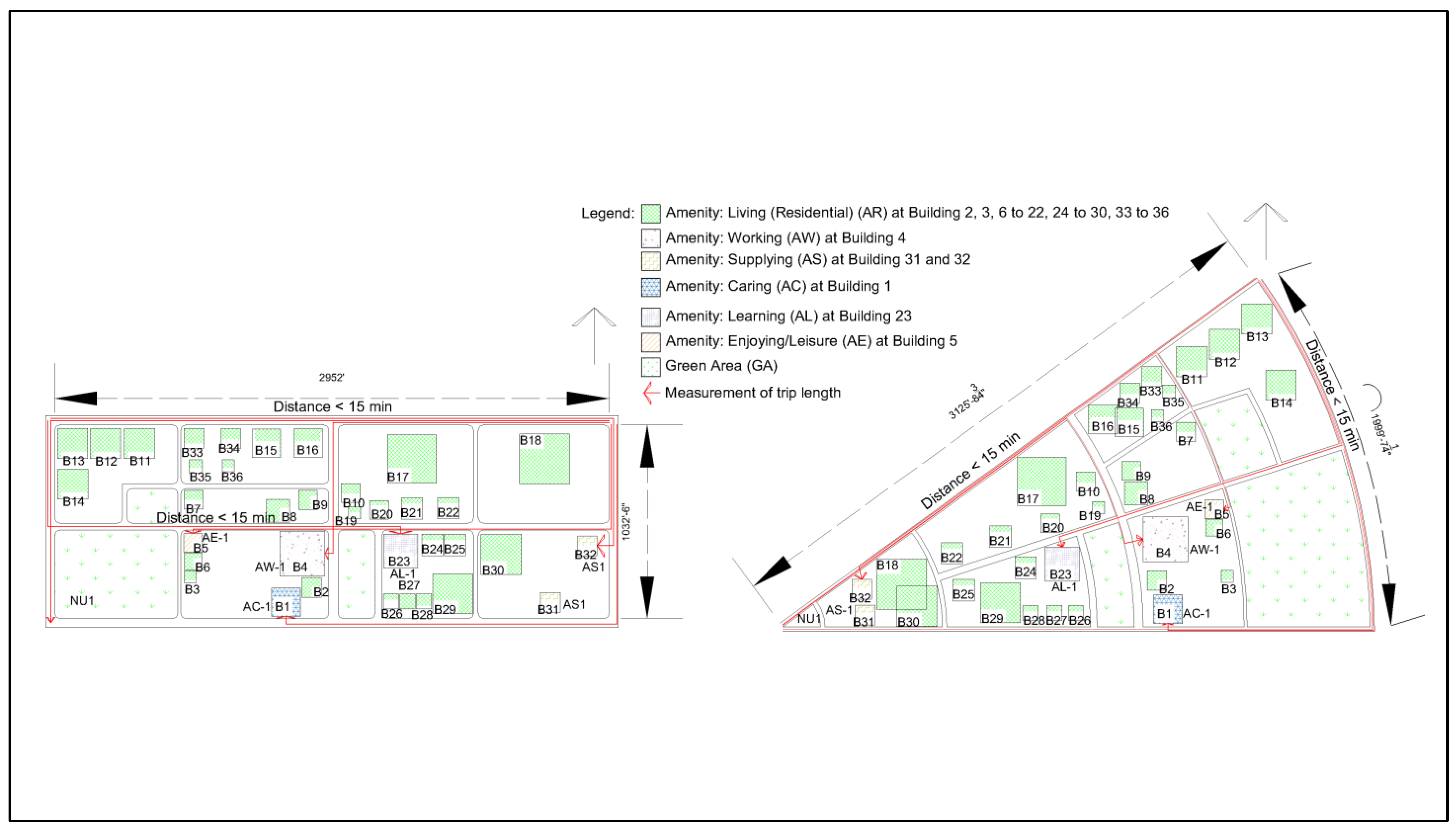
In their model, about 15% of the available roofs, facades, and lot space is converted to urban agriculture. That’s enough to make the neighbourhood self-sufficient in vegetables for a year. A small fleet of electric vehicles then distributes this food locally, powered entirely by photovoltaic panels embedded in the sidewalks. The result is amazing: transport-related CO₂ emissions drop by 98% compared to a conventional setup, and the payback time for the PV system is estimated at 2.8 years.
It’s a great example of how quickly emissions can fall when you stack proximity, clean energy, and short supply chains on top of each other. In one package, the model hits multiple UN Sustainable Development Goals at once: Zero Hunger, Affordable and Clean Energy, Sustainable Cities, and Climate Action.
U.S. Neighborhoods Already Moving Toward the 15 Minute City
Of course, critics will say: that’s Canada, that’s a simulation, what does this mean for the United States? The short answer is that many of the pieces already exist on the ground.
In San Diego, the master-planned community of Civita has been designed as a dense mixed-use “urban village” with housing, offices, retail, and parks layered around transit, bike paths, and increasingly energy-efficient buildings. In Florida, Babcock Ranch is marketing itself as America’s first solar-powered town, built around a large photovoltaic array and a walkable village center with schools and services close to home. And in Tempe, Arizona, Culdesac is testing a car-free neighborhood where residents move by light rail, bikes, and shared mobility instead of private cars.
None of these examples match the full Concordia blueprint. They don’t all have rooftop farming, solar sidewalks, and local food logistics in one integrated system. But they matter because they show that US planning culture is already shifting in the same direction: shorter trips, more local service, and infrastructure that incorporates sustainability into daily routines.
The European experience shows that having jobs, shops, “third places”, and services within a 15-minute walk is not a fantasy but rather a normal urban life when people are put over cars. The Canadian study shows that when you add distributed solar and urban agriculture into that familiar picture, the climate benefits are immense.
The question for North American cities now isn’t whether the 15-minute city is possible. It’s whether we’re willing to connect the dots between planning, energy, and food systems. These kinds of neighbourhoods already exist in many European cities; they can be brought closer to home.