
The International Energy Agency’s Delivering Sustainable Fuels report
Sustainable fuels are emerging as one of the most powerful levers of the global energy transition. The new Delivering Sustainable Fuels report, released in support of Brazil’s presidency of COP30, outlines the policy and technology priorities needed to accelerate their adoption by 2035.
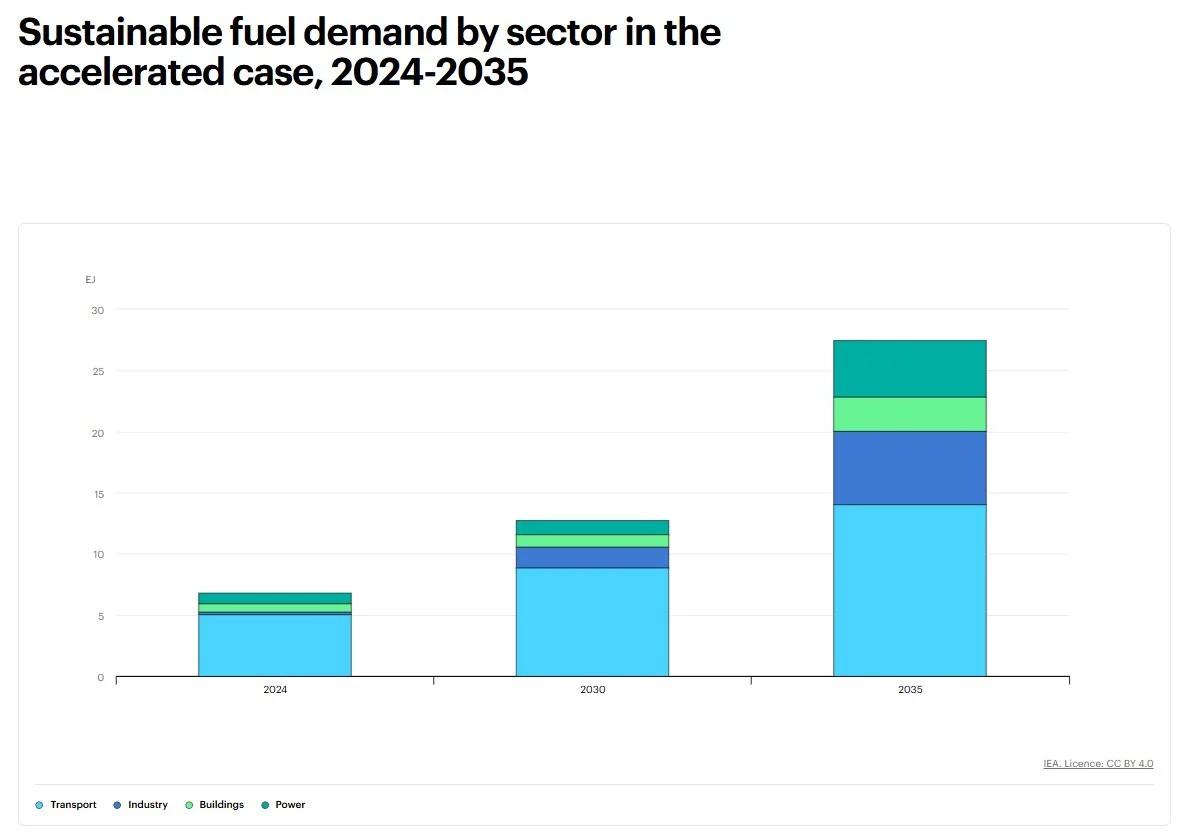
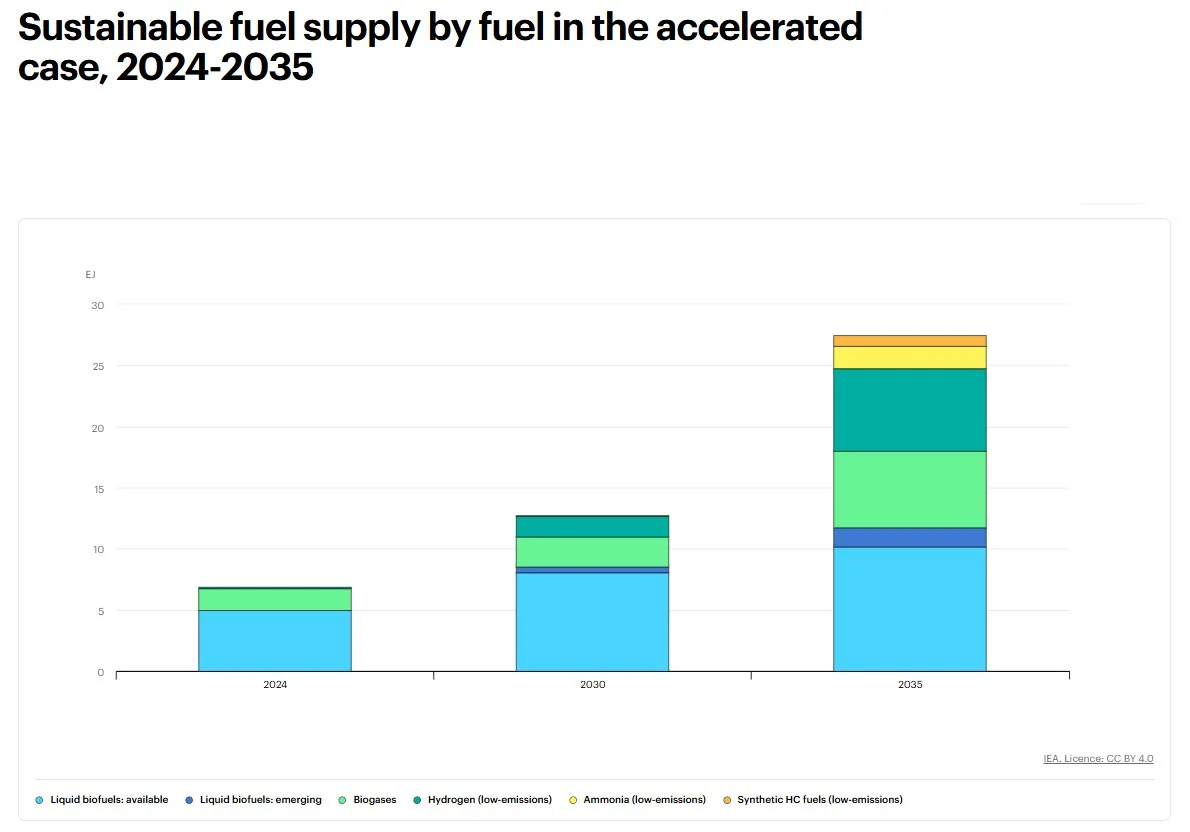
According to the report, the use of low-emission liquid and gaseous fuels could nearly double by 2030 compared to 2024 levels and quadruple by 2035, provided that current and proposed policies are fully implemented. Global demand for sustainable liquid and gaseous fuels could rise from about 6 exajoules in 2024 to over 25 exajoules by 2035, an increase of more than fourfold in just over a decade.
The potential of sustainable fuels in the energy transition
On the path toward climate neutrality, sustainable fuels complement electrification and energy efficiency. They provide a practical alternative for hard-to-decarbonize sectors such as aviation, shipping, heavy industry, and long-distance transport. The report highlights how liquid biofuels, biogas, low-emission hydrogen, and hydrogen-based synthetic fuels can significantly cut greenhouse gas emissions.
These technologies, the report notes, can strengthen energy security, reduce reliance on fossil fuel imports, and create new economic opportunities for rural regions. The transport sector alone will account for more than 60% of global sustainable fuel demand by 2035, with particularly strong growth in aviation and maritime transport. The benefits are therefore not only environmental but also social and industrial.
Advanced biofuels and hydrogen: key drivers of the new energy mix
Among advanced biofuels, the report identifies a growing role for those produced from organic waste and agricultural residues. Global production of advanced biofuels could reach 35 million tons by 2030, up from 7 million tons in 2022, driven by new facilities coming online in North America, Europe, and Latin America. These resources avoid competition with food supply chains and ensure real emissions reductions across their full life cycle.
At the same time, low-emission hydrogen and its derivatives, such as ammonia and synthetic methanol, are seen as essential for decarbonizing energy-intensive industries. The European Hydrogen Strategy confirms this direction by promoting the development of dedicated infrastructure and integrated regional markets. The report also calls for harmonized carbon accounting methodologies to ensure shared sustainability standards across countries and continents.
A coherent policy framework to close the cost gap
The main obstacle to the widespread adoption of sustainable fuels remains their cost gap with conventional fuels. Targeted policies and financial support mechanisms are needed to drive long-term investment. According to the IEA, only a shared global vision can overcome the economic and infrastructure barriers that persist today.
The European RED III Directive provides a concrete example: it sets binding targets for the share of renewable energy in transport and introduces sustainability criteria for advanced biofuels. However, many emerging economies still lack the financial and institutional tools to support this transformation, particularly in developing countries. The average cost of sustainable fuels remains 50% to 150% higher than conventional fossil fuels, making public support mechanisms essential to sustain industrial scale-up.
Global priorities for sustainable fuels through 2035
The analysis identifies several priority actions to accelerate the deployment of clean fuels:
- technological innovation to expand production potential
- storage and transport infrastructure integrated with existing energy networks
- traceability and certification systems to verify fuel origin and emissions
- international cooperation to share standards, incentives, and technical expertise
Through its Sustainable Bioenergy program, the International Energy Agency estimates that global biofuel potential could cover up to 15% of transport energy demand by 2035, thanks to continuous efficiency gains in production.
Italy backs the global call for sustainable fuels
At the Pre-COP meeting in Brasília, Italy’s Ministry of the Environment and Energy Security launched an international call to boost sustainable fuel production by 2035. The initiative forms part of the preparatory work for COP30 and aligns with the United Nations Global Stocktake process, which assesses collective progress toward the Paris Agreement goals.
The proposal, presented by MASE, aims to strengthen cooperation among governments, businesses, and research centers to expand the availability of biofuels, biogas, and low-emission hydrogen. The goal is to align national and international efforts with the Delivering Sustainable Fuels report’s recommendations, identifying the policy and regulatory tools needed to develop stable and transparent markets.
A path that demands coherence and investment
The success of sustainable fuels will depend on building competitive markets and long-term policy frameworks. The report estimates that achieving the 2035 targets will require over $1 trillion in new investments, most of which will go toward logistics and distribution infrastructure for biofuels and hydrogen. It also stresses the importance of a coordinated approach among governments, the private sector, and multilateral institutions. Without stable rules and shared infrastructure, the risk is to slow down the transition and undermine progress achieved so far.
According to the report’s authors, clean fuels can become “a bridge toward a resilient and inclusive energy system,” but only if supported by transparent investment plans and international governance aligned with the Paris Agreement’s climate goals.