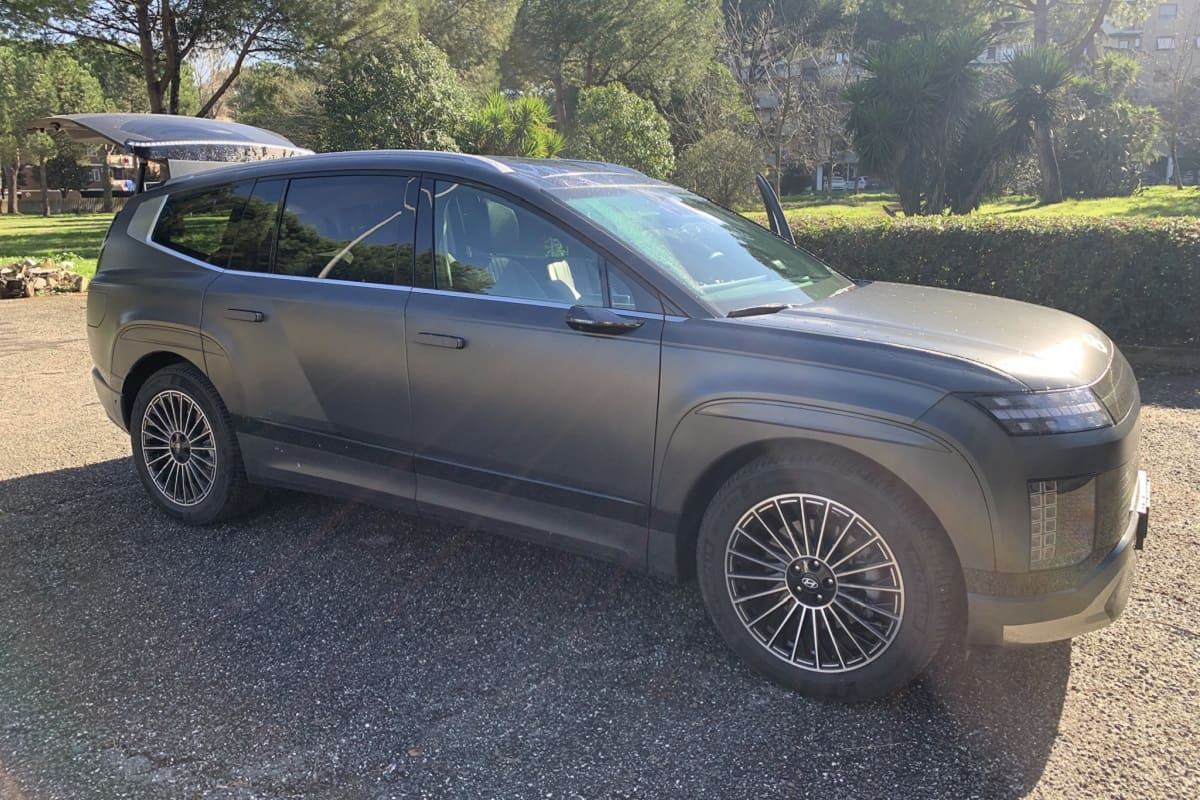
Hyundai Ioniq 9, Key Features Worth Watching Closely
It is the largest, most spacious, and most luxurious vehicle in Hyundai’s lineup. The Hyundai Ioniq 9 redefines interior space and on-board comfort, assuming you are ready to handle, and park, a vehicle of this size. After testing the compact and clever Hyundai Inster, our Rome test drive moved to this seven-seat “space SUV,” featuring exceptionally comfortable seats that feel closer to lounge armchairs than traditional car seating. Here are five well-reasoned reasons why the Hyundai Ioniq 9 stands out.
1. Space Without Compromise
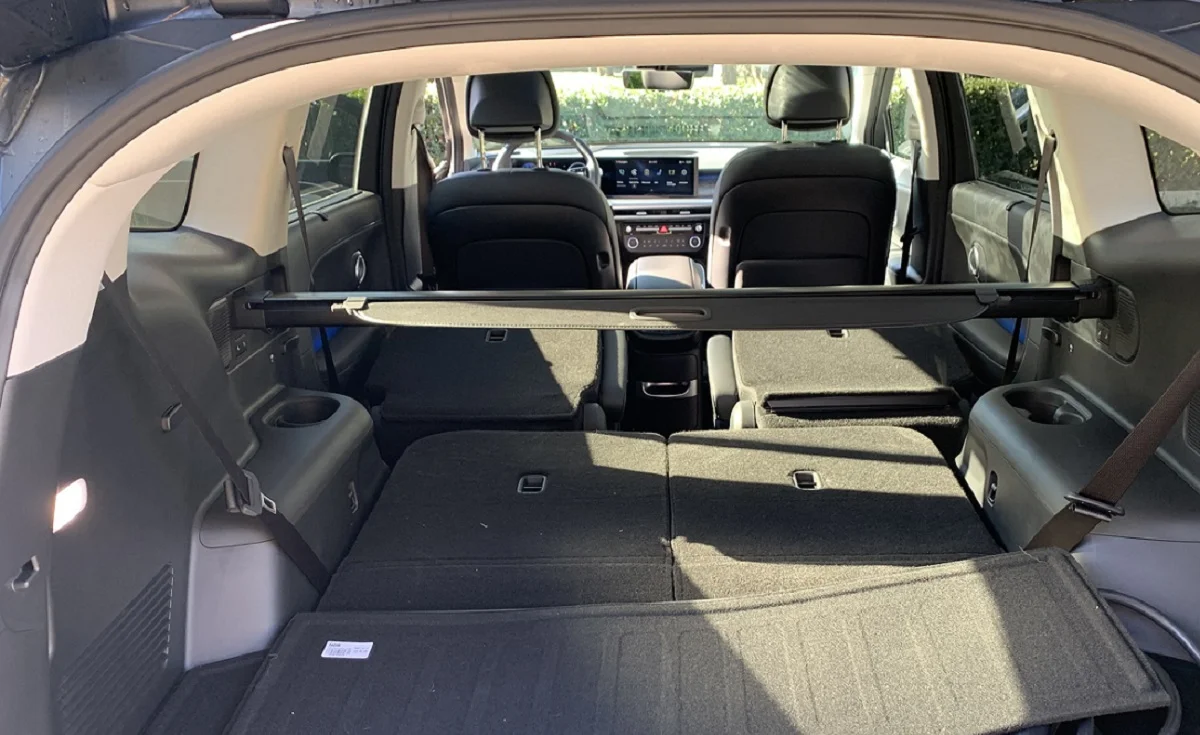
The Hyundai Ioniq 9 measures 5.06 meters in length, 1.98 meters in width, and 1.79 meters in height, with a wheelbase of 3.13 meters. This figure exceeds most SUVs in its class, translating directly into generous legroom. Driving comfort is enhanced by electrically adjustable seating. The second row offers two individual captain’s chairs with excellent comfort. In the third row, legroom and cargo capacity naturally decrease, this is unavoidable unless the vehicle becomes a minibus. The panoramic roof completes the experience, turning long journeys into a genuinely relaxing ride.
2. Record-Fast Charging
The Hyundai Ioniq 9 adopts the group’s advanced 800-volt architecture. According to technical specifications, it can recharge from 10% to 80% in just 24 minutes at ultra-fast charging stations up to 350 kW. This dramatically reduces charging anxiety on long highway trips, keeping stops no longer than an extended coffee break. The 110.3 kWh battery delivers a claimed range of up to 620 km under the WLTP cycle.
This type of vehicle is clearly aimed at larger families with at least two children, frequent travel needs, and regular use on highways or major roads. Using a vehicle of this size primarily in urban environments, as in our test, is not ideal. Despite advanced cameras and sensors, parking still requires ample maneuvering space.
3. The Car As A Power Bank
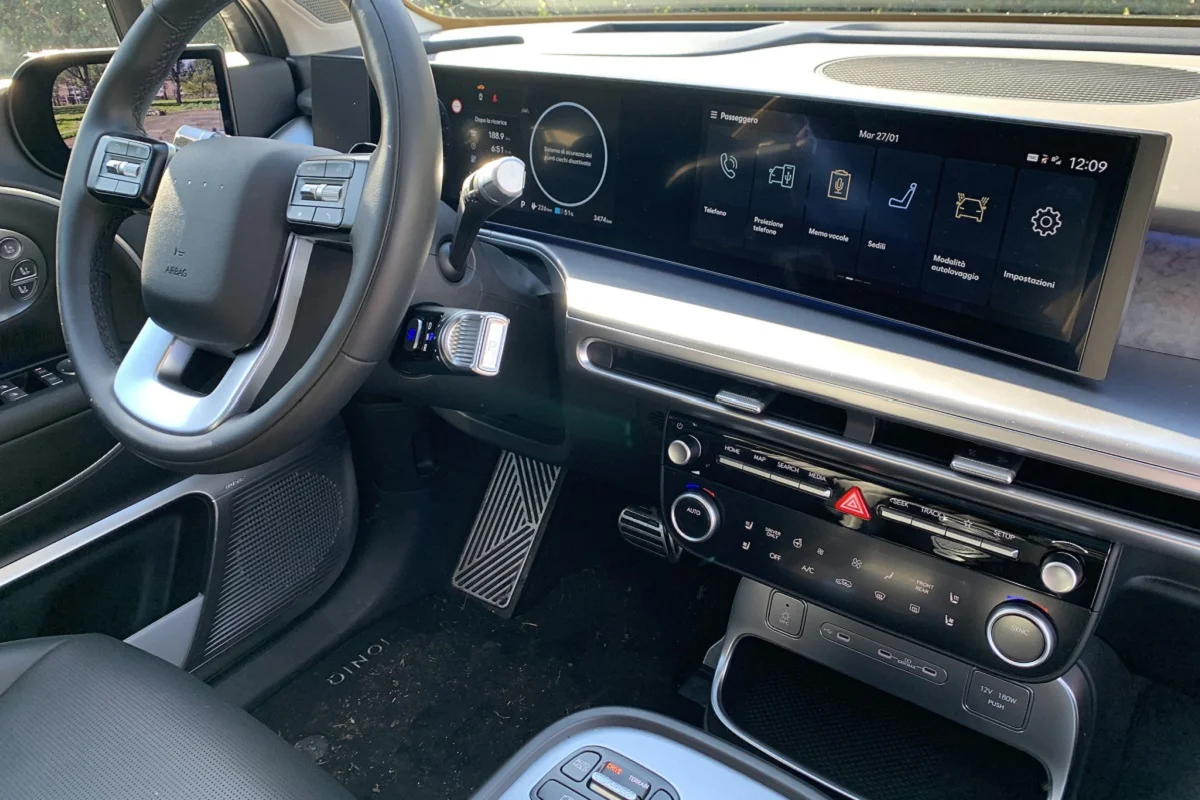
The Hyundai Ioniq 9’s vehicle-to-load (V2L) system delivers up to 3.6 kW of AC power at 230V, effectively turning the vehicle into a household outlet. Power is accessible through two main channels, an internal socket located below the infotainment area for charging devices while driving, and an external port using an adapter connected to the charging inlet, suitable for camping equipment or small appliances when the SUV is stationary.
The system is fully customizable via the infotainment screen, allowing users to set a battery discharge threshold. Once the remaining range drops below the selected percentage, external power delivery automatically stops, ensuring sufficient energy to reach the destination.
4. AI As An Intelligent Co-Driver
Artificial intelligence moves beyond a simple add-on and becomes a central component of the vehicle. Through a strategic partnership with NVIDIA, Hyundai integrates a generative voice assistant capable of understanding natural language. It does more than execute commands, it can respond to complex requests, such as suggesting family-friendly restaurants based on traffic conditions and personal preferences.
Intelligent regenerative braking and the EV Route Planner use navigation data and road context to optimize energy consumption and charging strategy in real time. The Remote Smart Parking Assist 2 system automates parking using sensors and cameras, allowing the vehicle to maneuver autonomously even when the driver is outside the cabin.
5. Hyundai Ioniq 9, Safety At The Top
Safety is not optional, it is a verified priority. Hyundai Motor Group leads the industry for the second consecutive year in the 2025 IIHS rankings, and the Hyundai Ioniq 9 has earned the prestigious TOP SAFETY PICK+ rating. It passed the most stringent tests for occupant protection, including second-row passengers, and crash prevention. Systems such as Remote Smart Parking Assist 2 enable autonomous parking without a driver on board, protecting both the vehicle and pedestrians during urban maneuvers.