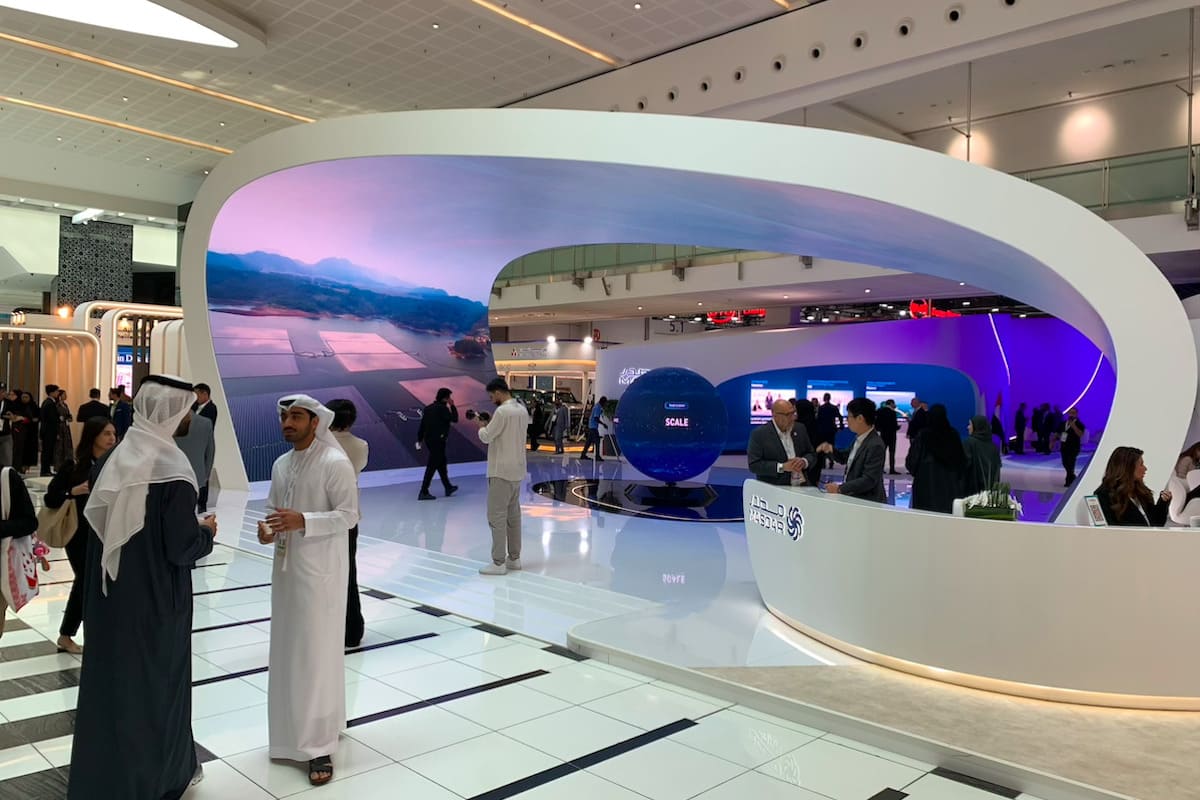
World Future Energy Summit highlights the UAE energy transition
The United Arab Emirates have emerged as key players on the global stage of the energy transition. Long known primarily as major oil producers and exporters, the country is now leveraging a growing regional awareness and vast financial resources to signal a strategic shift. The aim is clear, to demonstrate readiness for a global transformation and to build a new identity centered on clean energy and innovation.
This ambition is on full display at the World Future Energy Summit 2026, held in Abu Dhabi. The annual event focuses on clean energy, energy efficiency, advanced technologies, and the role of artificial intelligence as a catalyst for accelerating technological progress.
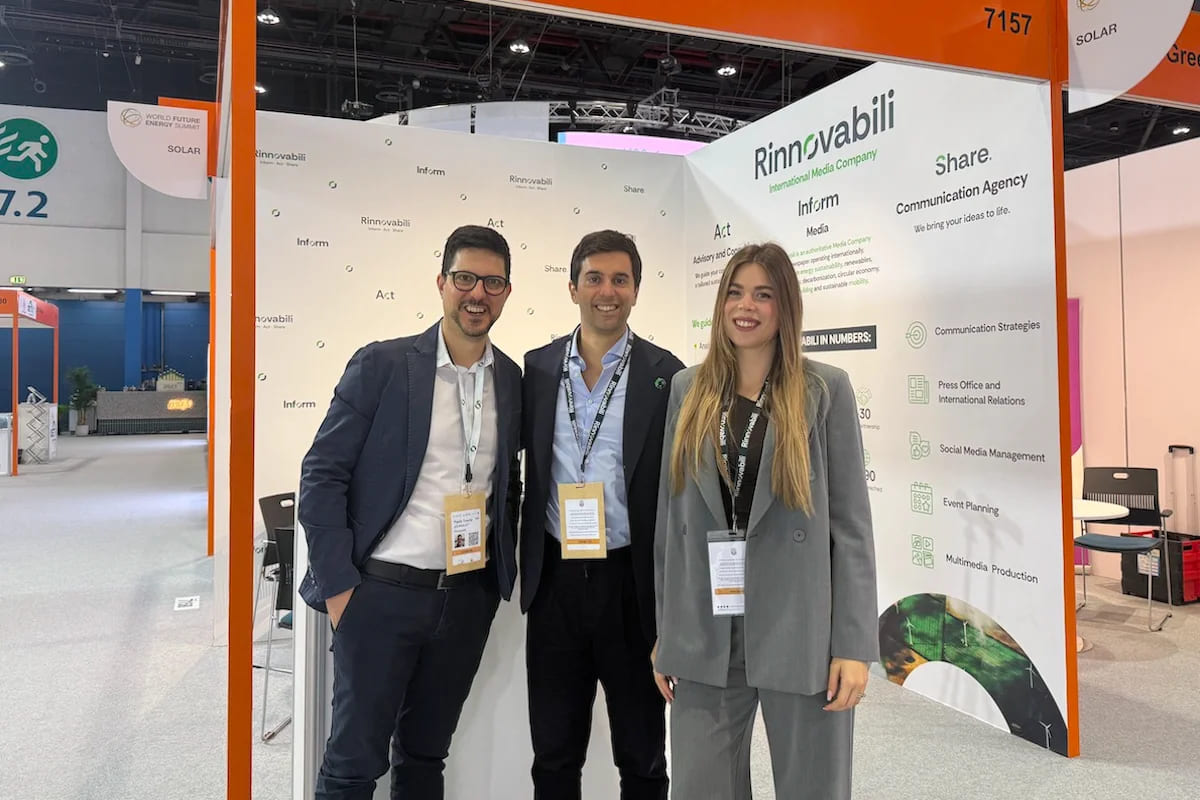
Rinnovabili attends the summit with its own stand
Rinnovabili is attending the leading energy event in the UAE with its own stand, reporting firsthand on the changes reshaping the region. As the only Italian news outlet present, Rinnovabili is covering the transformation as it unfolds.
The World Future Energy Summit runs from January 13 to 16 alongside Abu Dhabi Sustainability Week. The event brings together more than 450 companies and around 50,000 participants from over 150 countries. The program features conferences and networking sessions focused on renewable energy, AI, electric mobility, smart cities, sustainable finance, and the circular economy.
The summit gathers global leaders at a critical moment for the energy transition, combining expanded conferences, next generation technology showcases, and new engagement formats designed to accelerate real world impact. Key moments include the EU Hydrogen Council Summit and partnerships with organizations such as Greenpeace MENA and IRENA, aimed at turning climate ambitions into measurable outcomes.
“The summit this year was deliberately designed to extend well beyond the three days of the event,” said Gareth Rapley, Portfolio Director for Energy and Marine at RX Global. “Through expanded conference programs, new engagement platforms, and year round business generation initiatives, we are building a connected ecosystem that helps ideas move faster from discussion to delivery. Our goal is to ensure that the partnerships formed here translate into long term collaboration, investment, and measurable progress in the global energy transition.”
What is happening across the Gulf region
The United Arab Emirates have committed significant financial resources to accelerate the transition. The country has earmarked $54 billion in renewable energy investments by 2030 and announced $83 billion in climate related clean technology financing at COP28.
At the regional level, Saudi Arabia has allocated $270 billion to expand its renewable energy ambitions, while committing nearly $200 billion to climate action through the expansion of the Saudi Green Initiative. The scale of these figures highlights the strategic importance of what is at stake across the Gulf.
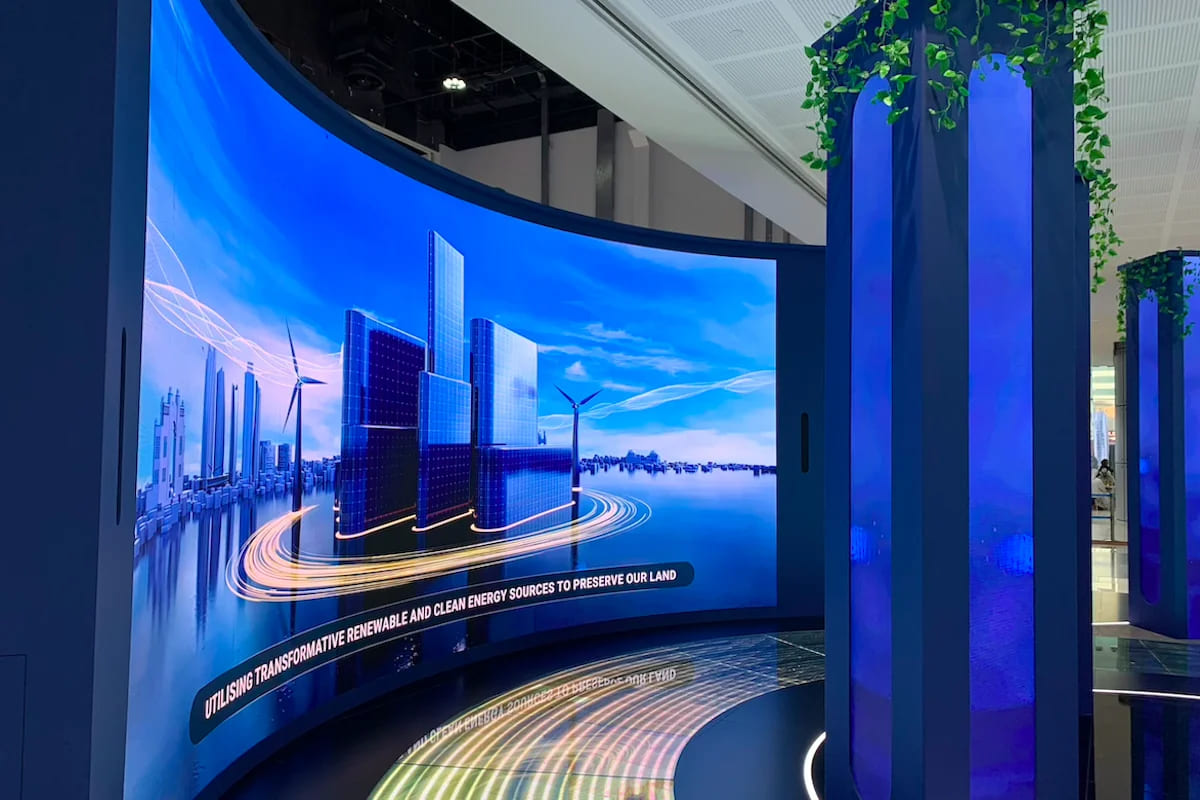
Covering the entire clean energy value chain, the exhibition showcases innovative technologies and scalable solutions across solar and renewable energy, hydrogen and clean fuels, water and wastewater technologies, circular economy and waste to energy, smart cities and electric mobility, green finance, and the rapidly expanding fields of digital energy, artificial intelligence, and cybersecurity.
From next generation photovoltaic systems and energy storage to smart grids, sustainable fuels, and intelligent infrastructure, the ADNEC exhibition halls offer a comprehensive snapshot of how innovation is reshaping the global energy system.
A 1 GW desert megaproject with Masdar
One of the UAE’s flagship achievements, and a point of pride for Abu Dhabi, is the world’s largest renewable energy project integrating solar power and battery storage. The system is designed to deliver 1 gigawatt of renewable electricity around the clock at a competitive tariff.
Developed by Abu Dhabi Future Energy Company PJSC Masdar together with Emirates Water and Electricity Company, the project combines a 5.2 GW photovoltaic plant with a 19 GWh battery energy storage system. It is the largest and most technologically advanced system of its kind globally.
The goal is to demonstrate how renewables can overcome solar intermittency. Once operational, the project will deliver large scale baseload renewable power for the first time, setting a new international benchmark with the ambition of becoming a replicable global model.
The project will require more than €5 billion in capital investment, create over 10,000 jobs, and establish new manufacturing facilities. When it comes online by 2027, it is expected to avoid around 5.7 million tons of carbon emissions each year.
World Future Energy Summit and the role of artificial intelligence
Among the featured areas at the World Future Energy Summit is FUSE AI, an innovation hub exploring how artificial intelligence is transforming energy systems, infrastructure resilience, and climate solutions. The platform presents AI driven applications for grid optimization, predictive analytics, system efficiency, and smarter resource management.
The 2026 edition also marks the debut of The Greenhouse, a startup focused platform connecting more than 50 early stage companies with investors, policymakers, and industrial partners. The initiative highlights emerging solutions in clean tech, climate technology, mobility, and water, reinforcing the summit’s role as a catalyst for commercialization and cross sector collaboration.
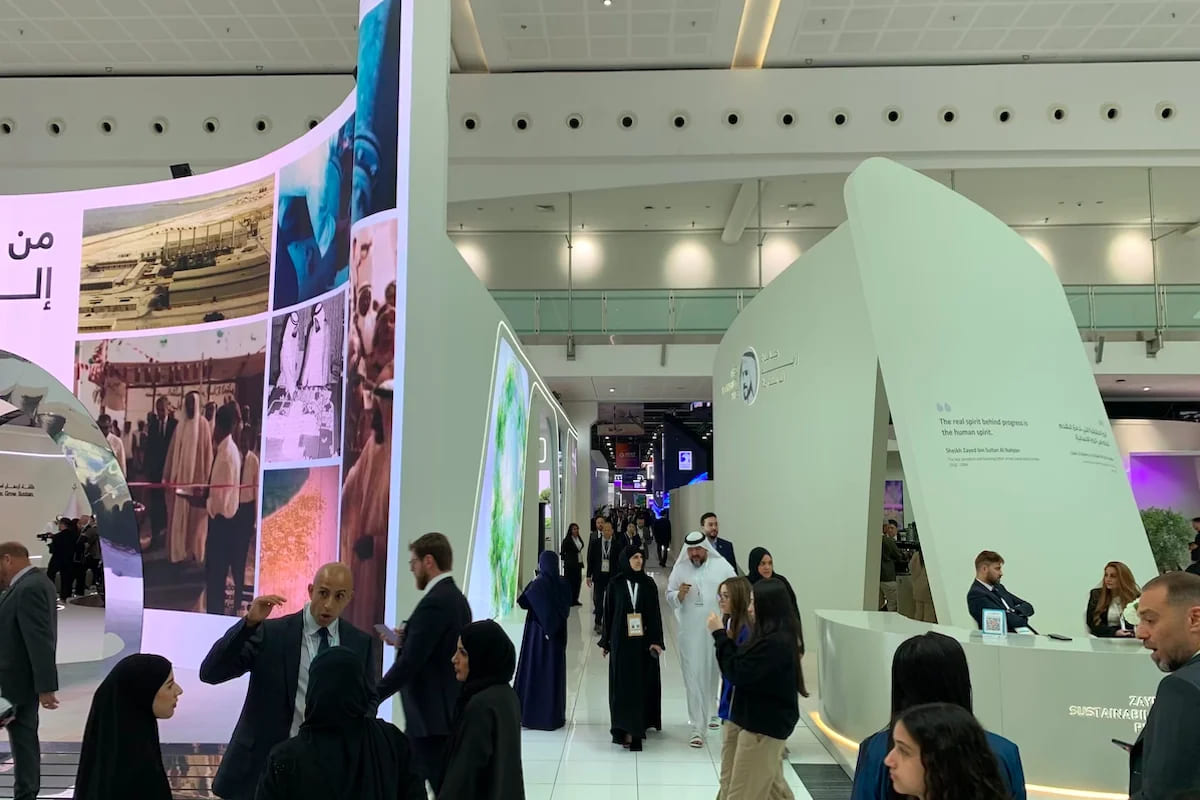
Complementing these innovation focused platforms is the new Greenpeace Cinema, an immersive storytelling space within the exhibition floor. Designed as a silent cinematic experience, it combines powerful environmental narratives with policy debate, technology presentations, and investment dialogue, expanding how sustainability challenges are explored and communicated.