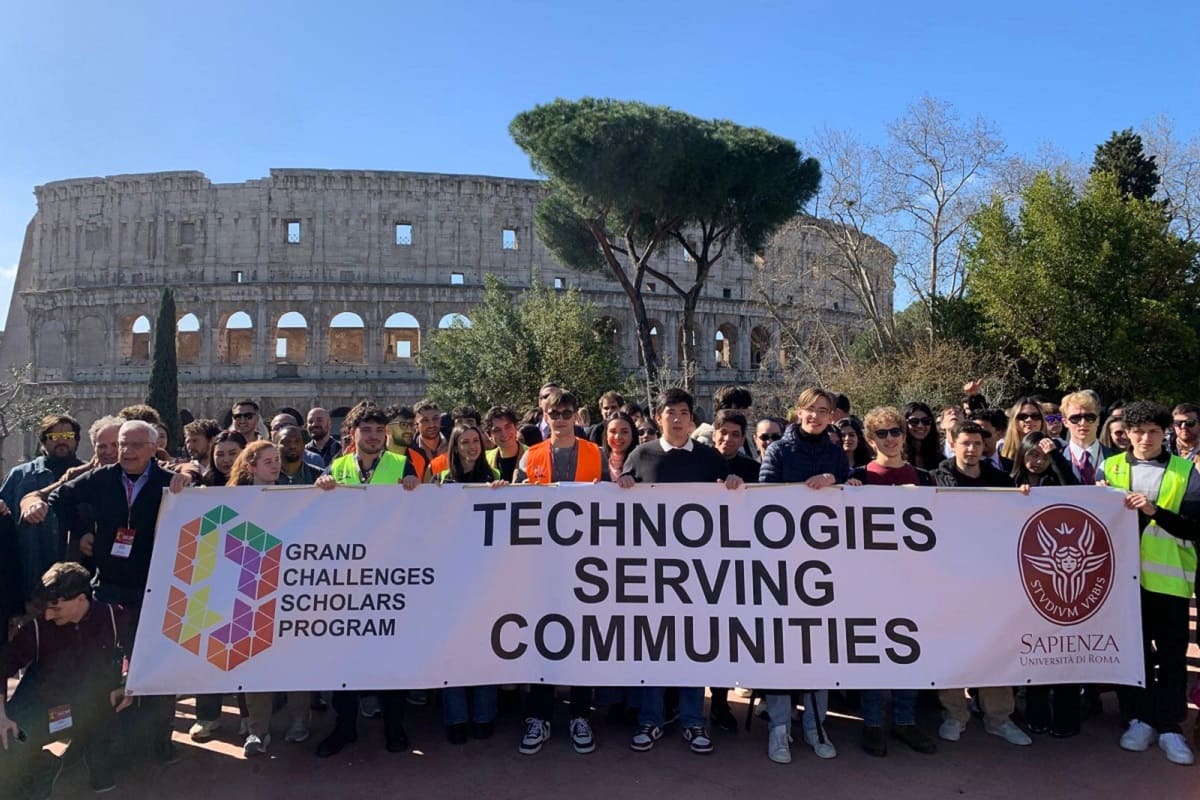
Grand Challenges Scholars Program spotlights energy as a driver of development
An international educational initiative bringing together students, professors and professionals from over 70 universities worldwide has turned Rome into a hub for debate on sustainable innovation. The Grand Challenges Scholars Program was hosted at Sapienza University’s Department of Engineering, with four days of workshops dedicated to dialogue, experience sharing and practical insights into sustainable solutions.
The central theme of this edition was energy as a catalyst for social and economic development. The opening session on February 13 focused on decentralized systems and mini-grids, renewable solutions for healthcare infrastructure and innovations applicable in emergency contexts, from pilot hydrogen projects to digital and data-driven tools. Particular attention was given to participatory and community-led energy models designed to enhance resilience and autonomy across diverse international settings.
Grand Challenges Scholars Program engages students worldwide
More than 600 participants registered for this edition, according to Professor Andrea Micangeli, organizer of the Grand Challenges Scholars Program sessions at Sapienza University.
“We would never have imagined these numbers. They reflect a desire to go beyond formulas and beyond the mechanics of technology, to give meaning and purpose to what we do,” Micangeli said. “Students are here from universities around the world because technology, without reflection on social impact and economic consequences for communities and territories, has no real value. We all want to study, apply and innovate to improve our regions, but at this moment the focus is not on profit, it is on impact.”
The program included keynote speeches, roundtables and open discussions. Among the participants was Matteo Spagnolo, CEO of Rinnovabili, who joined conversations on the role of renewable energy in sustainable development. The event provided a platform to share practical experiences and replicable models, reinforcing the idea that renewable energy can serve as a tangible tool for inclusive growth.
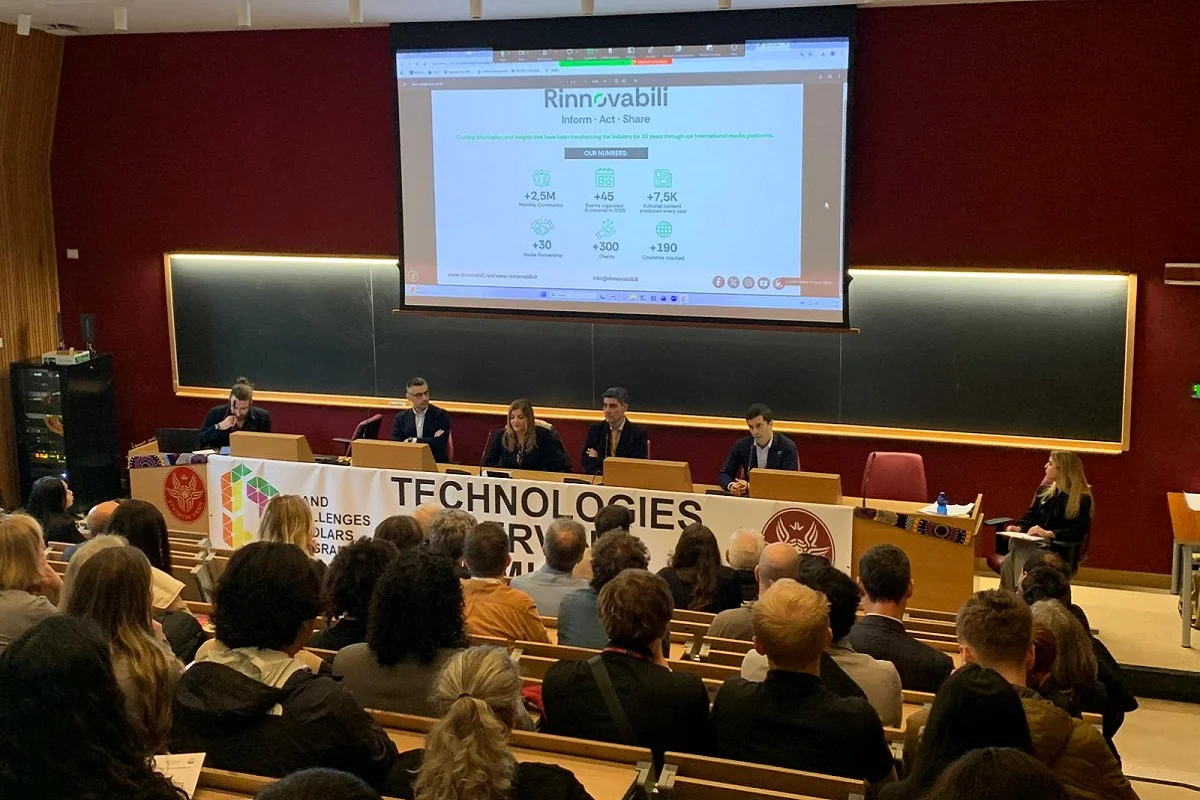
Artificial intelligence and scientific research
Among the speakers at the Grand Challenges Scholars Program was Yannis Yortsos of the University of Southern California, co-founder of the initiative and an internationally recognized figure in engineering education. A chemist by training, Yortsos has played a central role in shaping programs that prepare engineers to tackle complex global challenges through technical expertise, multidisciplinary approaches and social engagement.
In discussion, Yortsos highlighted the role of artificial intelligence as an enabling technology for scientific research.
“AI accelerates scientific discovery by shortening research cycles. It helps solve problems more quickly and potentially at a much larger scale than in the past,” he said. “There is no doubt that AI can be fundamental. At the same time, however, deep knowledge of the specific field remains essential. Researchers must be able to recognize whether AI is producing hallucinations or other errors that could lead us in the wrong direction. Maintaining the same level of technical expertise as before is critical, while using AI to move faster.”
Green hydrogen and steel decarbonization in Italy
One of the most discussed workshops during the first day of the Grand Challenges Scholars Program addressed the role of green hydrogen in the steel industry, a strategic sector in Italy and one of Europe’s leading steel producers, with strong links to automotive manufacturing.
Filippo Cirilli, a chemist at RINA’s Decarbonization and Energy Transition division, presented a project funded by Italy’s Ministry of Enterprises and Made in Italy under the European Next Generation EU plan.
“It is currently the largest steel-sector project in Italy,” Cirilli said. “Our direct reduction plant is the first of its kind in the country and the third in Europe. The facilities are located in Castel Romano, where we recently carried out the first ignition of the electric furnace. Within two or three months we expect full operation and the first production results from our pilot plant.”
According to Cirilli, if green hydrogen is used to its full potential, emissions reductions compared with a conventional blast furnace cycle could reach approximately 95%. While the plant is experimental, he noted, the decarbonization potential for the sector is substantial.