Why the Global Renewables Summit 2025 matters
The Global Renewables Summit 2025 (GRS25), held on September 22–23 in New York, gathers political leaders and industry executives to accelerate the global energy transition. Organized by the Global Renewables Alliance with the European Commission, IRENA, the governments of Kenya and the Bahamas, and the COP30 Presidency, the event is a critical step ahead of COP30 in Belém. Its purpose is to turn global ambitions into concrete actions, mobilizing capital and partnerships to scale renewable energy at unprecedented speed.
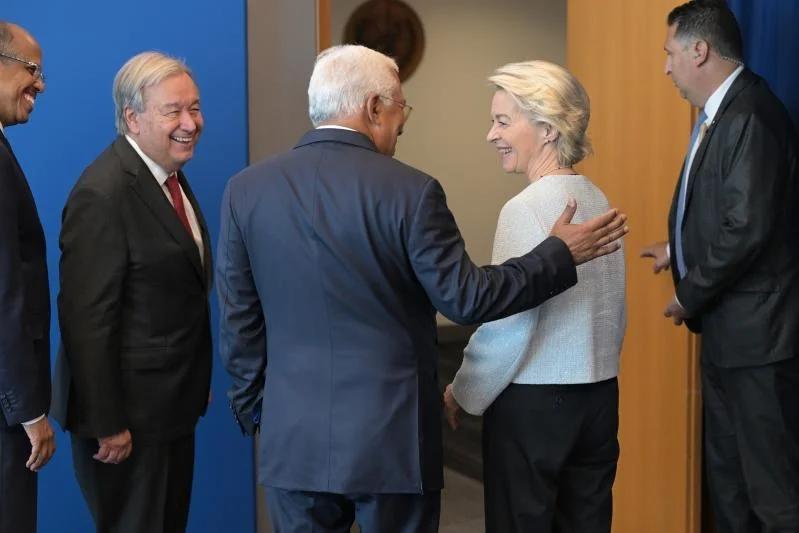
The message from the European Commission President
Von der Leyen emphasized that the summit comes at a decisive moment, describing it as the real “takeoff of the energy transition.” In 2024 alone, she noted, nearly €2 trillion was invested worldwide in clean energy projects.
“For every euro spent on fossil fuels, more than two were invested in clean energy,” she said. “Ninety percent of new renewable projects now generate electricity at a lower cost than fossil fuels. Solar power is 41% cheaper than even the least costly fossil alternative. The momentum is real.”
“Clean energy is not just about fighting climate change,” she continued. “It is about security and prosperity.”
But she warned momentum is not enough: “To inaugurate a true era of renewable abundance, delivering clean and affordable energy for all, governments and industries must act decisively, and we must do it together, across all continents.”
The three pillars of von der Leyen’s address
During her speech, von der Leyen addressed three themes: Europe’s ongoing transformation, the partnerships Brussels is building across continents, and what still needs to be done at the global level.
First, the European Commission President spoke about Europe’s experience: “Following Russia’s invasion of Ukraine, overnight Moscow cut us off from gas supplies and we faced a severe energy crisis. Our response was to accelerate. We doubled our investments in renewables.” This decision, she said, helped the climate and, in the long run, proved to be the safest and most cost-effective option.
Today, nearly half of Europe’s electricity comes from renewable sources, von der Leyen noted. “Solar and wind are the fastest-growing energy sources on the continent. And with the Clean Industrial Deal we are mobilizing more than €100 billion to help industries innovate and adapt.” She explained that this level of ambition and stability is attracting capital: “Renewable energy investment has risen 63% in just one year. But we know there is still much to do: we are working to strengthen our grids so that the benefits of clean and affordable power can truly reach every corner of the Union.”
Second, von der Leyen turned to Europe’s partnerships with other regions. The ELMED power link between Italy and Tunisia, she said, will become the first direct current interconnection between Europe and Africa. In North Africa, several projects are creating a “green corridor” for clean industries and hydrogen. These are win-win projects, she stressed, as they help meet climate goals, create jobs on both continents, and strengthen energy security.
Given these dynamics, von der Leyen argued that the energy transition must be at the core of the international agenda. Through its Global Gateway strategy, the Commission will mobilize €300 billion in long-term partnerships by 2027. In the Caribbean, hydrogen technologies are helping stabilize renewable power supply. In Kenya, Europe is investing €3.4 billion in climate and nature projects, with the ambition of helping the government reach 100% clean energy by 2030. Earlier this year, Brussels also launched the Global Energy Transition Forum to spur political initiative and monitor progress on clean energy commitments.
On the final point, what remains to be done, von der Leyen was clear about the obstacles: high capital costs, the need for stronger compensation to invest in higher-risk projects, and unstable investment conditions.
Her message to CEOs and investors gathered at the Global Renewables Summit 2025 was direct: “Tell us what you need. What guarantees, risk-sharing tools, or regulatory frameworks would enable you to invest at scale where it matters most? And what must governments do to support you?”
