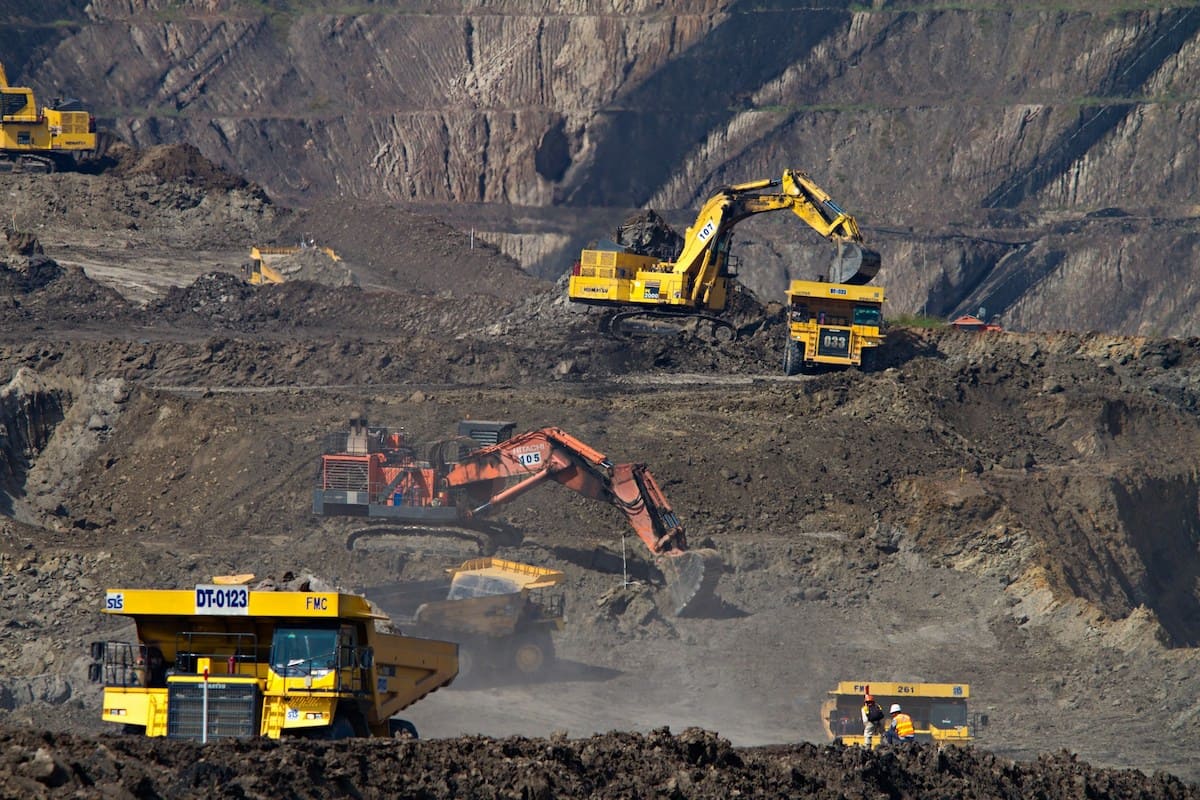
Global coal demand reaches a plateau in 2025
Global coal demand has peaked. In 2025, worldwide consumption is expected to reach 8.85 billion metric tons, before declining by around 3 percent over the next five years. This is one of the key findings of the International Energy Agency’s new report, Coal 2025, a 128-page analysis that examines recent trends and offers detailed forecasts for coal demand, supply, and trade by fuel type and region.
The first clear signal from the data is that this peak sits on a relatively flat curve. Growth and decline both appear slow and gradual, a trajectory that analysts had largely anticipated. What is changing, however, is the consumption pattern across major markets, starting with India.
India, long considered one of the main drivers of global coal demand alongside China, recorded an unexpected slowdown. This was not the result of a policy shift, but rather of an early and intense monsoon season, which reduced electricity demand while boosting hydropower generation. As a result, coal use in thermal power plants declined, an outcome that has occurred only twice in the past 50 years.
In contrast, the United States is moving in the opposite direction. After recording average annual declines of around 6 percent over the past 15 years, U.S. coal consumption is expected to rise. Higher natural gas prices combined with new federal policies supportive of coal are projected to push demand up by 8 percent in 2025.
China, the world’s largest coal consumer, remains broadly stable. Demand in 2025 is expected to increase by just 0.5 percent compared to 2024. In the European Union, coal demand continued to contract by 2 percent, although at a slower pace due to lower hydropower generation.
The world’s largest coal consumers today
China remains by far the dominant player, with annual demand of 4,953 million tons, roughly 30 percent more than the rest of the world combined. India follows with 1,297 million tons, ahead of ASEAN countries in Southeast Asia at 516 million tons. The United States is expected to consume 410 million tons in 2025, while the European Union stands at 306 million tons.
Global coal production in 2025
Worldwide coal production in 2025 is estimated at 9.111 billion tons, broadly in line with the record levels reached in 2024. This leaves the ranking of the top producers largely unchanged. China leads with 4,730 million tons, followed by India at 1,089 million tons, Indonesia at 778 million tons, the United States at 473 million tons, and Australia at 446 million tons.
Looking ahead to 2030
“Despite unusual trends in several key coal markets in 2025, our outlook for the coming years remains broadly unchanged from last year,” said Keisuke Sadamori, Director of Energy Markets and Security at the IEA. “We expect global coal demand to reach a plateau before gradually declining by 2030.”
According to the Coal 2025 report, the largest absolute increase in coal consumption through 2030 will occur in India, where demand is projected to grow by an average of 3 percent per year, resulting in an increase of more than 200 million tons. The fastest growth rate, however, is expected in Southeast Asia, where demand could rise by more than 4 percent annually.
“At the same time, significant uncertainties remain,” Sadamori added, particularly in China, where economic growth, policy choices, energy market dynamics, and weather conditions will continue to exert a major influence on the global picture. More broadly, trends in electricity demand growth and the global rollout of renewable energy could reshape the trajectory of coal over the coming decade.
Read the full report here.