What the oil futures curve does and does not reveal
One of the most debated issues during the current energy crisis is the overly optimistic interpretation many analysts give to oil futures markets. Futures contracts are often treated as predictive tools capable of revealing where energy markets are heading next.
When crude prices rise or fall, markets frequently interpret those movements as implicit forecasts about geopolitical tensions, demand destruction or a return to normal market conditions. In reality, however, the structure of the futures curve reflects immediate physical constraints far more than any genuine expectation about the future.
A concise but highly detailed analysis published by Boston Consulting Group analyst Jamie Webster argues that this widespread interpretation is fundamentally flawed. According to the report, oil futures are not predictive instruments and should not be used as reliable indicators of future prices or geopolitical turning points.
The analysis specifically warns against interpreting lower prices in future delivery months as evidence that markets expect a rapid end to the current Middle East crisis. Instead, the opposite dynamic is at work.
Higher near-term prices primarily signal an urgent need for physical barrels today. As the report explains, “the greater the need for barrels today, the stronger the downward slope in the curve becomes,” encouraging traders to release oil from storage and deliver supplies immediately.
The Strait of Hormuz shock reshaped oil futures markets

The report focuses on the market turmoil triggered by the de facto closure of the Strait of Hormuz, one of the world’s most strategic oil chokepoints through which nearly 20% of global crude supplies normally transit.
According to the analysis, the disruption caused a dramatic surge in prices:
- crude oil climbed above $100 per barrel;
- several refined products moved beyond $200 per barrel during the most severe phases of the crisis;
- physical supply concerns rapidly became the dominant market driver.
In this environment, markets became obsessed with two key questions:
- when the Strait of Hormuz would reopen;
- when oil flows would normalize.
This is precisely where the role of oil futures becomes widely misunderstood.
What the oil futures curve actually shows
The futures curve represents the prices of oil contracts with different delivery dates. At first glance, it may appear to offer a straightforward view of market expectations.
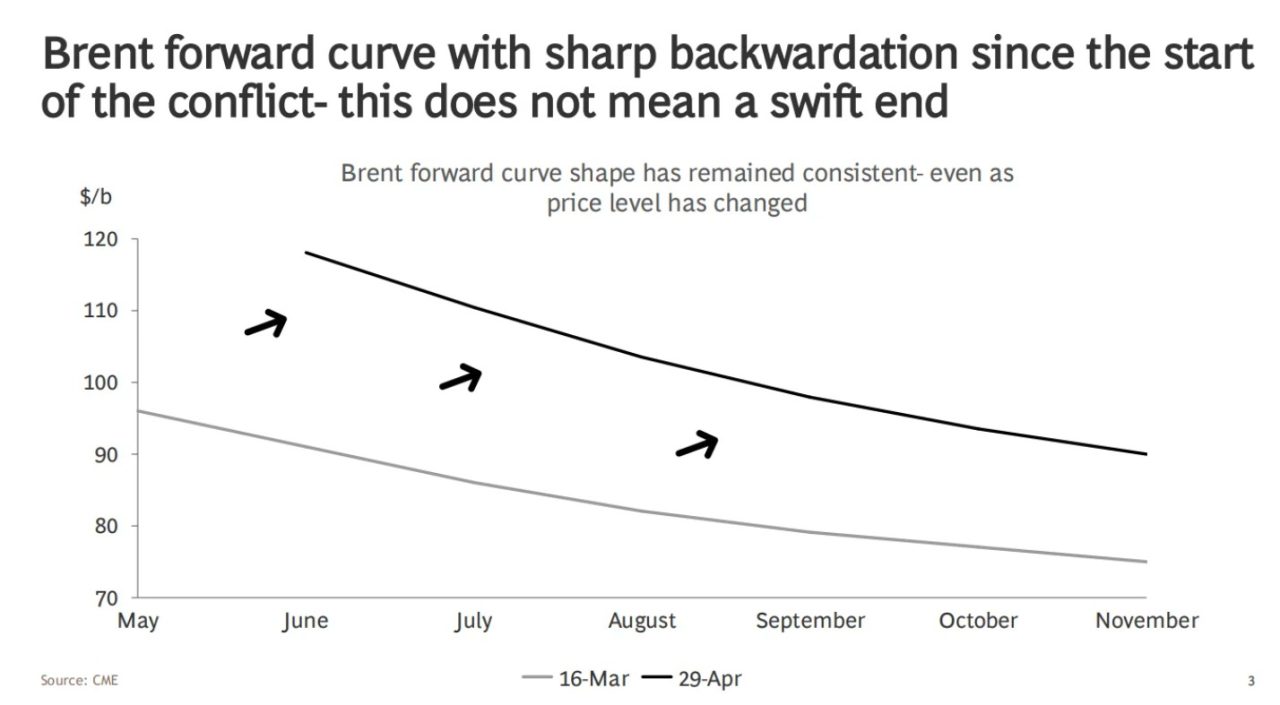
The report highlights that the Brent market entered an extreme state of backwardation, meaning:
- spot prices became significantly higher;
- prices for later months fell lower;
- six-month contracts traded roughly $25 per barrel below spot prices.
Many observers interpreted this as proof that traders expected a rapid stabilization of the Middle East crisis. According to the Boston Consulting Group analysis, however, this conclusion ignores how oil futures markets actually function.
Backwardation reflects immediate scarcity, not optimism
The futures curve primarily reflects current physical market conditions, not confidence about future stability.
The report explains that backwardation typically emerges when markets face:
- low or rapidly declining inventories;
- strong immediate demand for crude;
- incentives to sell oil now rather than later;
- pressure to withdraw barrels from storage.
In practical terms, a barrel available today becomes far more valuable than one available months from now. That dynamic pushes spot prices higher and creates a downward-sloping curve.
This does not automatically mean the crisis is expected to end soon. Instead, backwardation reveals how urgently the market needs immediate supply.
The analysts stress that the oil futures curve says “far more about storage tanks, bottlenecks and today’s inventories than tomorrow’s prices.”
Oil futures are better inventory indicators than forecasting tools
During periods of severe uncertainty, investors often search for reassurance directly inside the futures structure itself. According to the report, this is a mistake.
The futures curve is mainly useful for understanding:
- the relative tightness of inventories;
- storage incentives;
- the level of stress in physical markets;
- the value of time spreads between deliveries.
It should not be used to:
- predict future oil prices;
- interpret the market’s “view” on geopolitical outcomes.
The COVID-19 example explains the problem
To illustrate the point, the report compares the current situation with the COVID-19 pandemic.
During the global health crisis, oil demand collapsed by nearly 20 million barrels per day. As a result:
- massive volumes of crude accumulated in storage;
- markets shifted into oversupply;
- future prices traded above spot prices.
At that stage:
- oil had less immediate value;
- storing crude became economically attractive;
- higher future prices were necessary to incentivize storage.
Most importantly, nobody used the futures curve during COVID-19 to predict when an effective vaccine would arrive. The real turning point came on November 9, 2020, when the first successful vaccine results were publicly announced, an event the futures market never anticipated.
The same logic applies today. Oil futures cannot predict when geopolitical crises will end or when normal energy flows will resume.
The curve remains valuable as a snapshot of market stress and inventory scarcity, but it has never demonstrated a reliable ability to forecast decisive geopolitical or economic turning points.