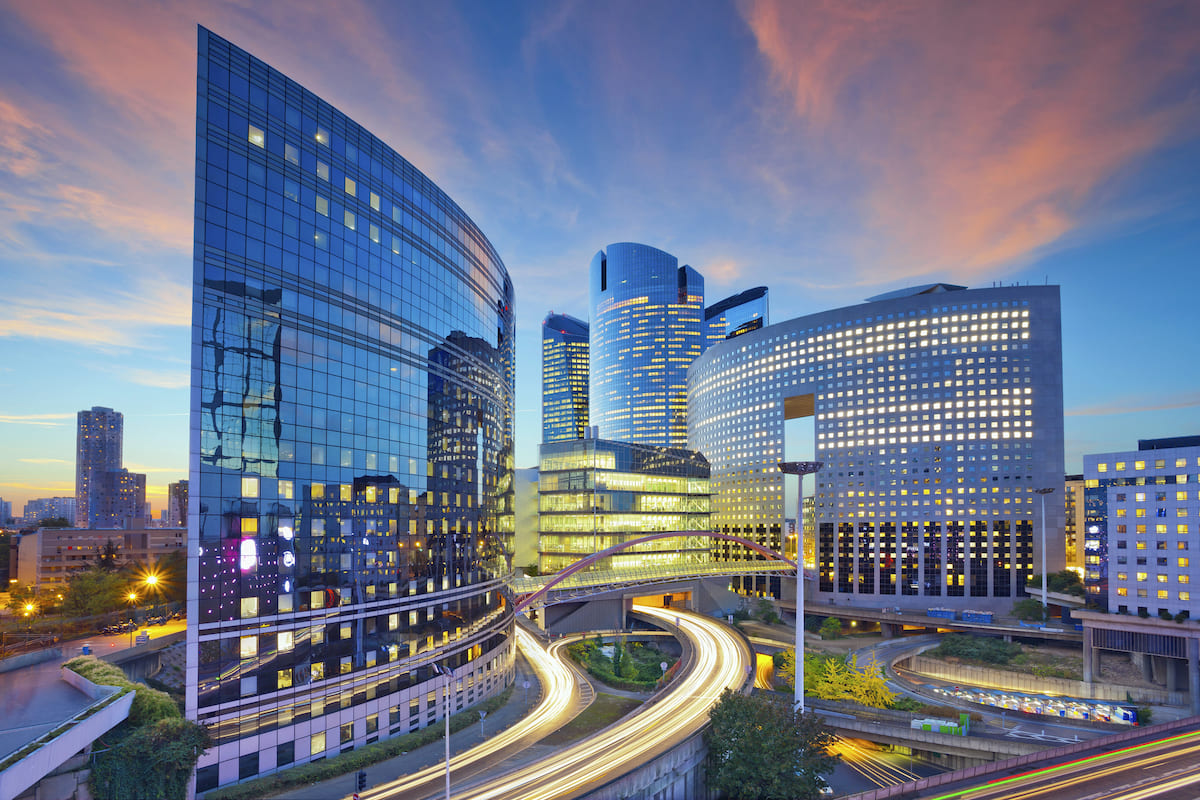
Cities of the future face rapid growth and urgent reinvention
More than 50 percent of the world’s population now lives in cities. By 2050, according to UN projections, this share will reach 70 percent, with most of the growth occurring in the world’s poorest regions. Faced with these dynamics, cities are being pushed to reinvent themselves and move toward a model that is now clearly emerging: the smart city.
The trends that will define the cities of the future are already partially visible, ranging from energy efficiency and climate adaptation to water governance and new housing models. These challenges will not only shape urban quality of life but also determine whether cities can remain resilient, competitive, and sustainable in the decades ahead.
Smart cities as engines of the energy transition
Efficiently managing increasingly scarce resources and rising energy demand is the top priority for the cities of the future, which will need to meet the needs of nearly 6.7 billion residents. The real challenge is not simply producing more energy, but managing it through a more flexible urban infrastructure capable of integrating renewables, forecasting consumption, and reducing waste.
At the heart of this transformation are smart grids, intelligent electricity networks designed around real-time monitoring systems and the integration of solar, wind, and emerging decarbonization technologies.
Energy storage systems will play an increasingly strategic role, helping stabilize the grid and fully leverage renewable generation. Home batteries, shared storage systems, and centralized plants are becoming integral to the urban fabric, ensuring continuity, reliability, and greater energy autonomy.
Urban actors are becoming prosumers, no longer just consumers but active energy producers who generate electricity through rooftop solar, share it within their community, or feed it back to the grid when they do not need it. The rise of prosumers is accompanied by renewable energy communities, collaborative models that generate environmental, economic, and social benefits by transforming neighborhoods into autonomous energy micro-ecosystems.
The city of the future is no longer just a place where energy is consumed, but a living organism capable of producing, distributing, and optimizing it.
Three interconnected technologies shaping tomorrow’s cities
The cities of the future will emerge from a deep transformation where demographic evolution meets technological innovation. Digitalization is the engine that makes urban ecosystems more efficient, sustainable, and responsive. But what technologies will truly define this shift?
Three interconnected pillars form the backbone of tomorrow’s smart cities: artificial intelligence, the Internet of Things, and digital twins.
The Internet of Things, often described as the city’s “nervous system,” is the dense network of sensors and devices that enables real-time monitoring of urban life, from traffic flows and energy use to air quality and building performance.
Digital twins, the virtual replicas created using IoT data, offer dynamic and real-time simulations of entire infrastructures and districts. They allow city planners and operators to anticipate challenges, model future scenarios, and test solutions in a virtual environment before deploying them in the real world.
Artificial intelligence acts as the operational brain, capable of processing the massive volume of data generated by IoT and digital twins and turning it into actionable insights. AI anticipates critical issues, reduces waste, improves services, and supports policymakers in making more informed decisions.
KEY 2026: where urban innovation meets the energy transition
Technological innovation and the trends shaping the cities of tomorrow will be at the center of KEY – The Energy Transition Expo 2026, the leading European event for technologies, services, and industrial solutions in the energy-transition sectors. The event will include an entire exhibition area dedicated to the macro-theme of the sustainable city, where public authorities, companies, associations, and multi-utilities will showcase and discuss the latest innovations in urban solutions.
From energy-efficiency technologies and building retrofits to ICT and IoT solutions for infrastructure, from smart mobility systems to services for energy communities, and from advanced tools such as artificial intelligence, digital twins, and augmented reality, the expo will highlight the digital technologies driving the smart city and the energy transition.
To participate in KEY – The Energy Transition Expo 2026, fill out the registration form at the following link.
In collaboration with KEY – The Energy Transition Expo