Beijing’s strategic blueprint: The latest five-year plan approved
China has approved its latest five-year plan during the closing of the fourth session of the 14th National People’s Congress, marking the end of the “Two Sessions”.
Doubling non-fossil energy in ten years
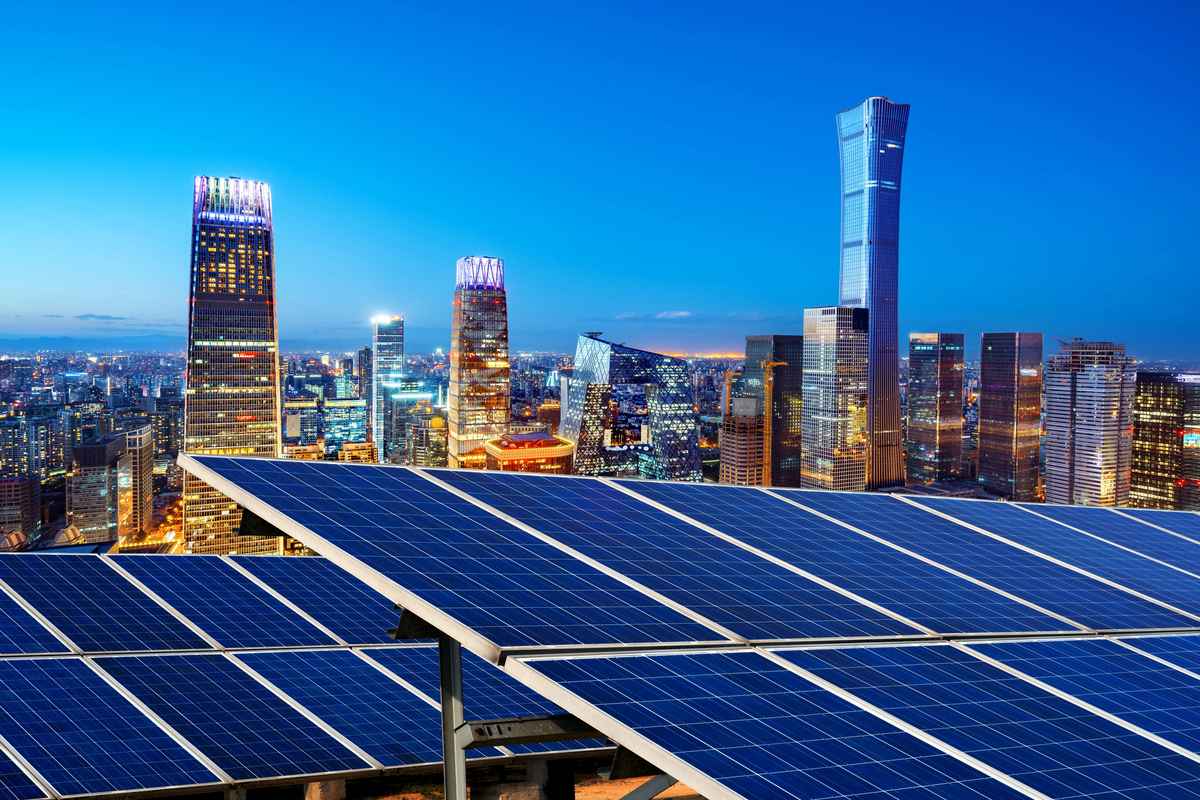
The plan places significant emphasis on the role of clean energy, considered not only in the context of the energy transition and emissions but also as a pillar for economic growth. Beijing aims to adopt an action program to double non-fossil energy in ten years. The new plan includes the expansion of offshore wind power, the construction of solar plants in desert areas, and the relocation of industries to areas rich in renewable energy.
As explained by a CREA analysis, if this means doubling the total use of non-fossil sources between 2025 and 2035, the target would be significantly more ambitious than China’s previous goals (25% non-fossil energy by 2030 and 30% by 2035). If total energy demand were to grow by almost 2.5% annually, the share of non-fossil energy would need to reach 29% by 2030 to ensure the necessary reduction in carbon intensity.
Towards a “new type of power system”
Also according to the CREA analysis, the construction of a “new type of power system” remains a central objective for Beijing. This system must be capable of integrating large quantities of wind and solar energy and will be structured around:
- Energy storage systems and smart grids.
- Interprovincial electricity exchanges and large-scale transmission.
- “Vigorous” development of battery energy storage.
- Construction of 100 GW of pumped-hydro energy storage systems.
Expanding strategic oil reserves
Within the latest five-year plan, China has set an annual crude oil production target of 200 million tons (around 4 million barrels per day). This target is lower, though very close, to that of 2025, when a record of 216 million tons was reached. Simultaneously, Beijing has committed to expanding its strategic oil reserves, though no official data is available.
Unlike oil, for natural gas, the new plan foresees a constant expansion until 2030, although precise figures are lacking. Among ongoing projects, the plan confirms the start of work on the gas pipeline Power of Siberia 2, which will connect Russian fields to northern China via Mongolia.
“Building the new before destroying the old”
Furthermore, Beijing aims to reduce its carbon intensity, i.e., carbon emissions per unit of GDP, by 17% by 2030. This target, however, is not sufficient to meet the goals of the Paris Agreement. In summary, Beijing’s strategy until 2030 seems to be this: to reserve room for maneuver but not entirely abandon the decarbonization strategy. The push for renewables and the increase in strategic oil reserves demonstrate that China is cautiously committing to reducing its dependence on imported crude oil. “Building the new before destroying the old” is indeed a principle of Xi Jinping.